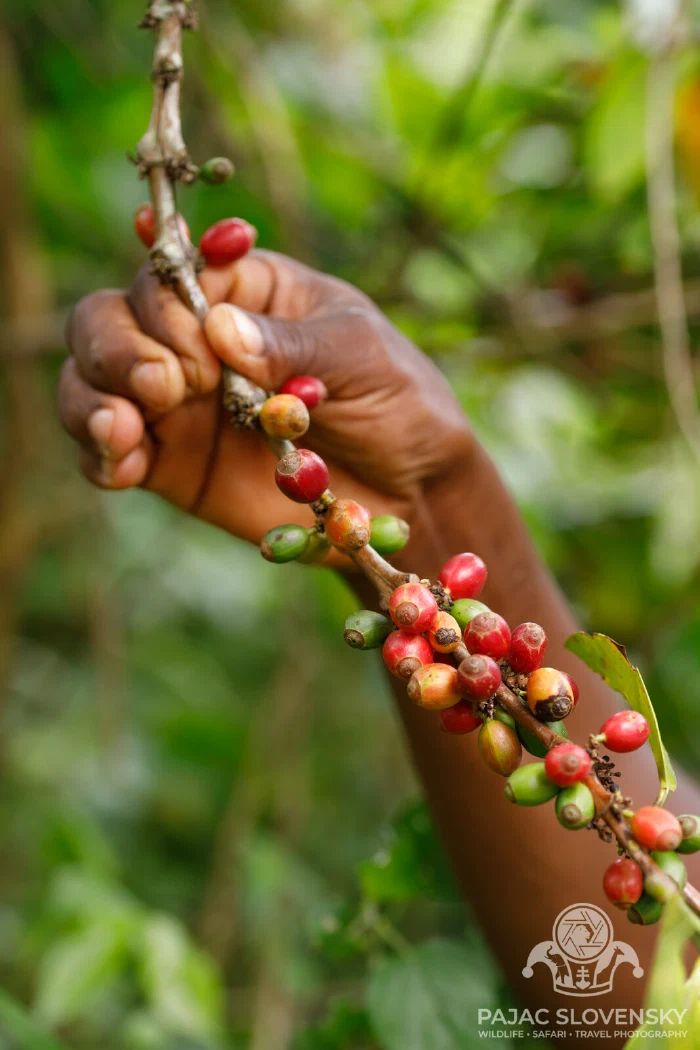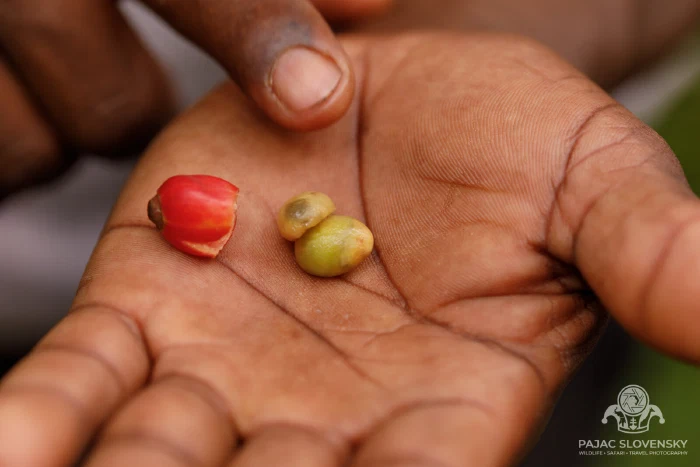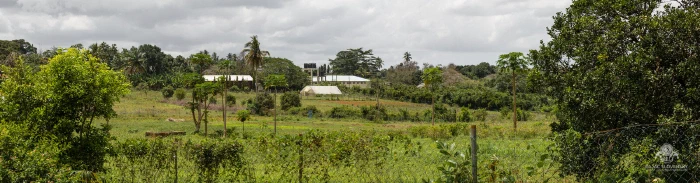
Three days after the safari loop closed in Nairobi, the dust of five parks still in my camera bags, I traded savanna for ocean and flew out to Zanzibar. Most people come to the island for the beaches. I spent my first proper morning nowhere near one — half an hour inland from Stone Town, in the farm belt around Dole, where the air itself is seasoned.
They call Zanzibar the Spice Island, and it isn’t a marketing line. In the nineteenth century the clove plantations here were valuable enough that the Sultan of Oman moved his entire capital from Muscat to Stone Town to sit closer to them. Cloves, nutmeg, cinnamon and pepper built the island’s fortunes — and its tragedies — long before tourism arrived. Today the great plantations have shrunk to family farms, and the farms have learned to harvest visitors as well as spices. I expected a tourist trap and got a botany lecture you can eat.
A Guide with a Knife
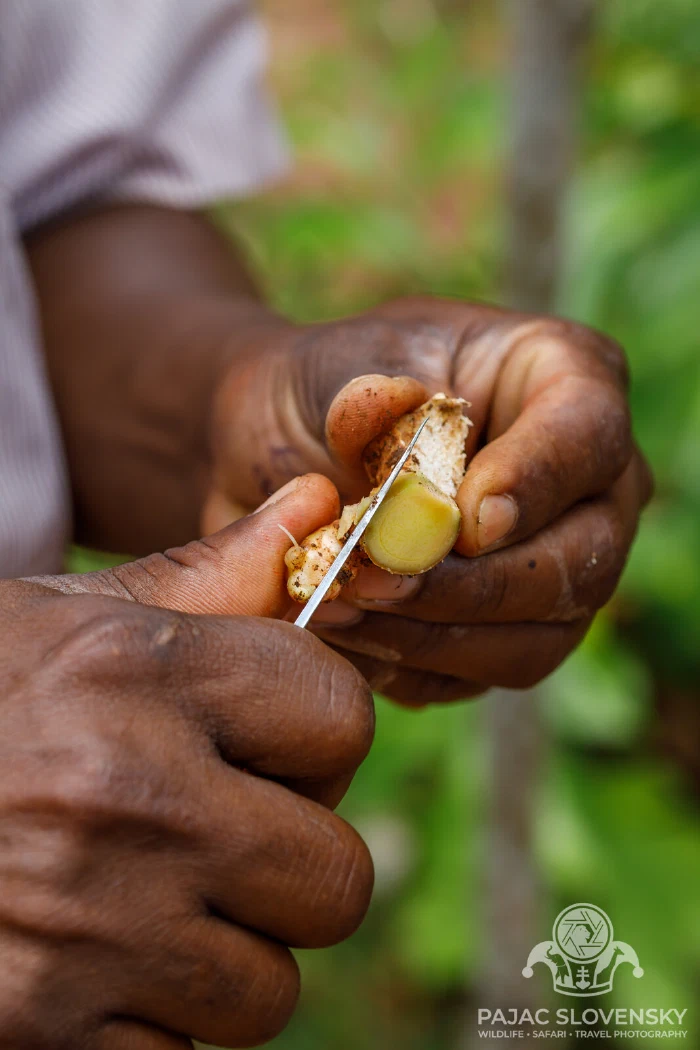
Our guide walked barefoot, carried a short knife, and had the timing of a stage magician. The tour works like this: he stops at an unremarkable green shrub, cuts, scrapes, or peels something, presses it into your hand and says — smell. You smell. Your brain lights up with something utterly familiar from a kitchen shelf three continents away, and you completely fail to match it to the plant in front of you.
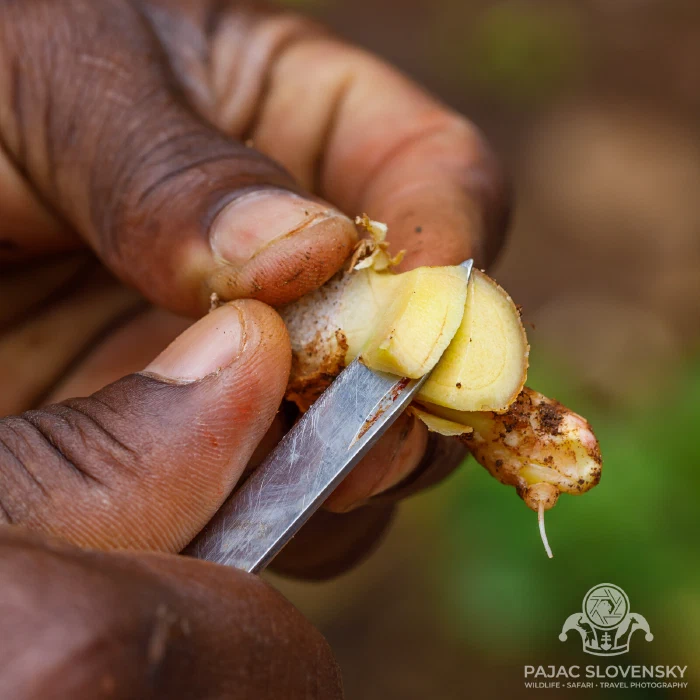
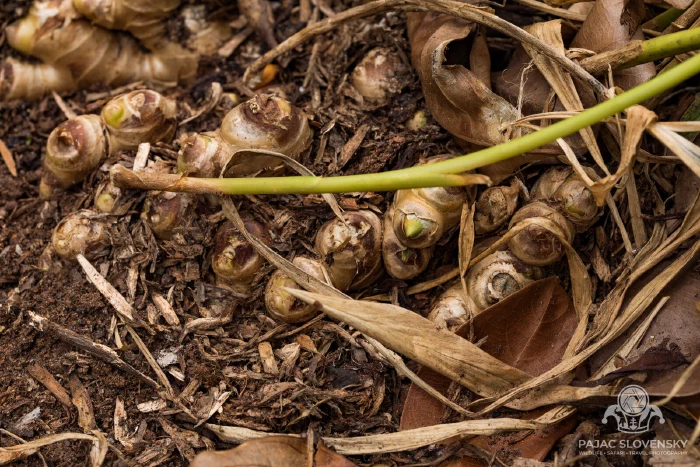
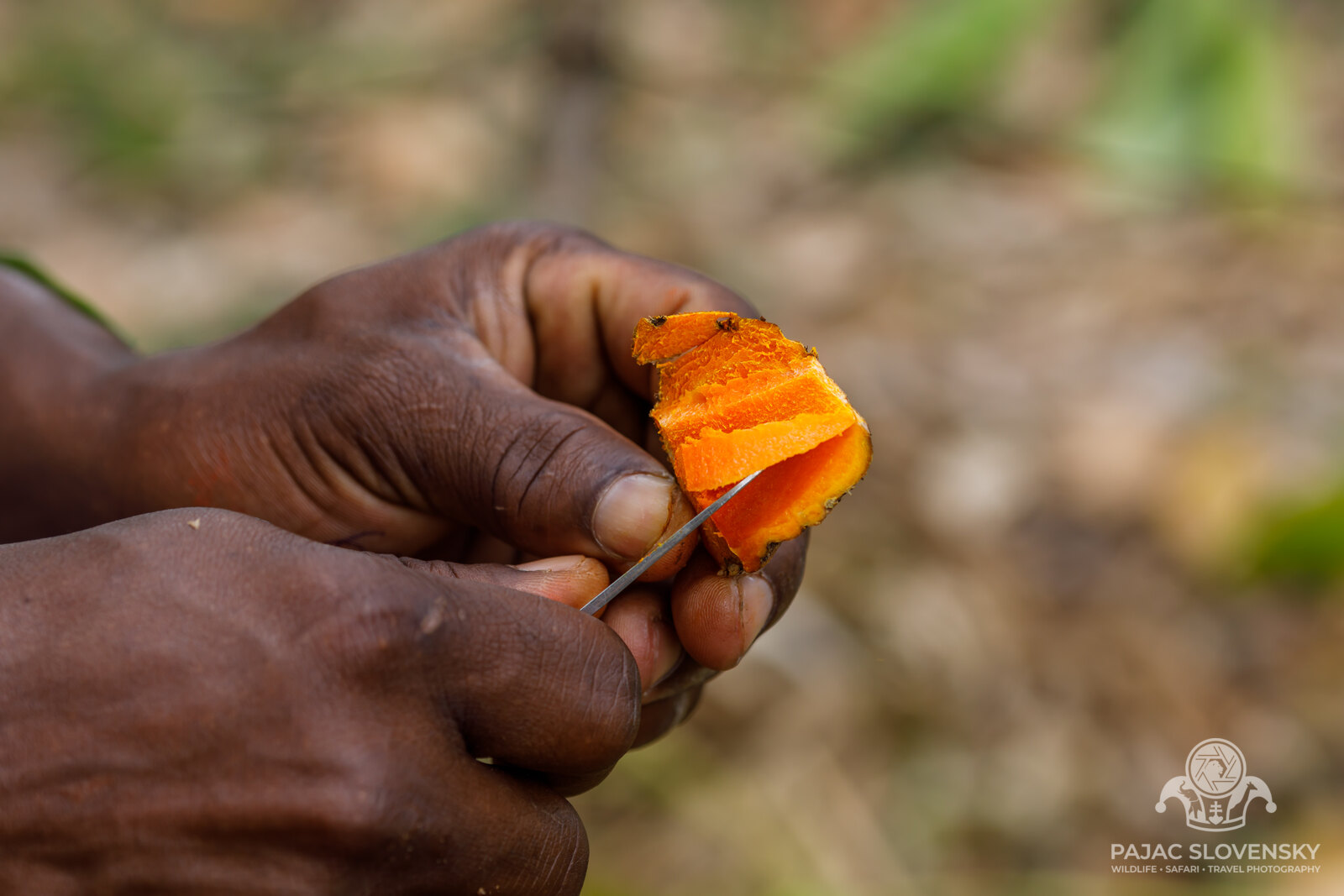
A knuckle of root, sliced on the blade and handed over: ginger, sharp enough to make your eyes water. A handful of dirt-crusted rhizomes that looked like nothing at all until he snapped one — turmeric, an orange so violent it stained his fingertips, and then mine, and then the camera grip, for the rest of the day.
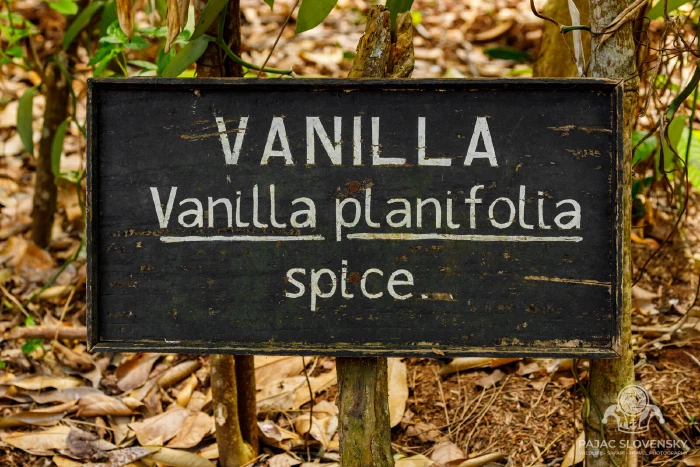
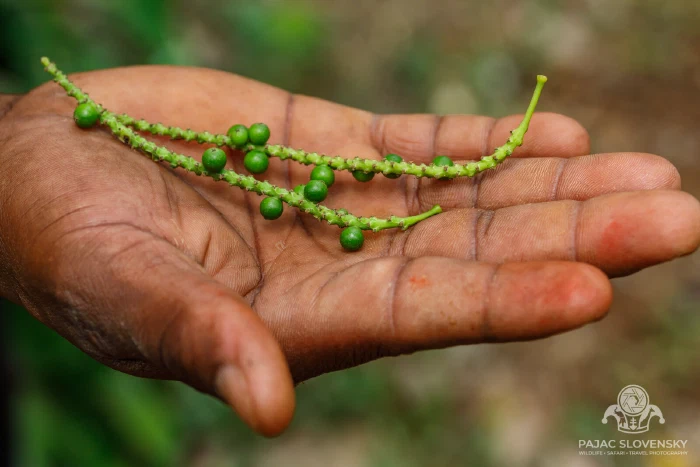
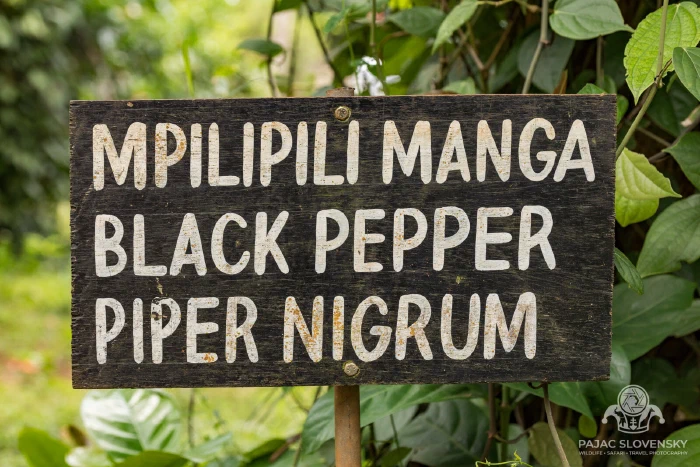
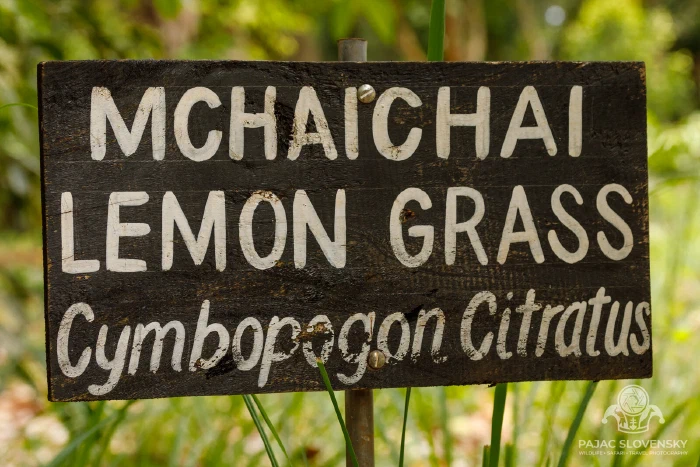
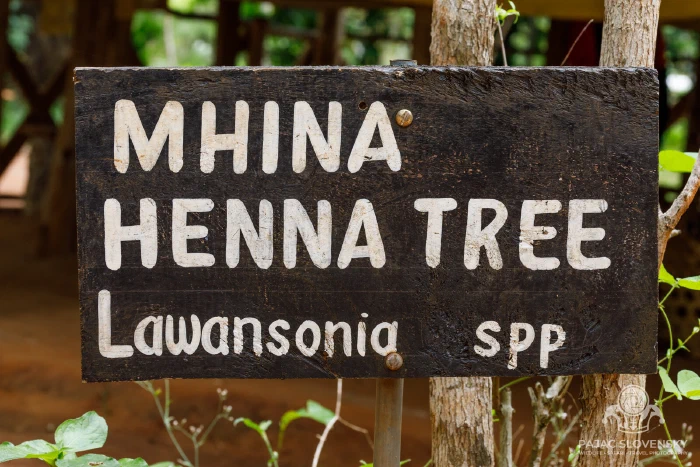
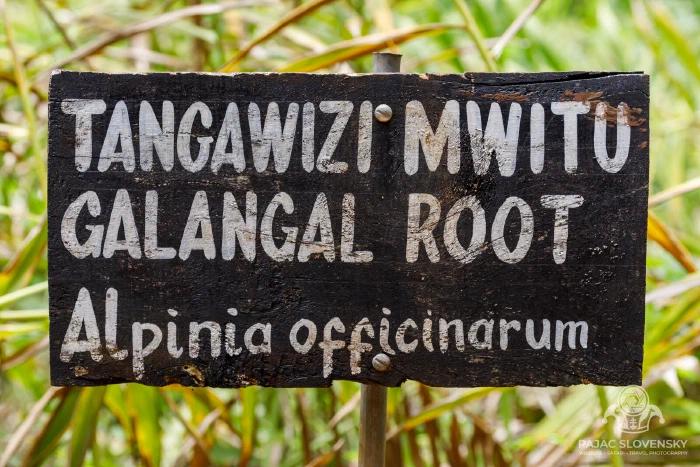
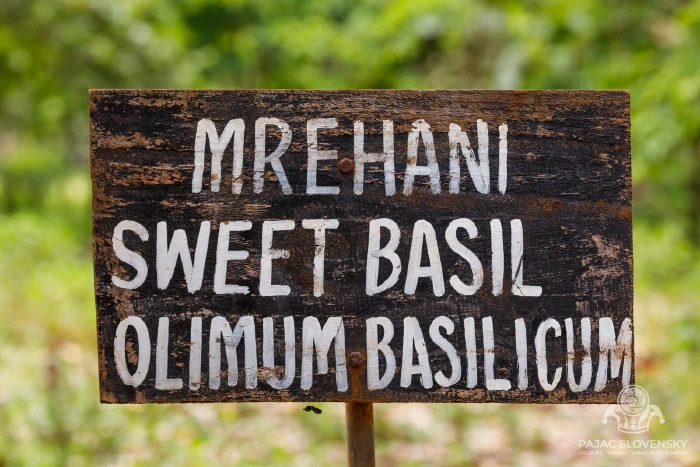
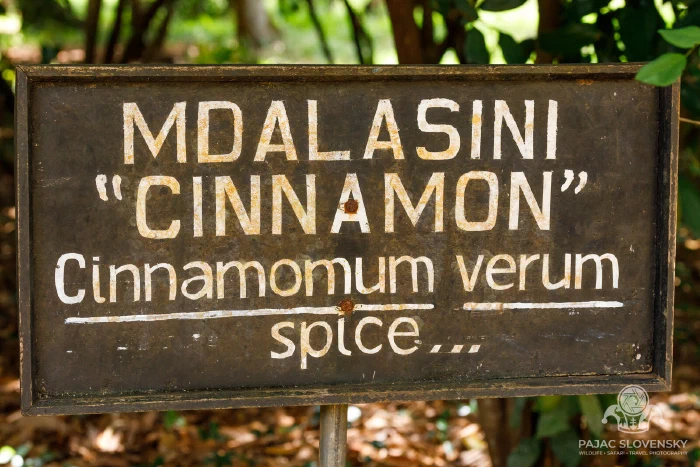
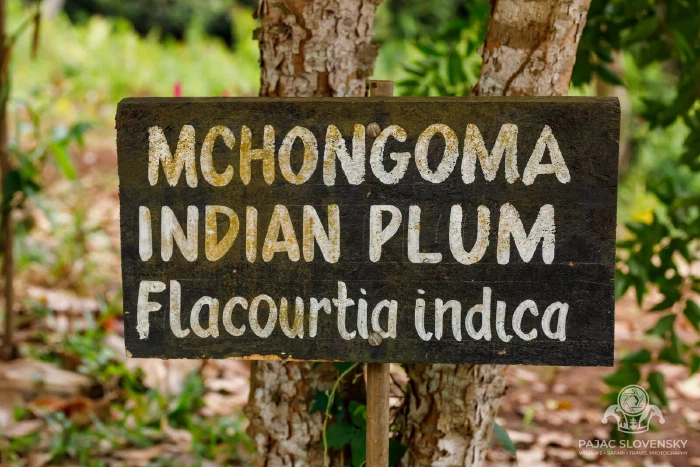
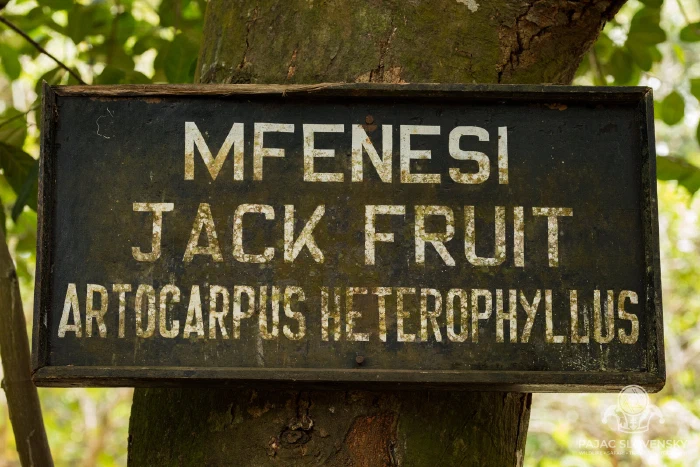
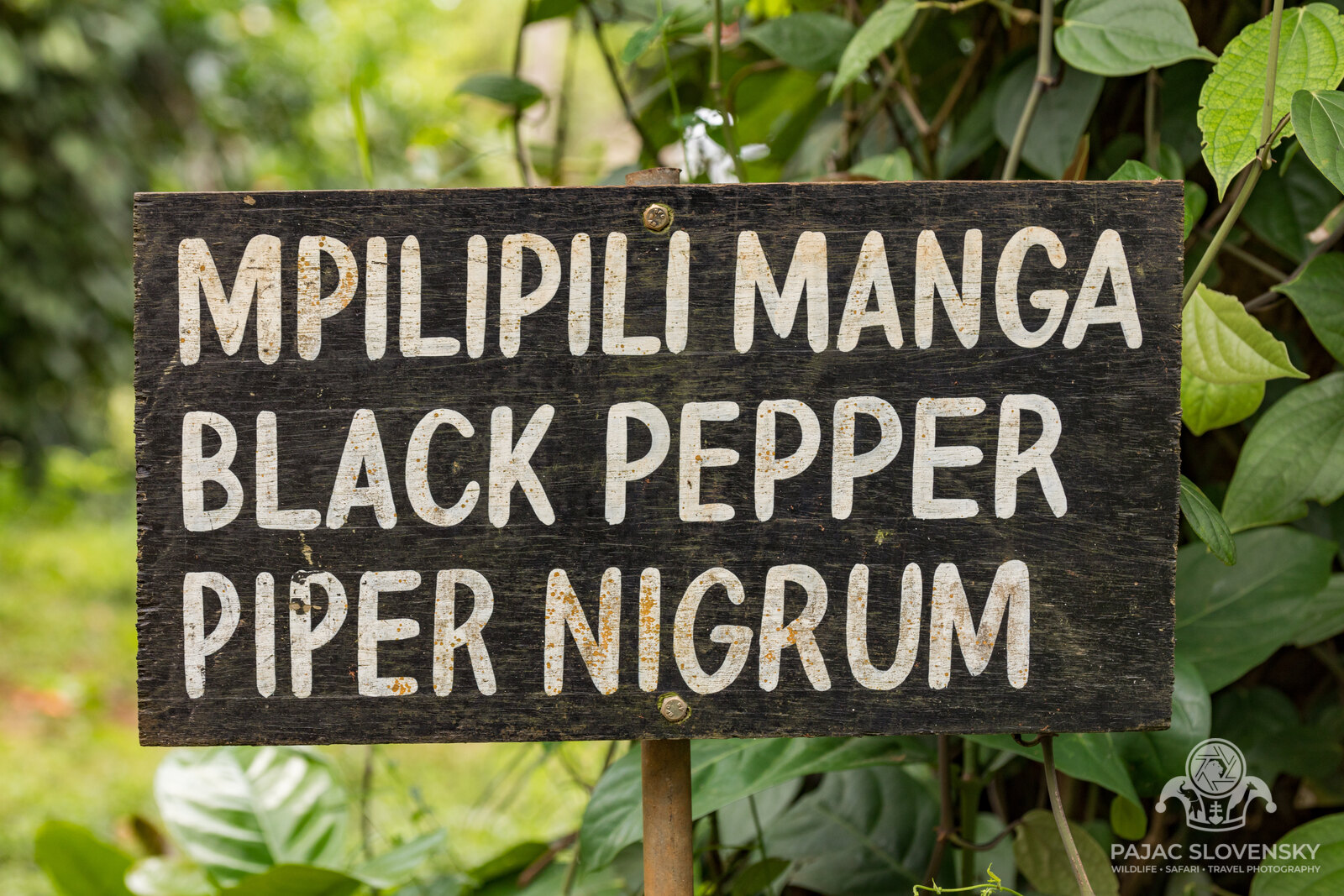
Every station has its hand-painted sign, Swahili first, Latin last: mchaichai — lemon grass. Tangawizi — ginger. Mdalasini — cinnamon. Mpilipili manga — black pepper, whose green strands he draped across my palm looking nothing like the dried shot of a pepper mill. The signs are nailed to trees, weathered, hand-lettered, occasionally misspelled, and I photographed nearly all of them — together they read like a poem about the island.
The Nutmeg Reveal
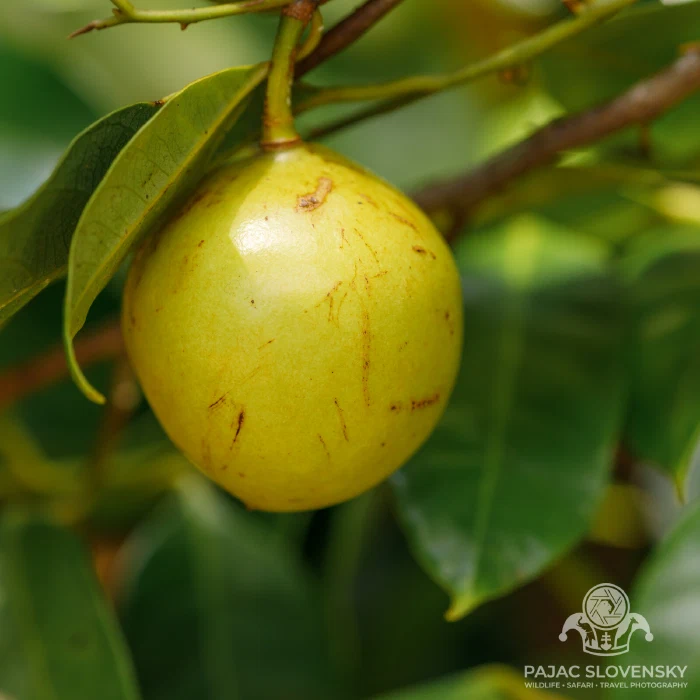
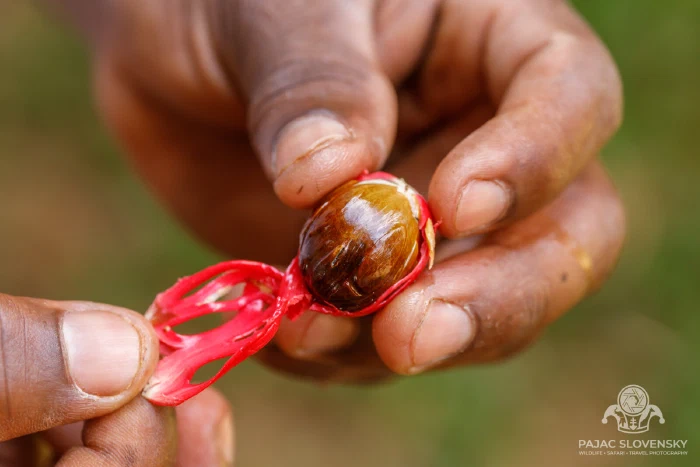
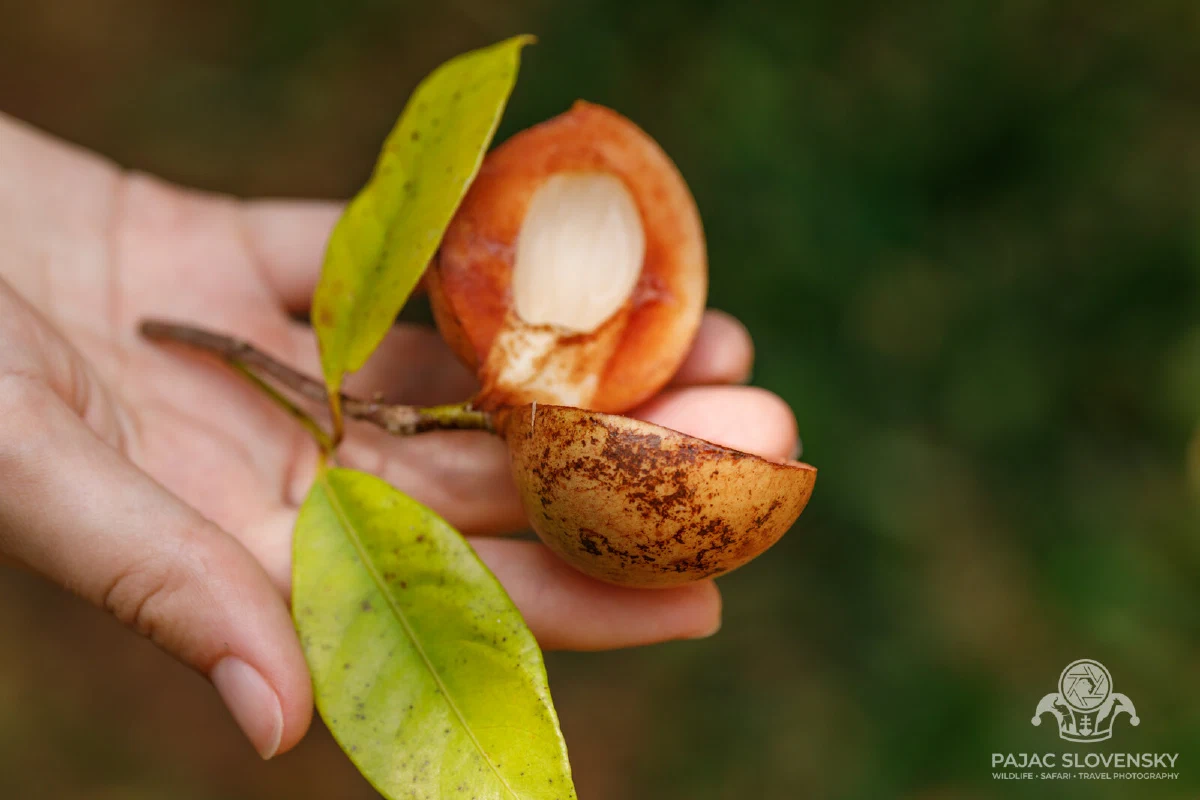
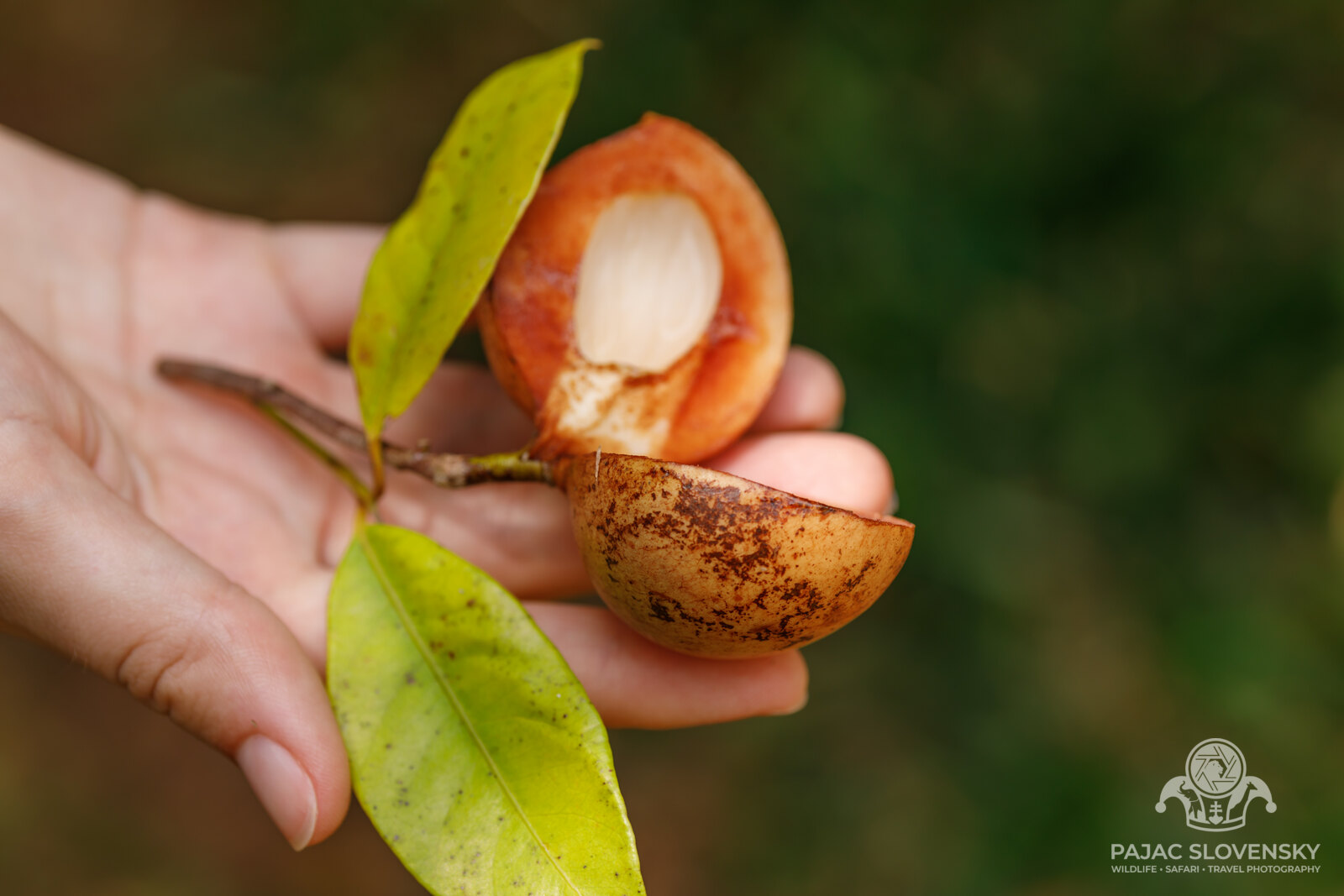
The best sleight-of-hand was the nutmeg. On the tree it’s a modest thing — a pale, apricot-like fruit hanging quietly among the leaves. Then the guide splits it with his thumbs and the inside is suddenly, shockingly baroque: a glossy dark seed wrapped in a scarlet lace called mace, like something jewelled from a sultan’s workshop hiding inside a golf ball.
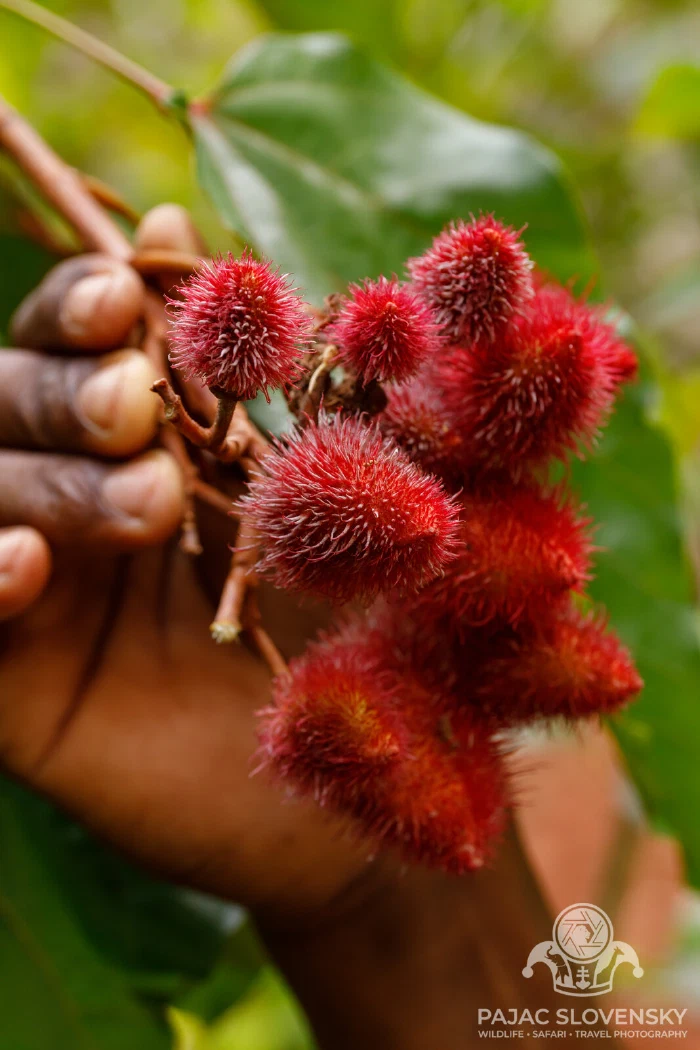
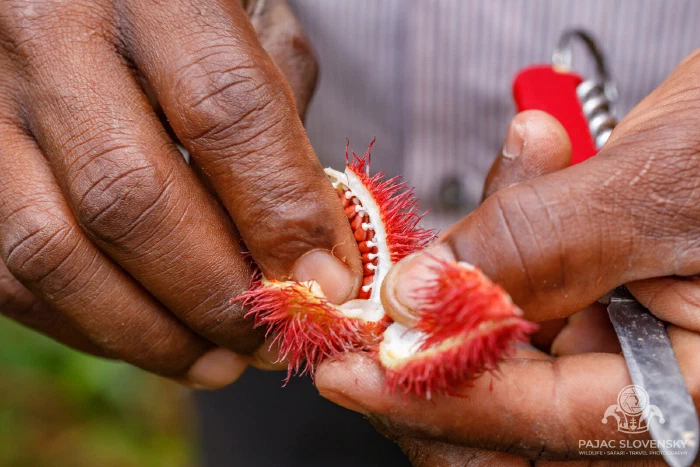
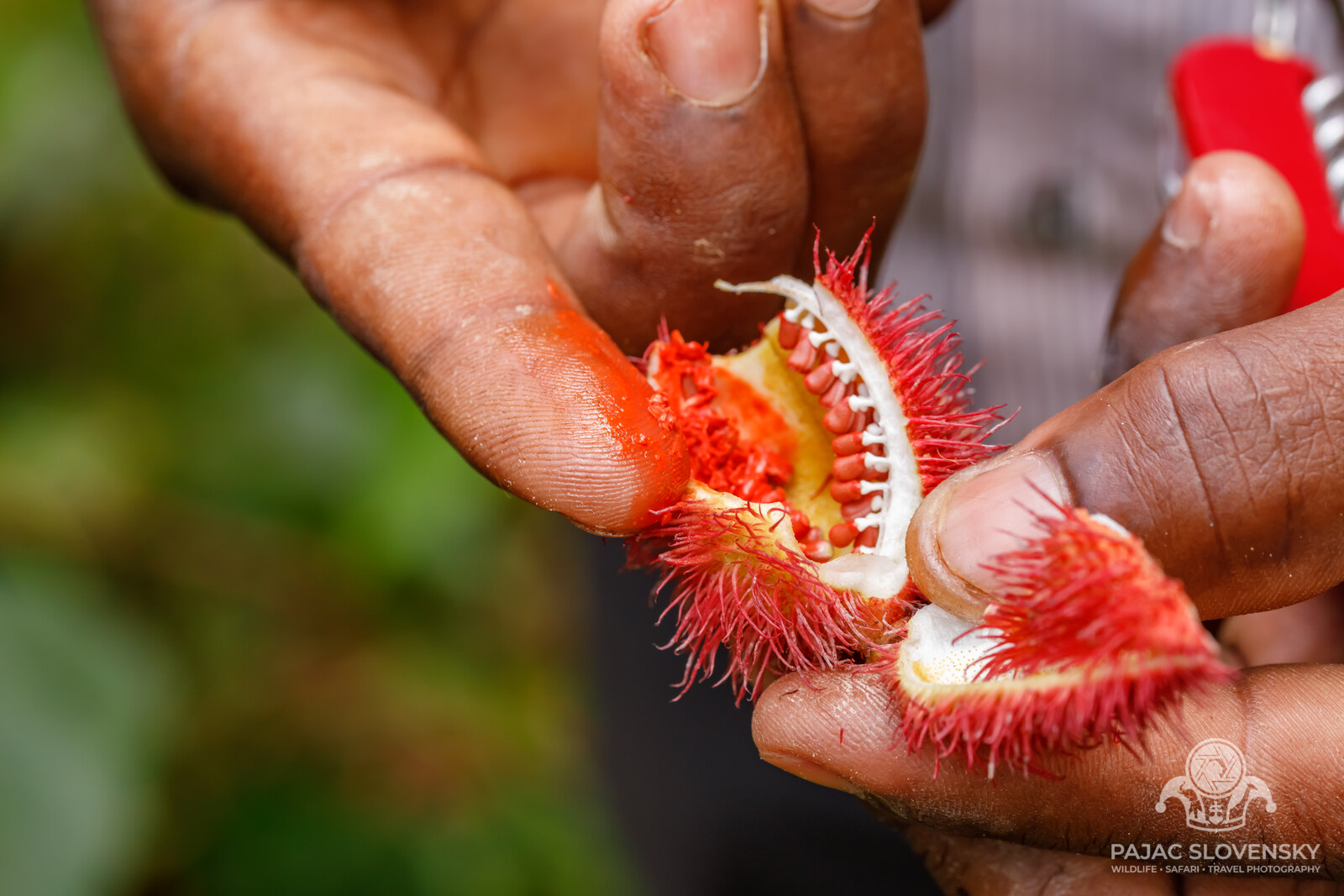
Nearby stood the tree the guides save for the theatrical finale of every visit: the annatto, or lipstick tree. Its bristly crimson pods crack open to seeds coated in a red-orange pigment that people here have used as body paint and food colouring for centuries — it’s the “natural colour” in half the orange cheese on Earth. Within a minute, half our group had painted stripes on their faces and the other half was photographing them.
Vanilla, Cloves, and the Economics of Patience
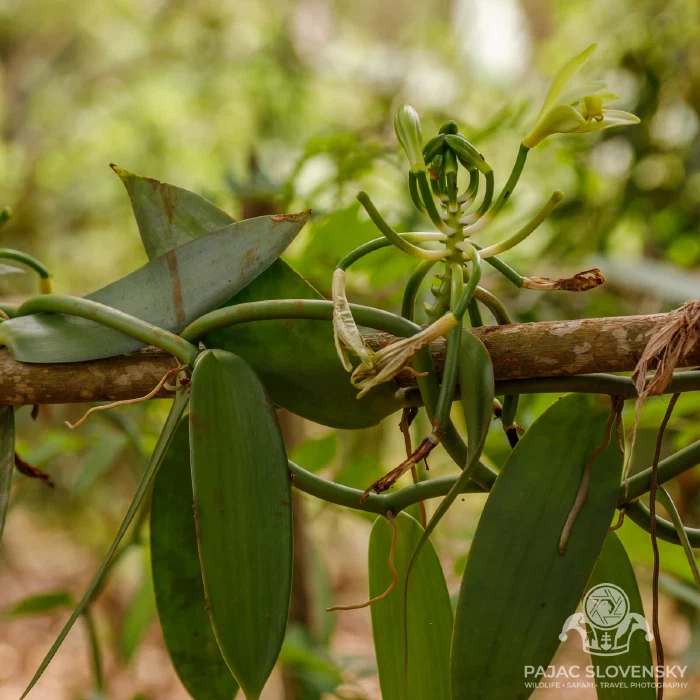
Deeper into the farm, the crops turn serious. Vanilla here grows as an orchid vine strung from tree to tree, and because the moth that pollinates it lives an ocean away in Mexico, every single flower on the island must be pollinated by hand, one by one, in the few hours it opens. Hearing that, you stop resenting the price of a vanilla pod forever.
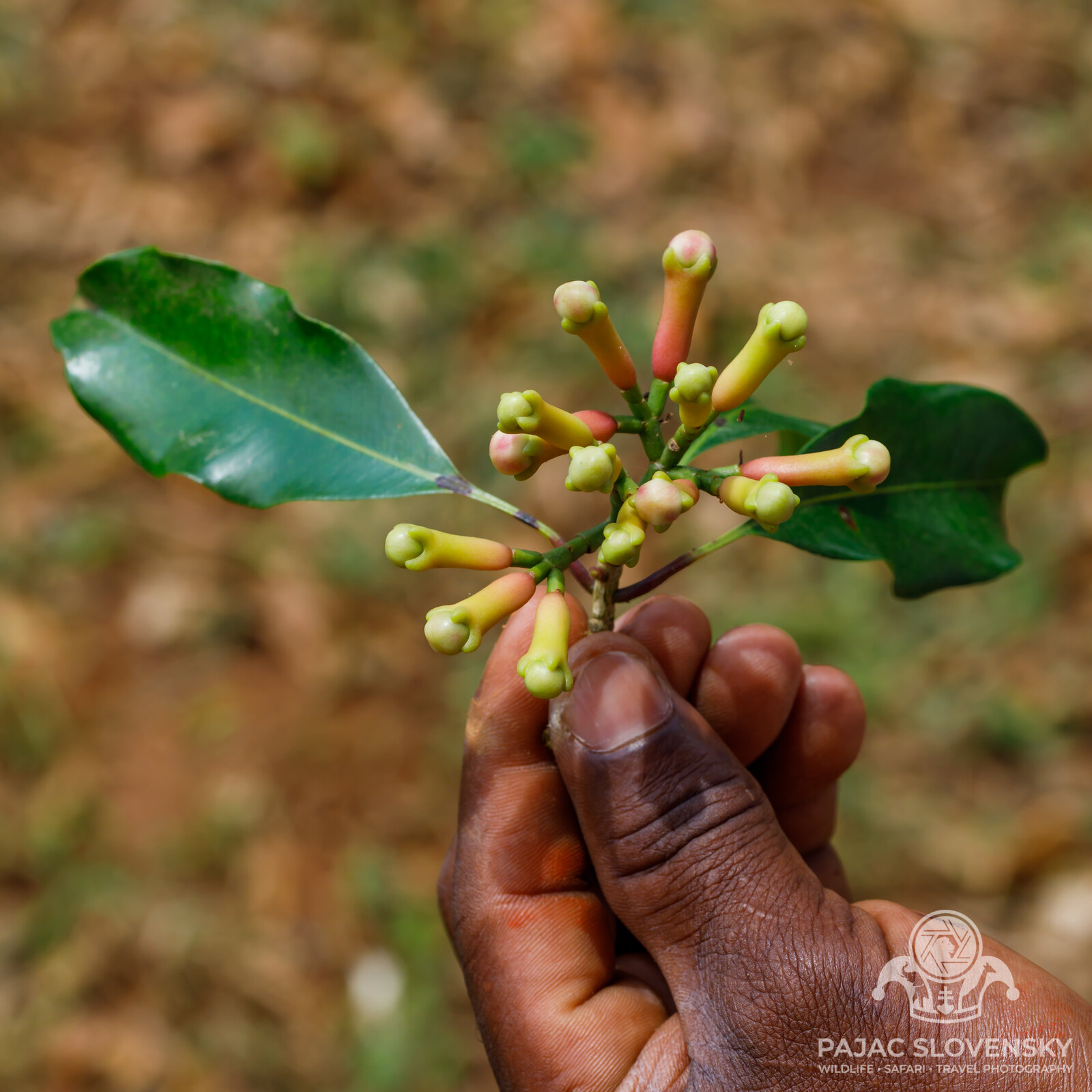
And then the tree that built Stone Town: the clove. What you buy in a jar is the unopened flower bud, picked green and dried in the sun until it turns the colour of old wood. The guide pulled down a branch to show the buds standing in little clusters — unremarkable, faintly rosy, smelling like Christmas and toothache remedies and the whole nineteenth century.
The Cacao Finale
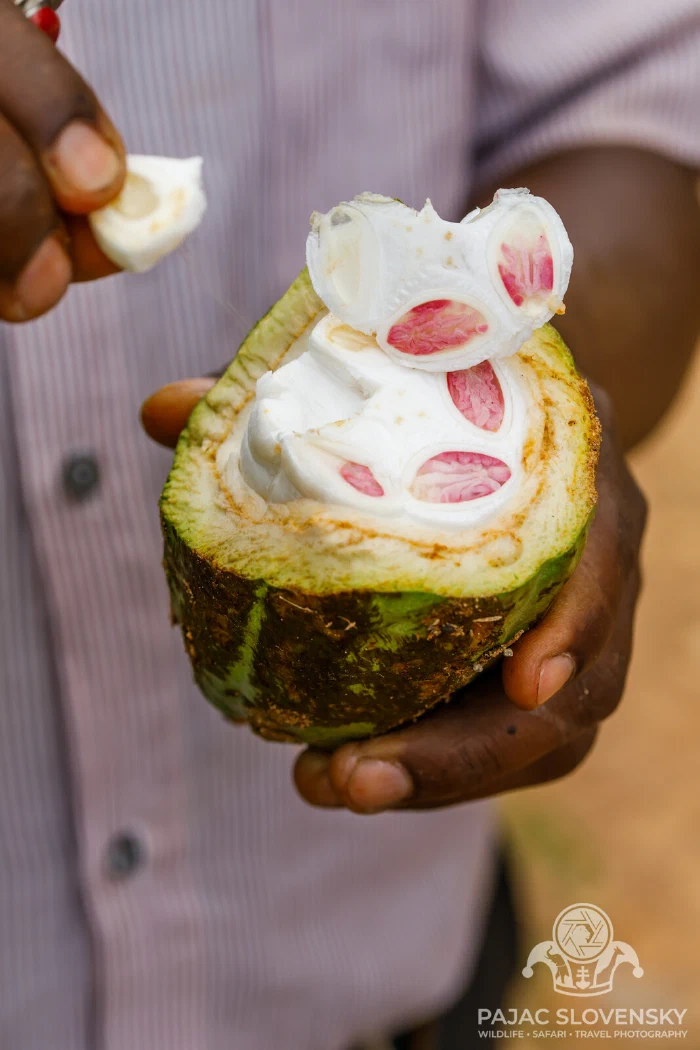
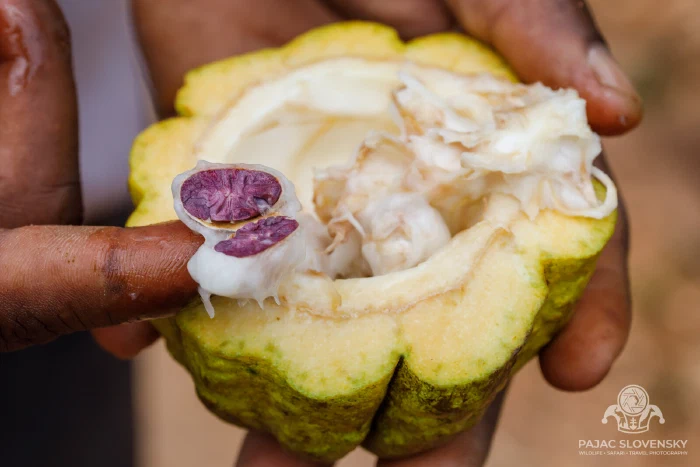
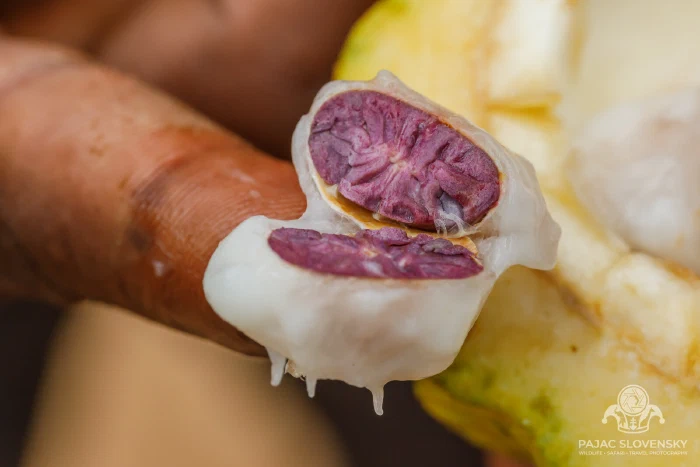
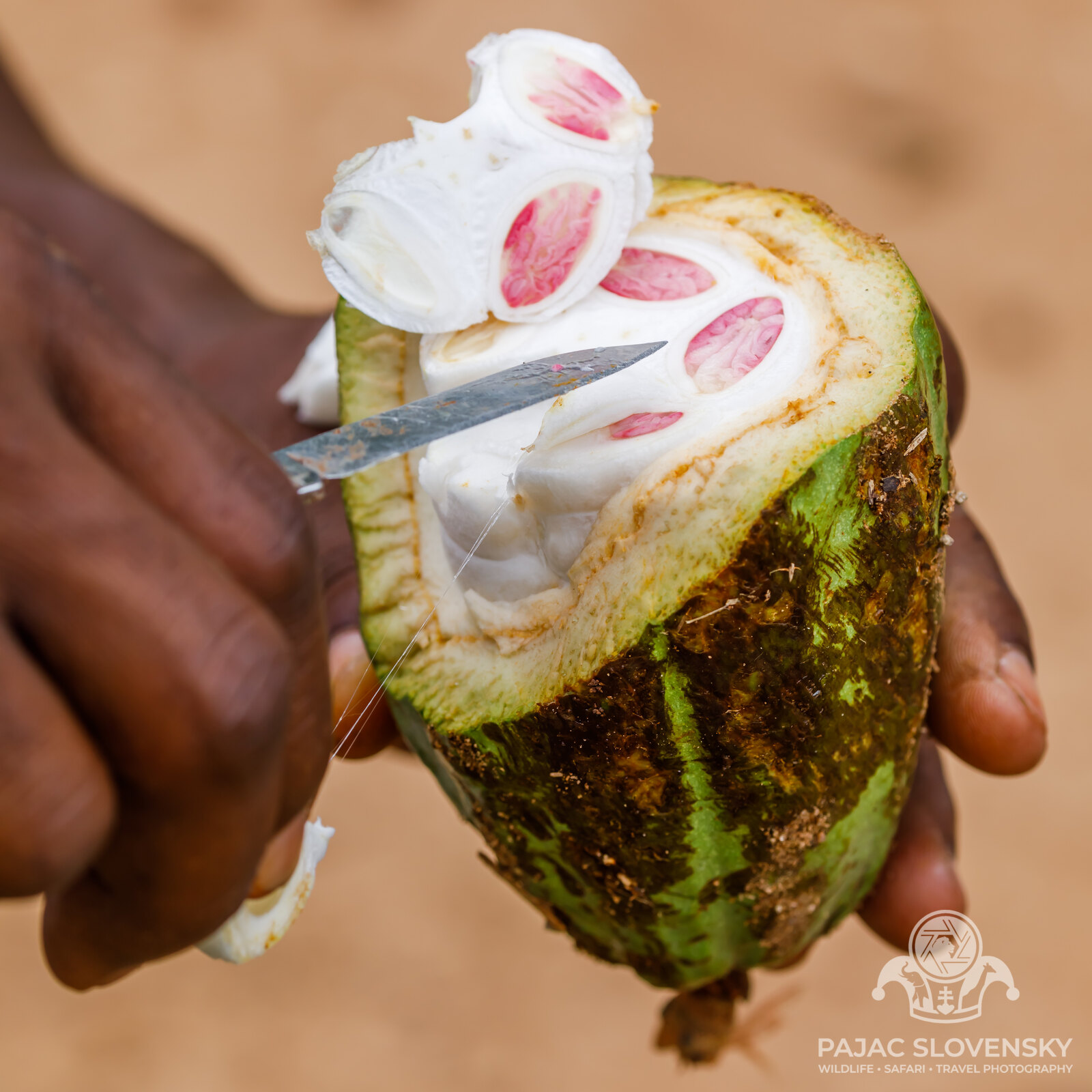
The tour ends the way all good tours should: with chocolate, sort of. A cacao pod came off its trunk with a machete-knock, was cracked in half, and went around the circle. Inside, the beans sit in a white pulp that tastes nothing like chocolate — it’s closer to lychee and sour cream, sweet and bright — and you suck the pulp off the bean and pass the pod along. Somewhere between the tasting and the laughing, the photographs took themselves.
We walked out two hours after walking in, carrying paper cones of cloves and cinnamon bark, fingers still faintly orange, cameras full of hands — because that’s what a spice farm really photographs as: the guide’s hands, opening one small miracle after another. After a week of photographing elephants at eye level across the Rift Valley, it was a different kind of wildlife entirely.
More from this trip
- Zanzibar Spice Farm — all 40 photographs from the Dole farm, sign by sign, spice by spice
- Two Countries, Five Parks — the safari loop that ended three days before this morning
- Zanzibar — an earlier visit to the island: Stone Town, Jozani’s mangroves, and the east-coast lagoons
Photographed 11 October 2017 at a spice farm in Dole, central Unguja. Photographs in the text open in the viewer — click any of them.