Day four of the Ring Road loop was the one day the trip went underwater. Silfra is a flooded crack in Þingvellir National Park where the North American and Eurasian plates are pulling apart — about two centimetres a year, roughly the speed your fingernails grow — and for forty minutes I got to fly through the gap.
A Crack in the World
Silfra opened in 1789, when a swarm of earthquakes rearranged this edge of the rift valley, and it has been slowly filling with the strangest water in Iceland ever since. What pours through the fissure is meltwater from Langjökull, the glacier fifty kilometres north — except it doesn’t pour at all. It seeps. Every drop spends somewhere between thirty and a hundred years filtering through porous lava rock before it wells up in the fissure, and by the time it arrives it is about the purest natural water on the planet. You can drink it mid-dive. I did. It tastes like cold, and like nothing.
That filtration is also why the visibility is quoted at over a hundred metres — in practice you simply see to the end of whatever you are looking down, and the limit is the fissure’s geometry, not the water. The price of admission is the temperature: 2–4 °C, summer and winter alike. Hence the drysuit, the dry gloves, the hood, and the guide’s cheerful promise that my lips — the only exposed skin — would go pleasantly numb in about four minutes. They did.
The Big Crack
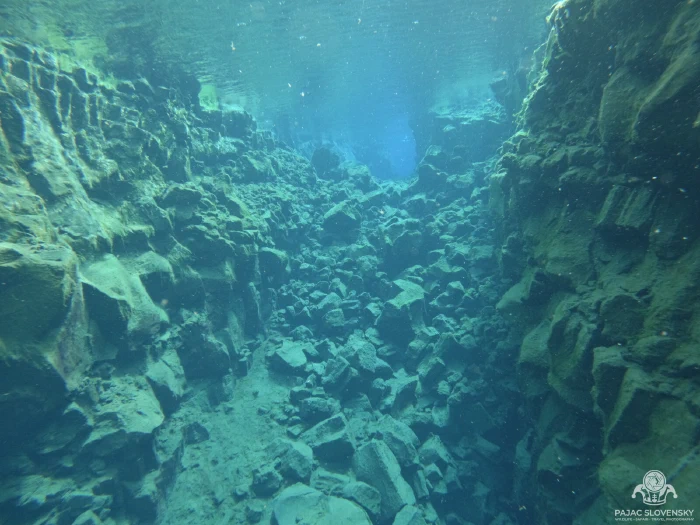
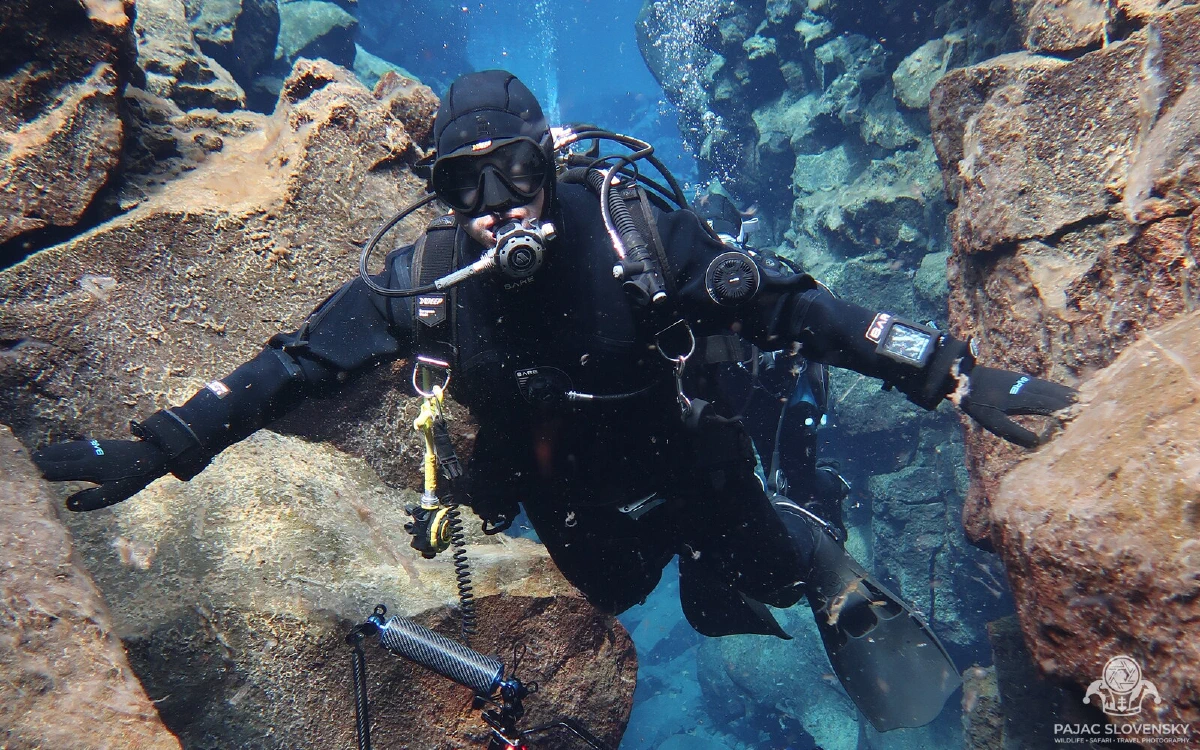
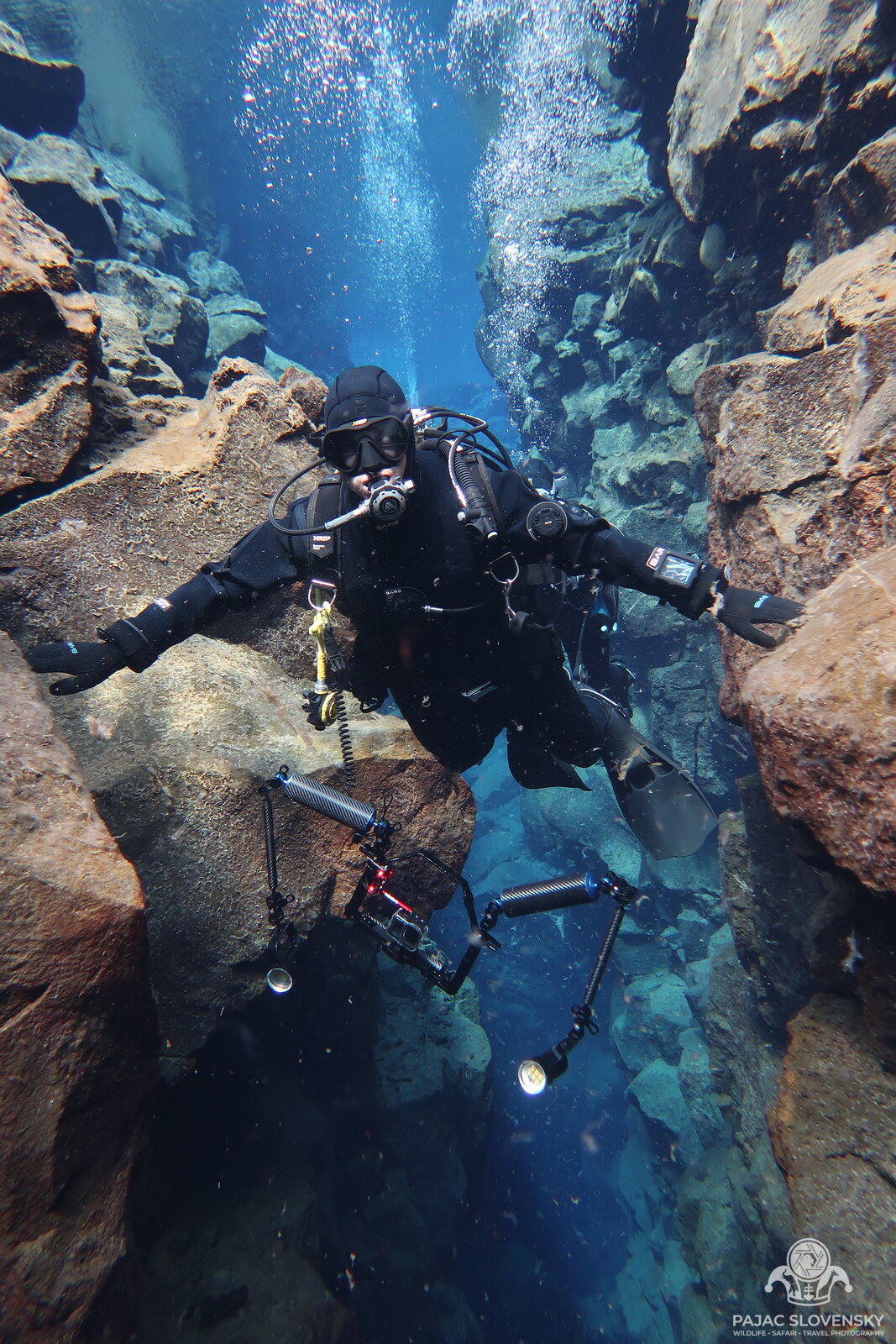
The dive starts at a steel stair, drops into a narrow trench, and almost immediately delivers the postcard: the walls close in until the fissure is barely a body-length wide, black volcanic rock on both sides, blue nothing below. This is the spot where you stretch your arms out and touch both walls at once — one glove on the North American plate, one on the Eurasian.
Geologists will tell you, correctly, that the boundary is really a ten-kilometre zone of fractures and that no single crack is “the line”. I understand this. I also spent a full minute hanging there with my arms out like a scarecrow while the guide took pictures, because some clichés are simply mandatory.
Hall and Cathedral
Past the Big Crack the fissure widens into Silfra Hall, and the light changes character. The floor opened up into a jumble of pale, algae-furred boulders — rockfall from two centuries of the walls letting go — with the surface rippling silver overhead like the wrong side of a mirror.
Then comes the Cathedral: a hundred metres of straight, deep corridor where both walls are visible at once, converging toward a blue that doesn’t really have a name. This is the stretch where “diving” stops being the right word. There is almost no current, the water is optically empty, and you hang weightless between two continents with the rock unspooling past you. The closest thing I know to it is flying the drone — except here you are the drone.
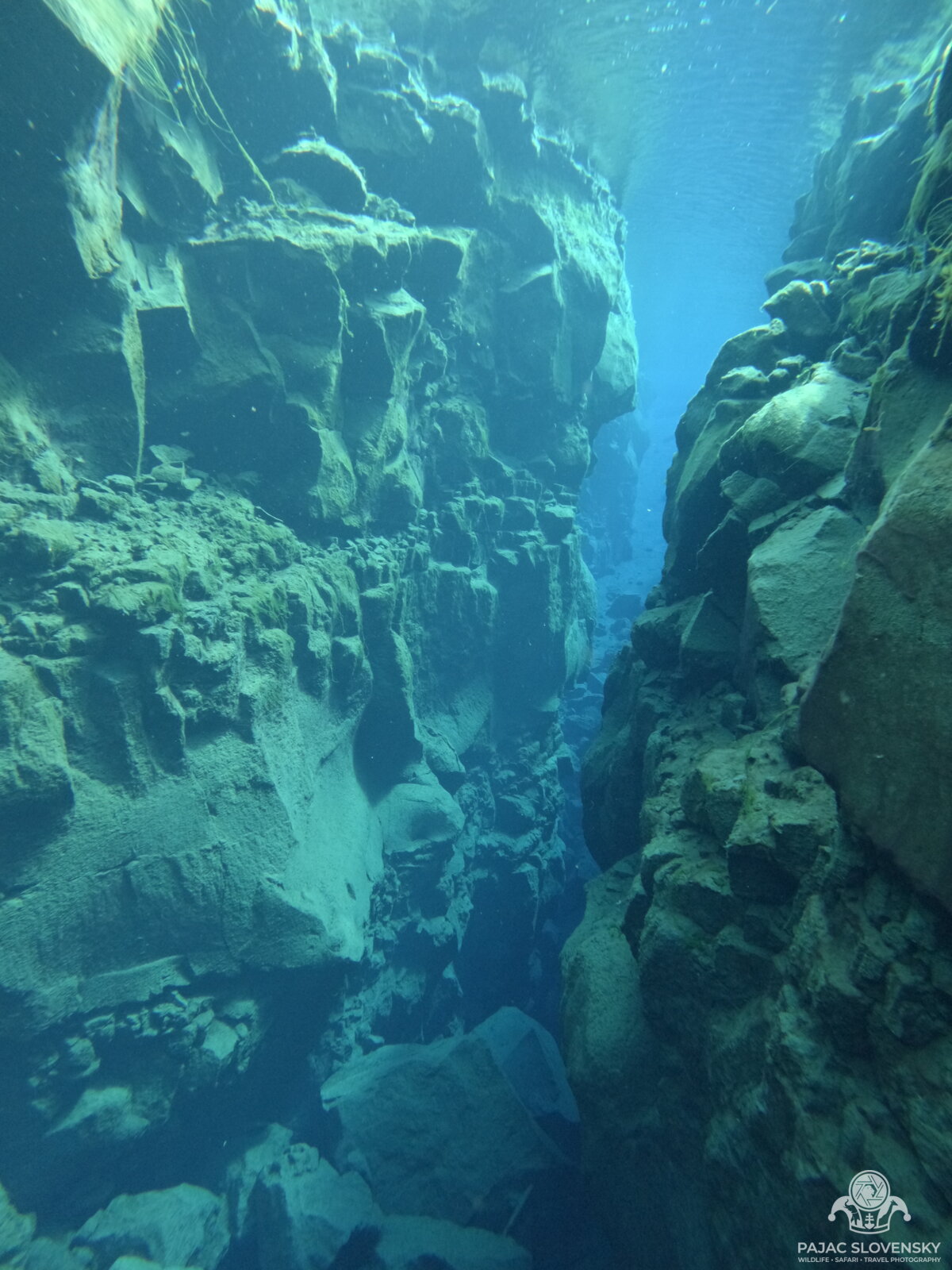
Every underwater photographer fights the water itself — particles, plankton, backscatter. Silfra is the one place I’ve been where the water simply declines to participate.
The Lagoon
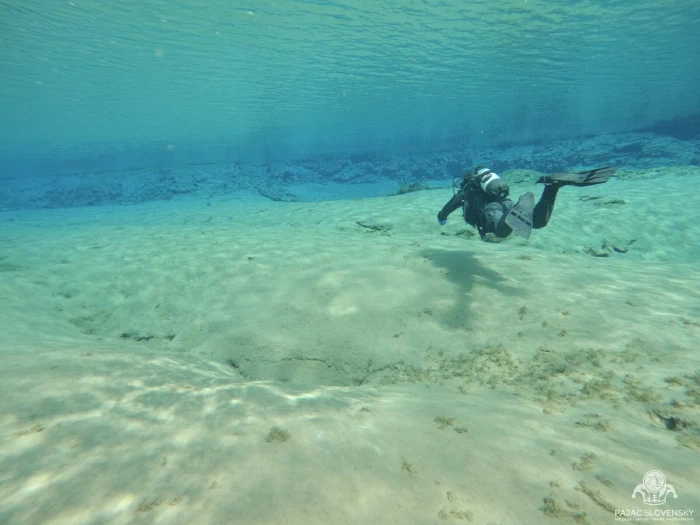
The fissure ends by relenting. The walls fall away, the floor rises into brilliant white-green sand, and the last stretch — Silfra Lagoon — is a sunlit shallow where the visibility stops being impressive and becomes faintly absurd: the far shore is a hundred and twenty metres away and you can read it. We finned across the sand with our shadows sliding along the bottom beside us, and a few minutes later we were at the exit stair, trailing bubbles.
Forty minutes in the water, lips numb exactly as promised.
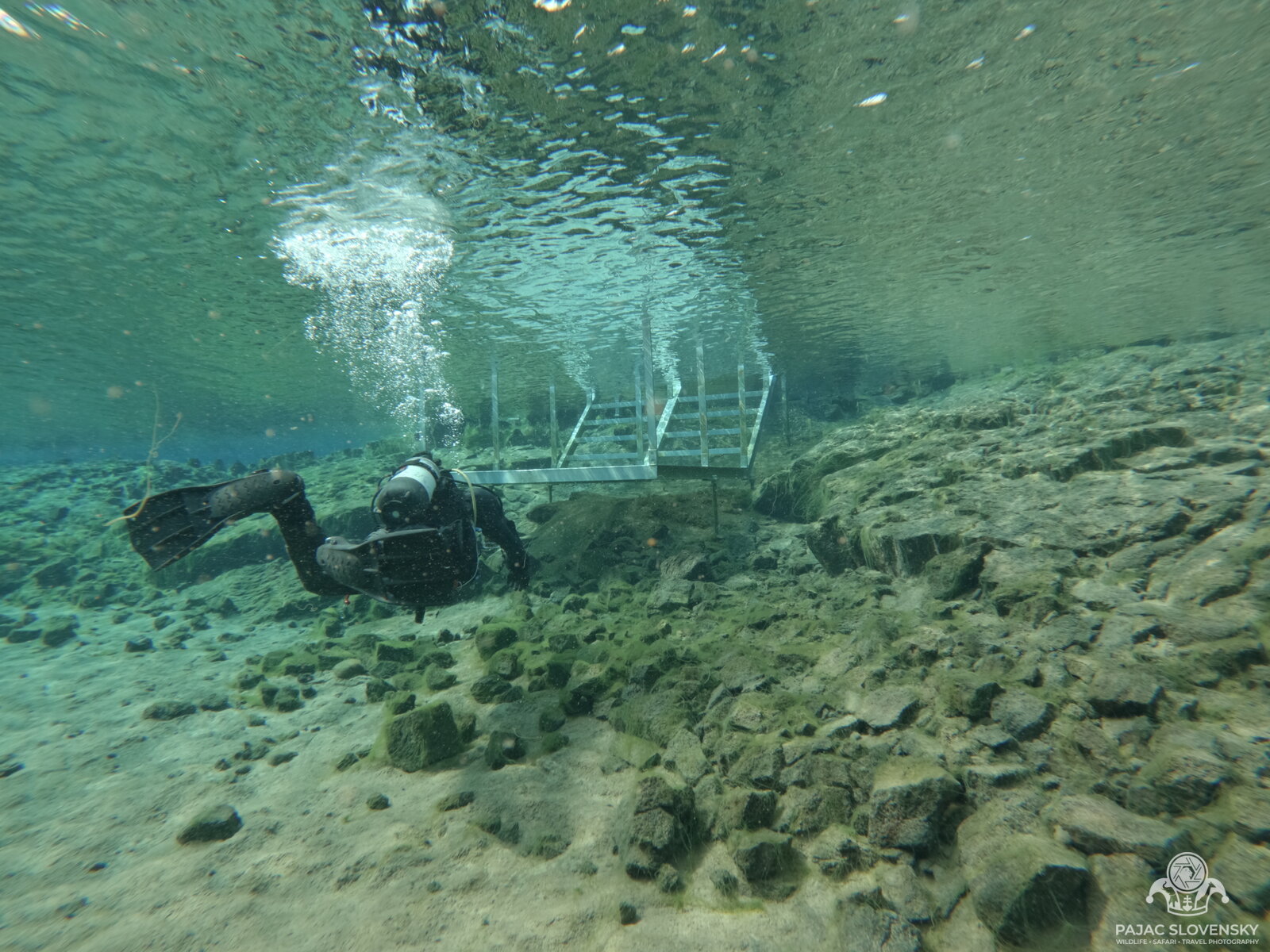
The GoPro also ran as video for most of the dive. Here is the film from between the plates — scored, fittingly, to a track called Aurora:
(More films from the trips land on the YouTube channel — including the lava-detour drive to the Blue Lagoon from this same journey.)
More from this trip
- The Island That Never Slept — the full two-week Ring Road loop this dive belongs to
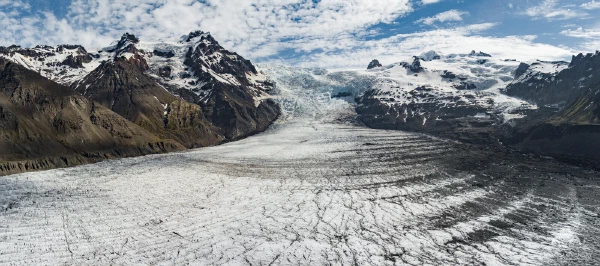
- The Farthest Frame — the other way this trip found to fly: 3.65 km over Svínafellsjökull by drone
- Iceland and Iceland — Bird Perspective — the photo galleries from the trip
Dived on 11 June 2024. Water facts are Þingvellir National Park’s: 2–4 °C year-round, 30–100 years of lava filtration, visibility beyond 100 metres. Photographs in the text open in the viewer.