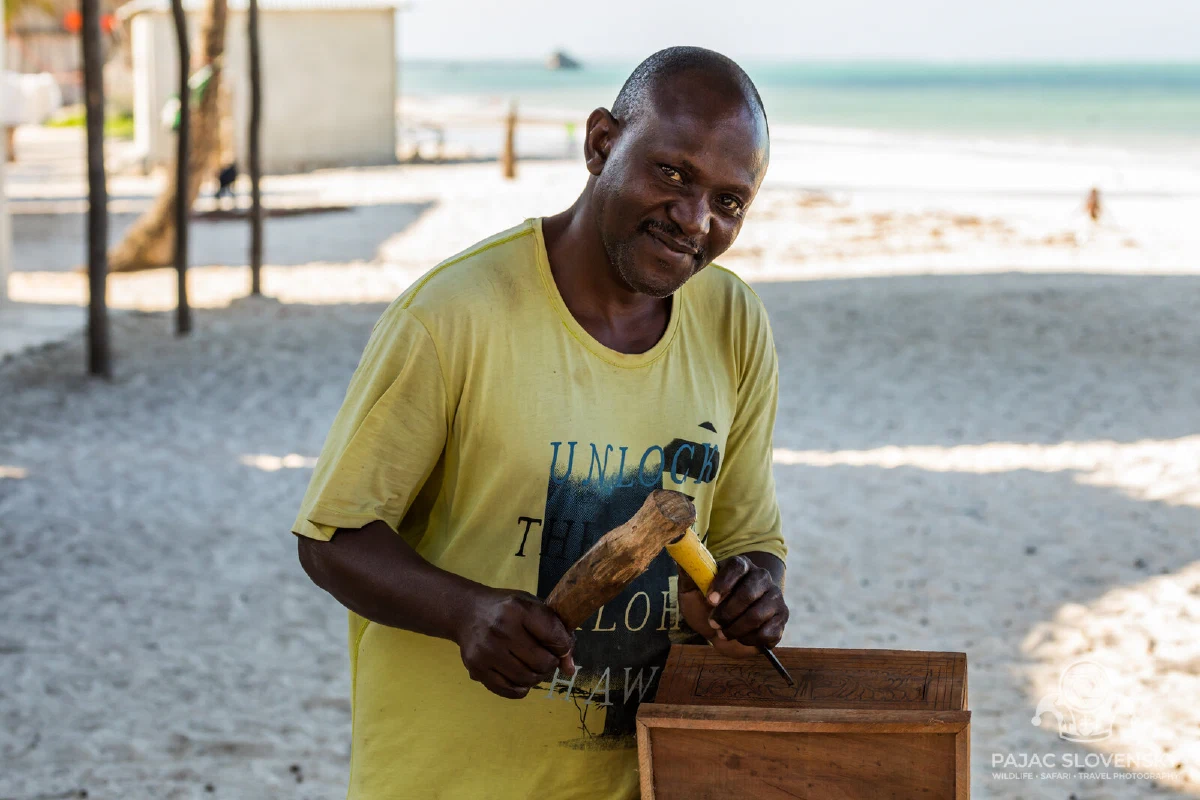
Some sessions you plan for weeks. This one I didn’t plan at all — it simply happened, one warm October afternoon on the beach at Kiwengwa, on Zanzibar’s east coast.
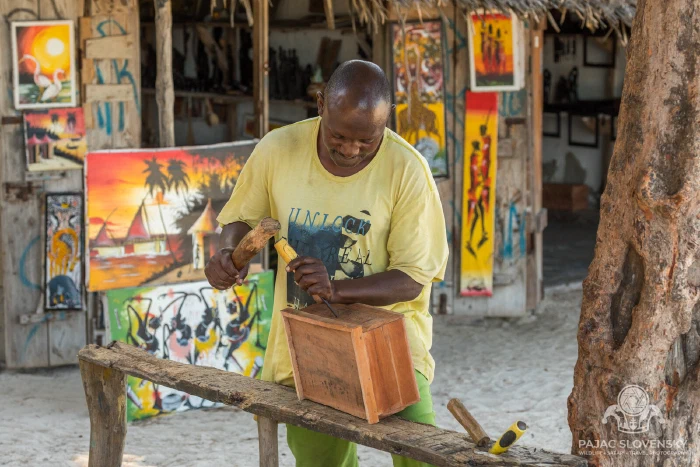
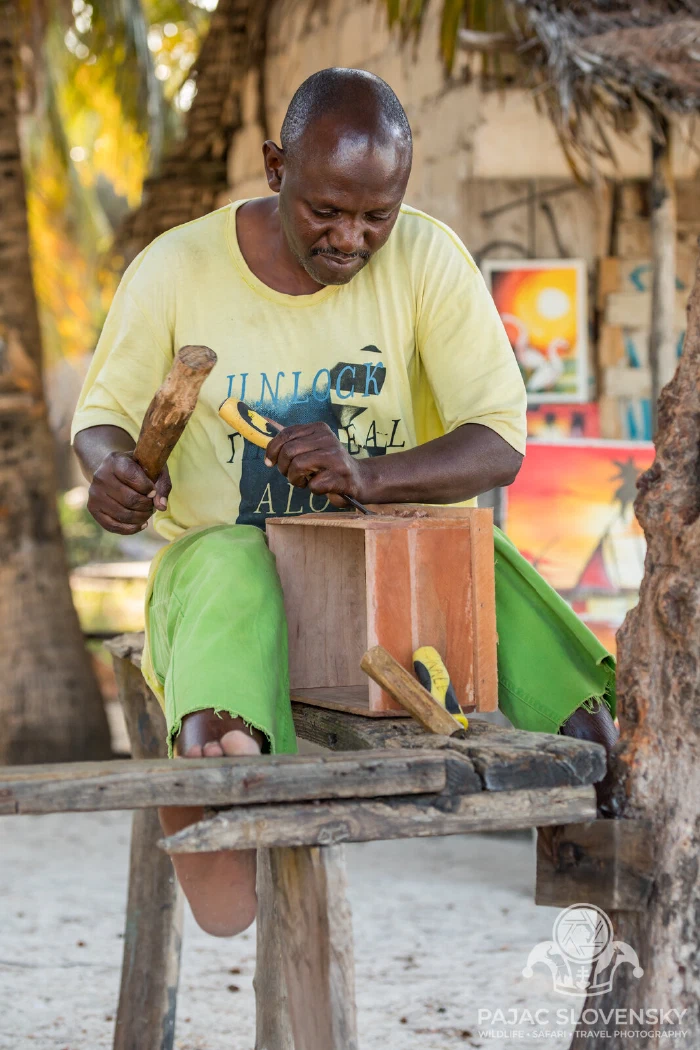
We had come to Kiwengwa for the obvious reasons: white sand, turquoise water, the reef at low tide. But halfway down the beach, between the palms and the tide line, stood a workshop — a few rough poles, a plank bench, a thatch of shade, and a back wall made not of wall but of Tingatinga paintings, hung in rows, their colours shouting cheerfully over the blue behind them.
The Man at the Bench
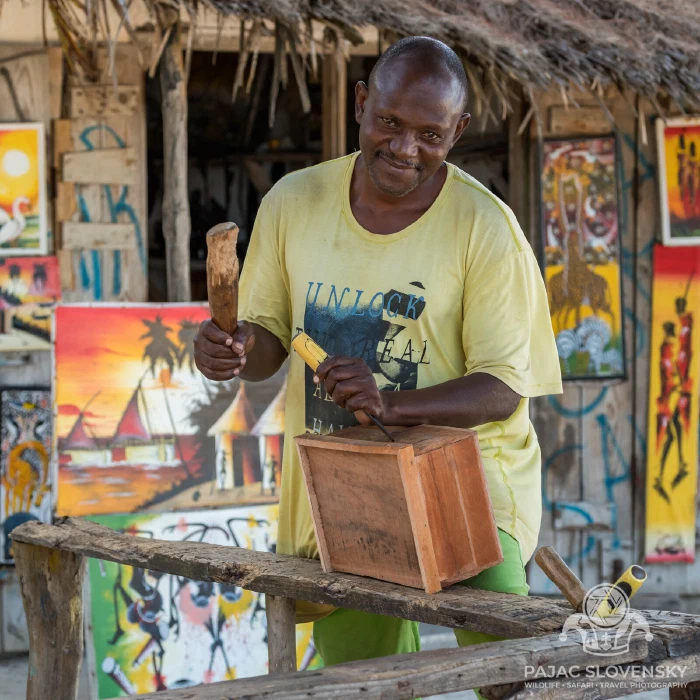
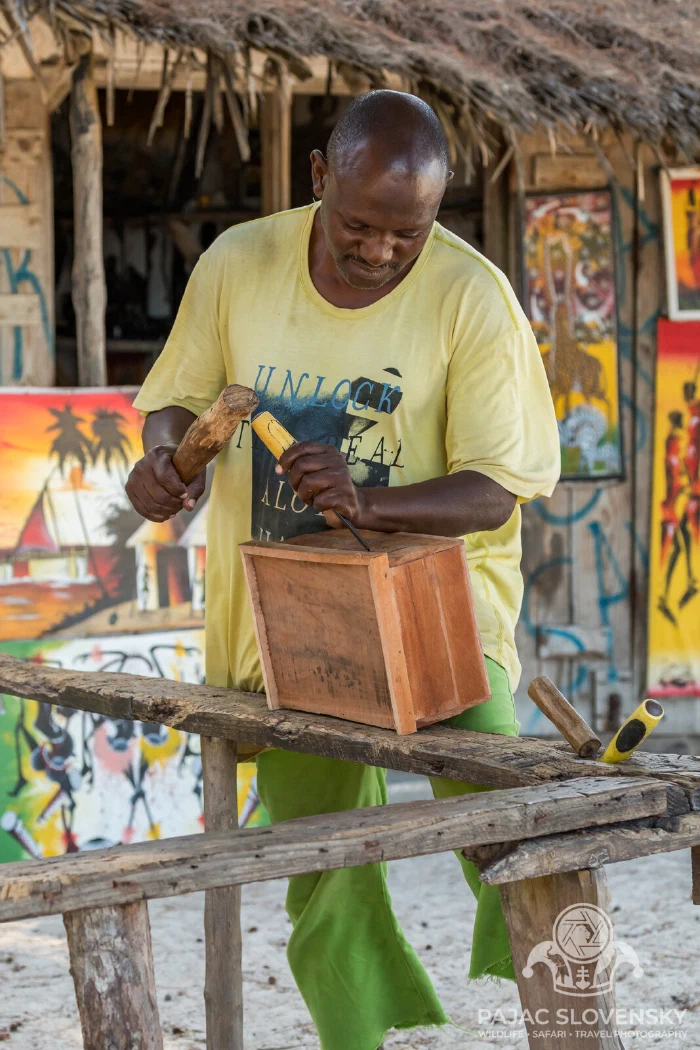
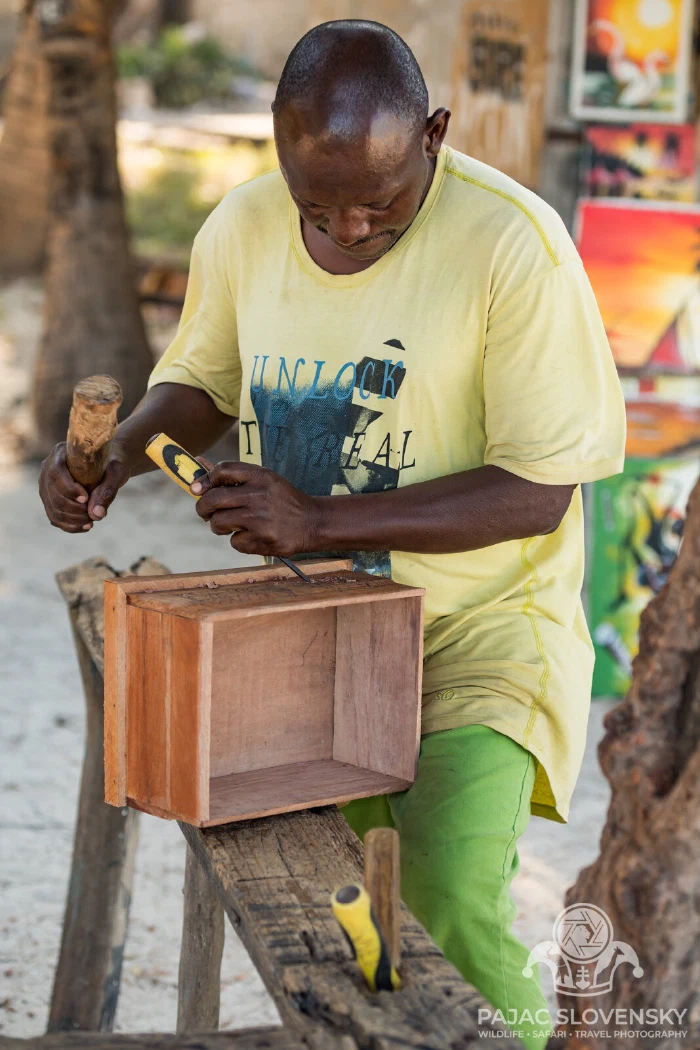
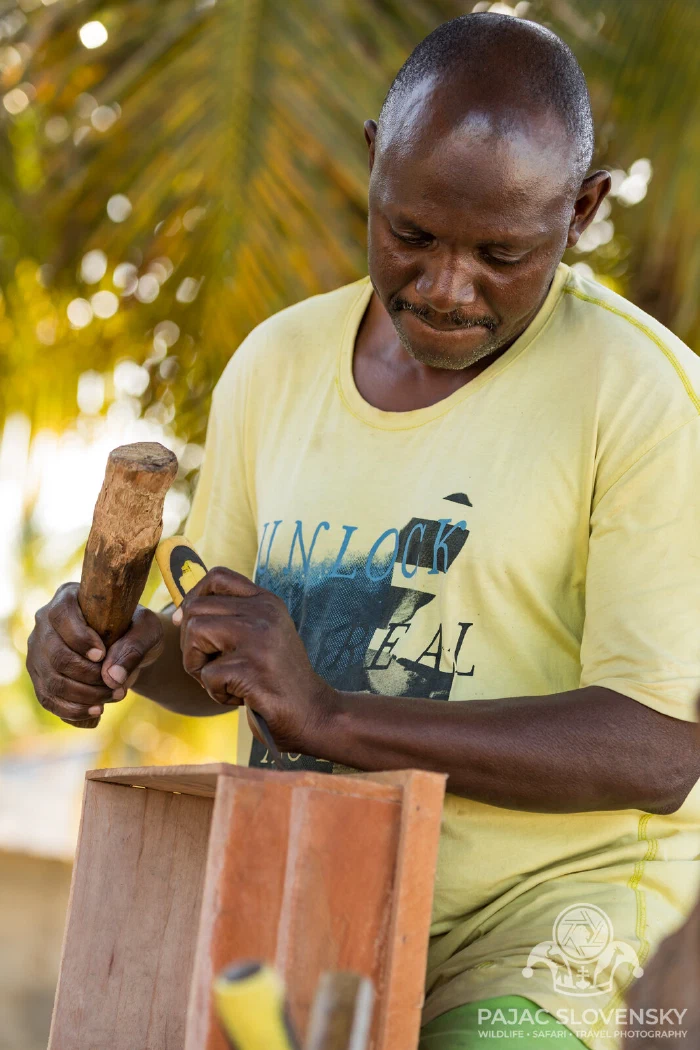
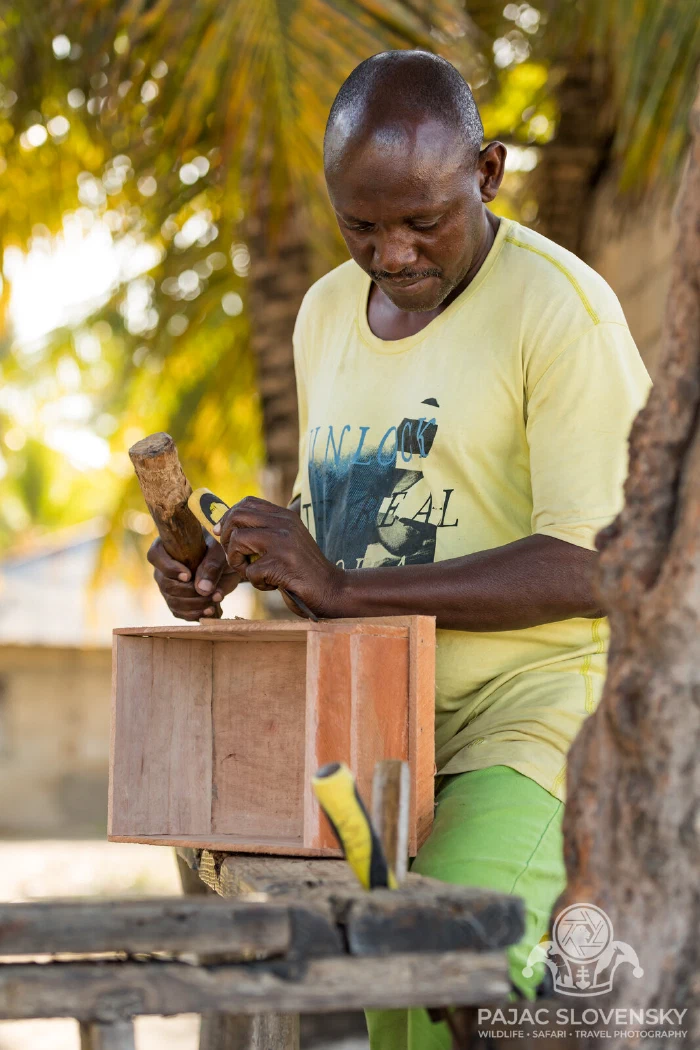
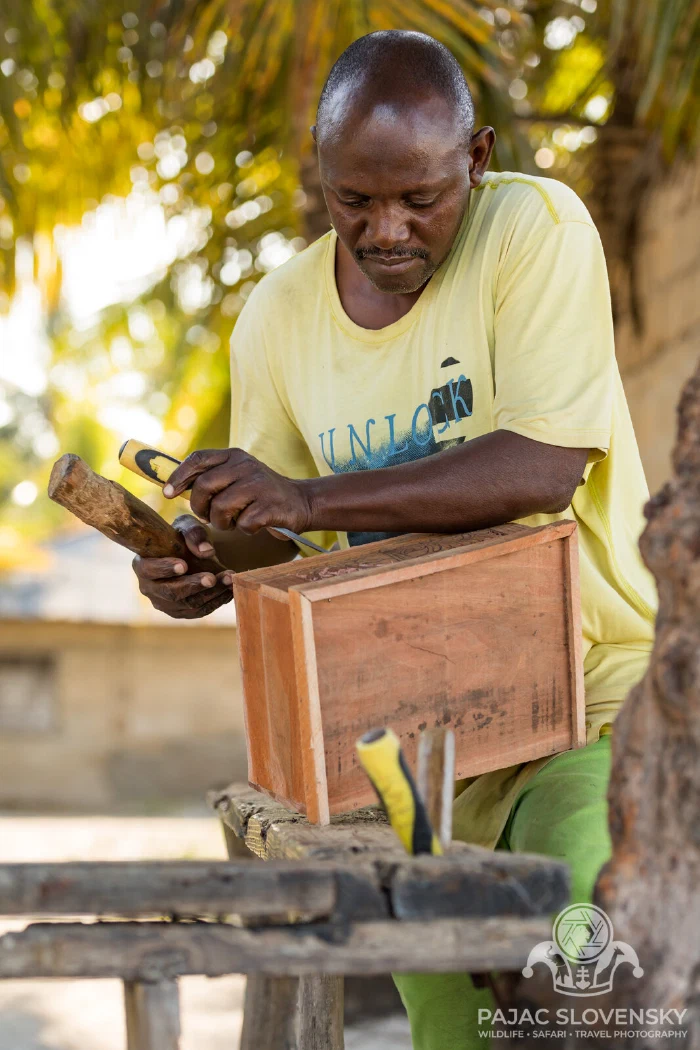
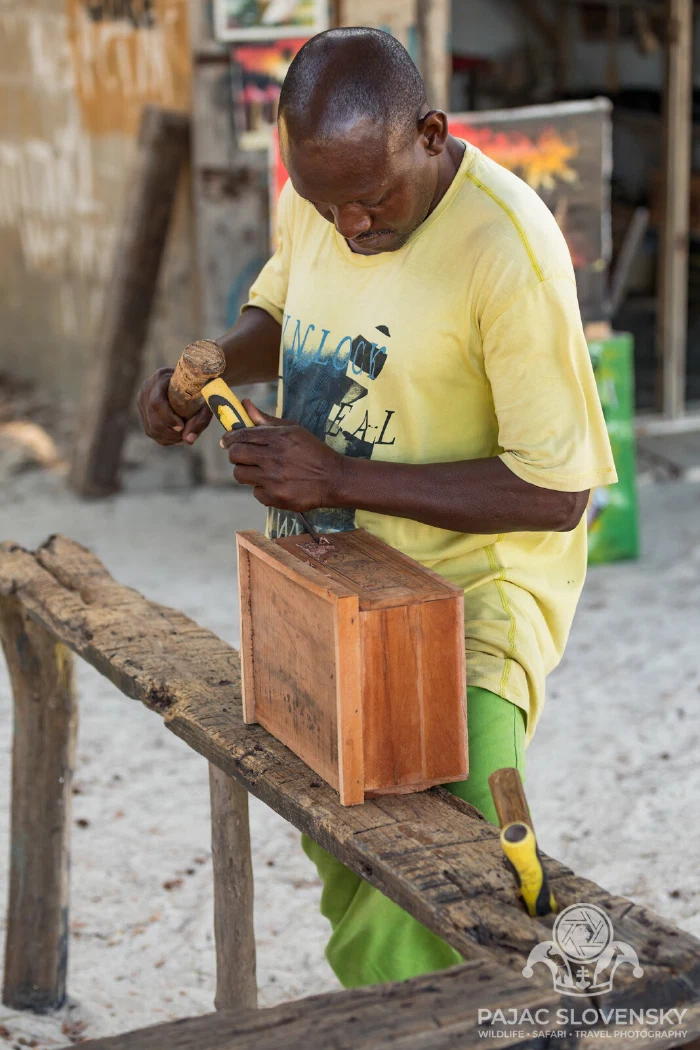
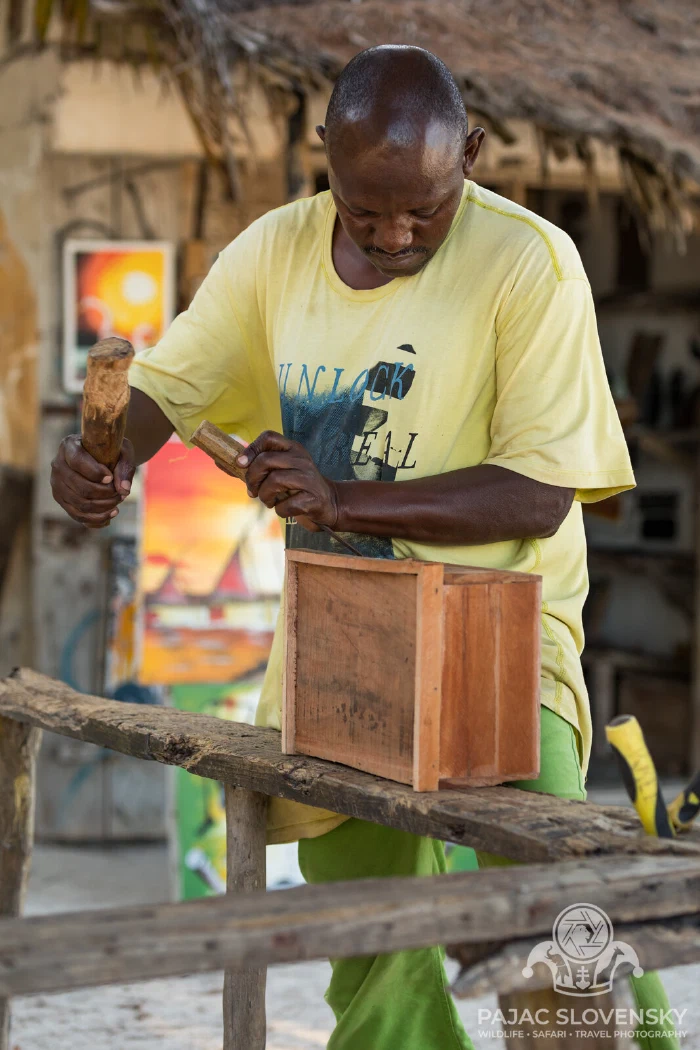
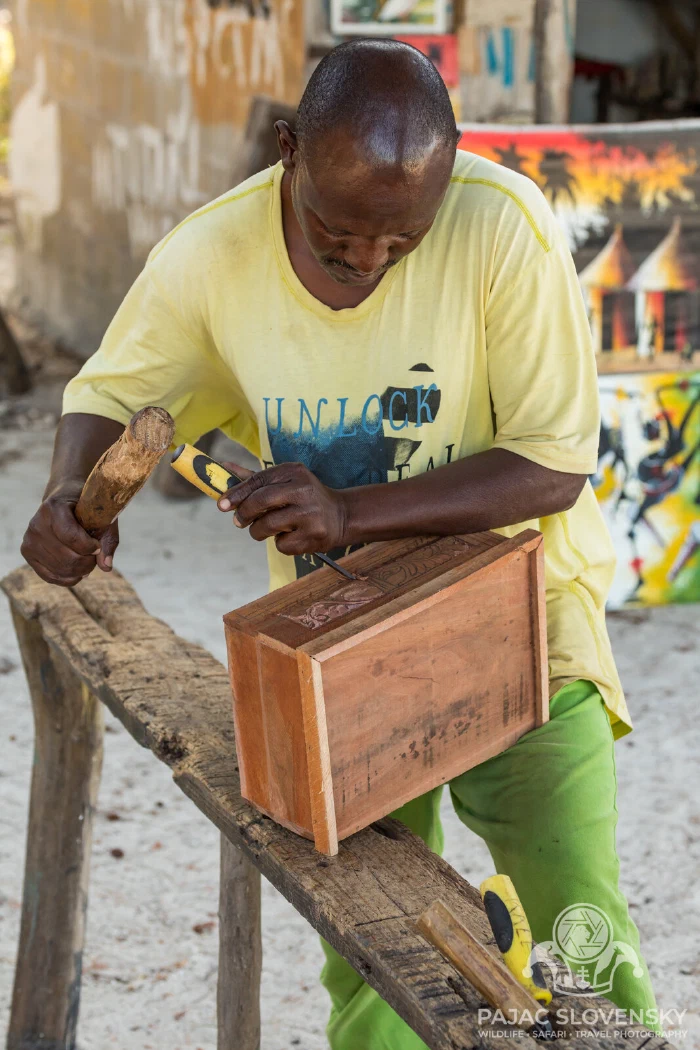
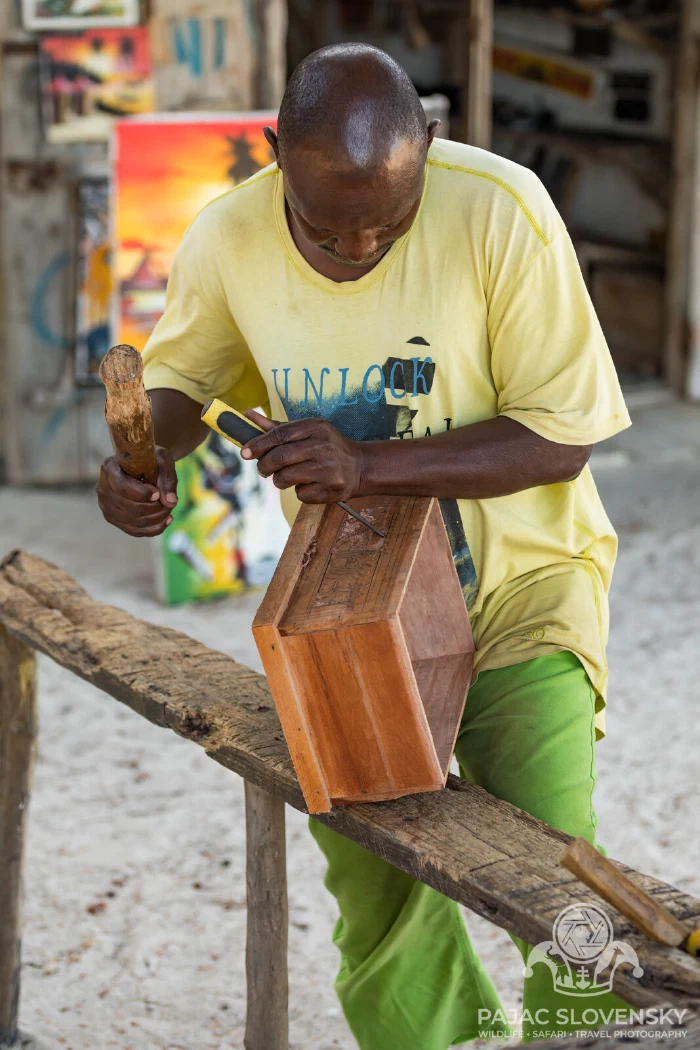
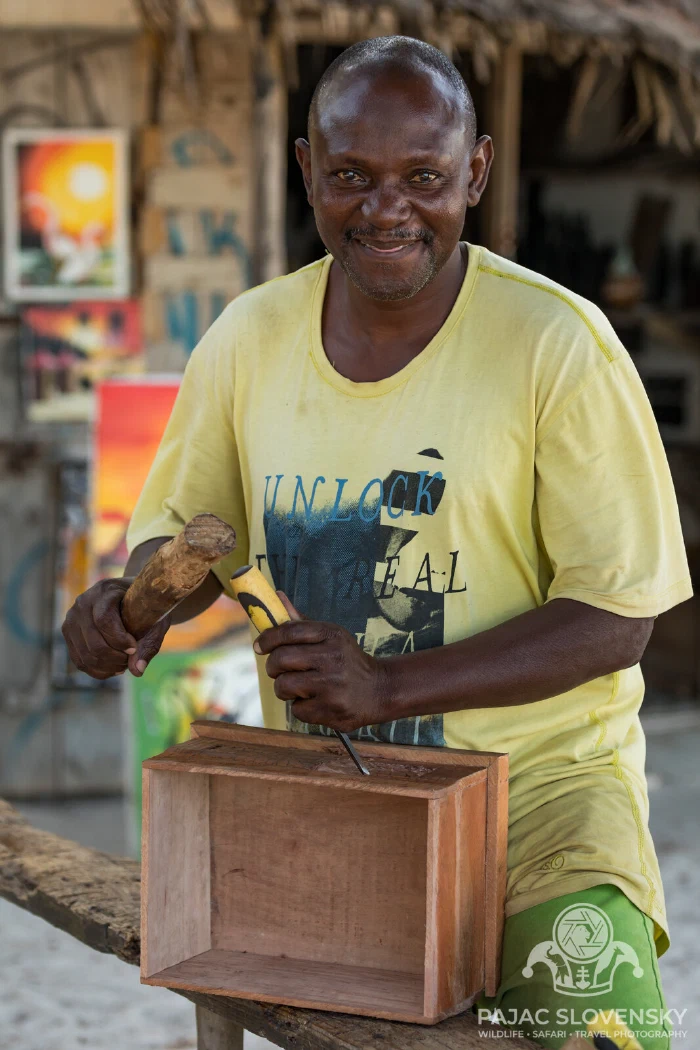
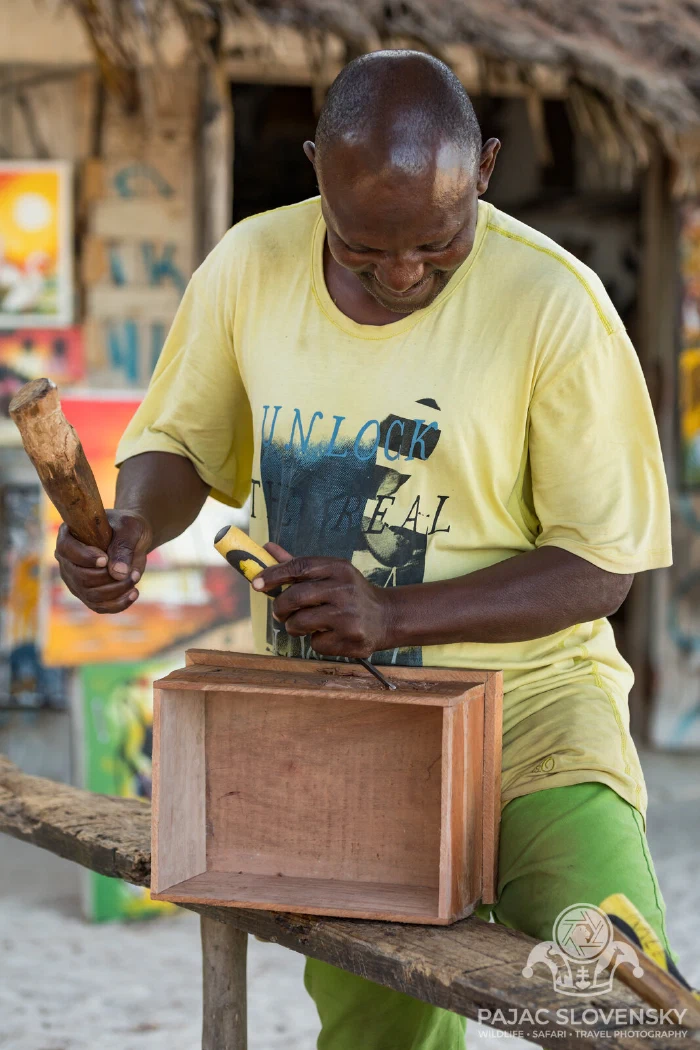
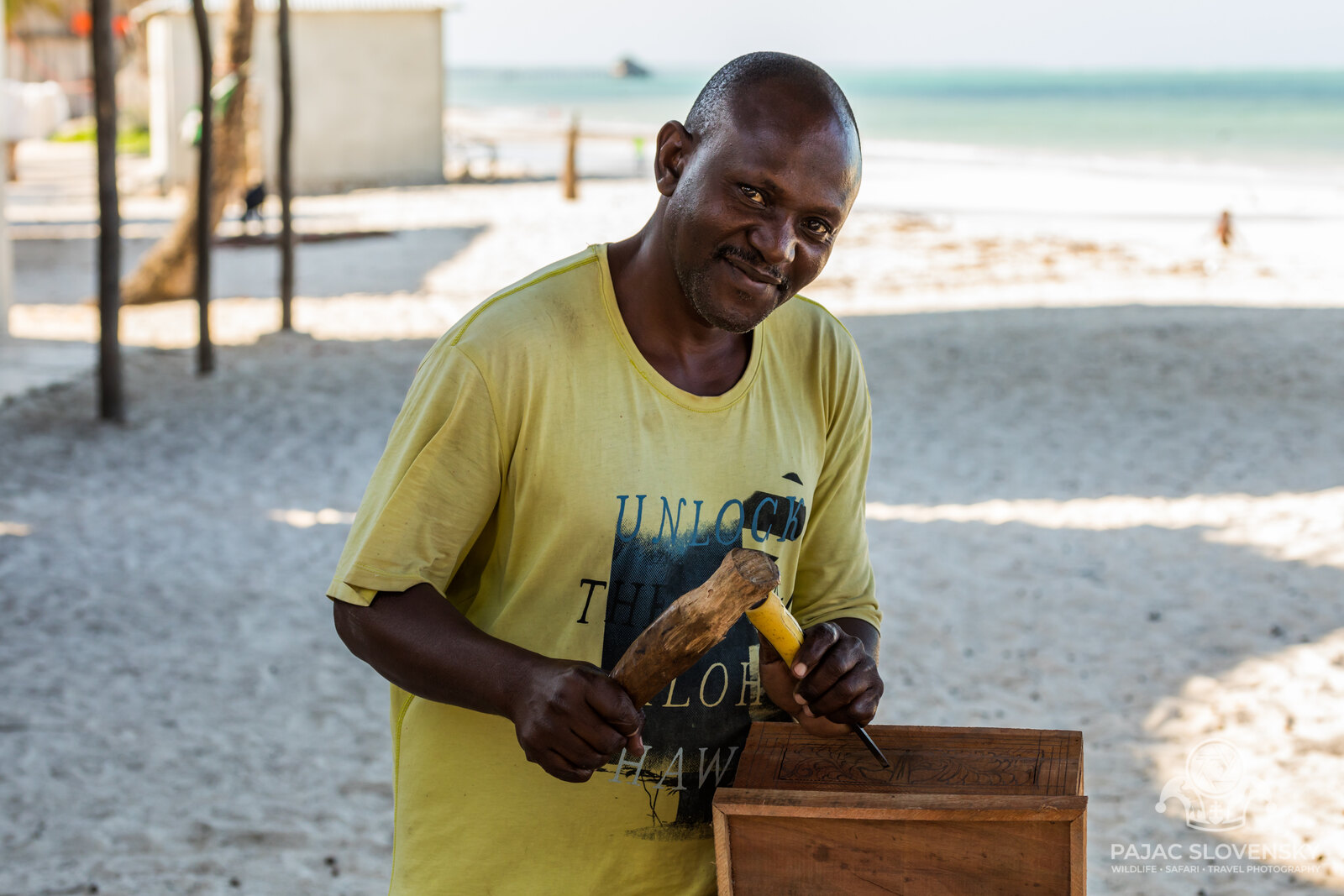
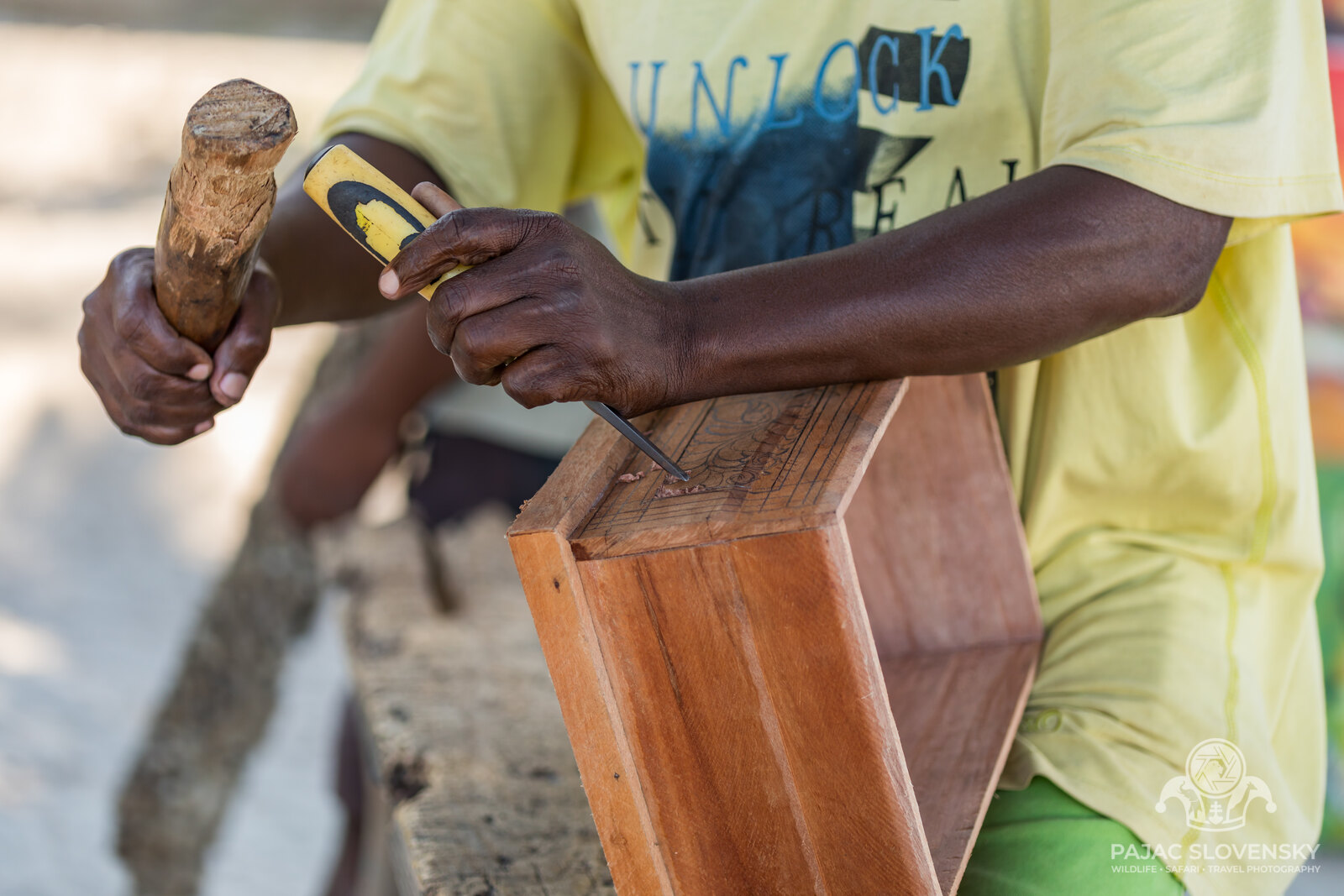
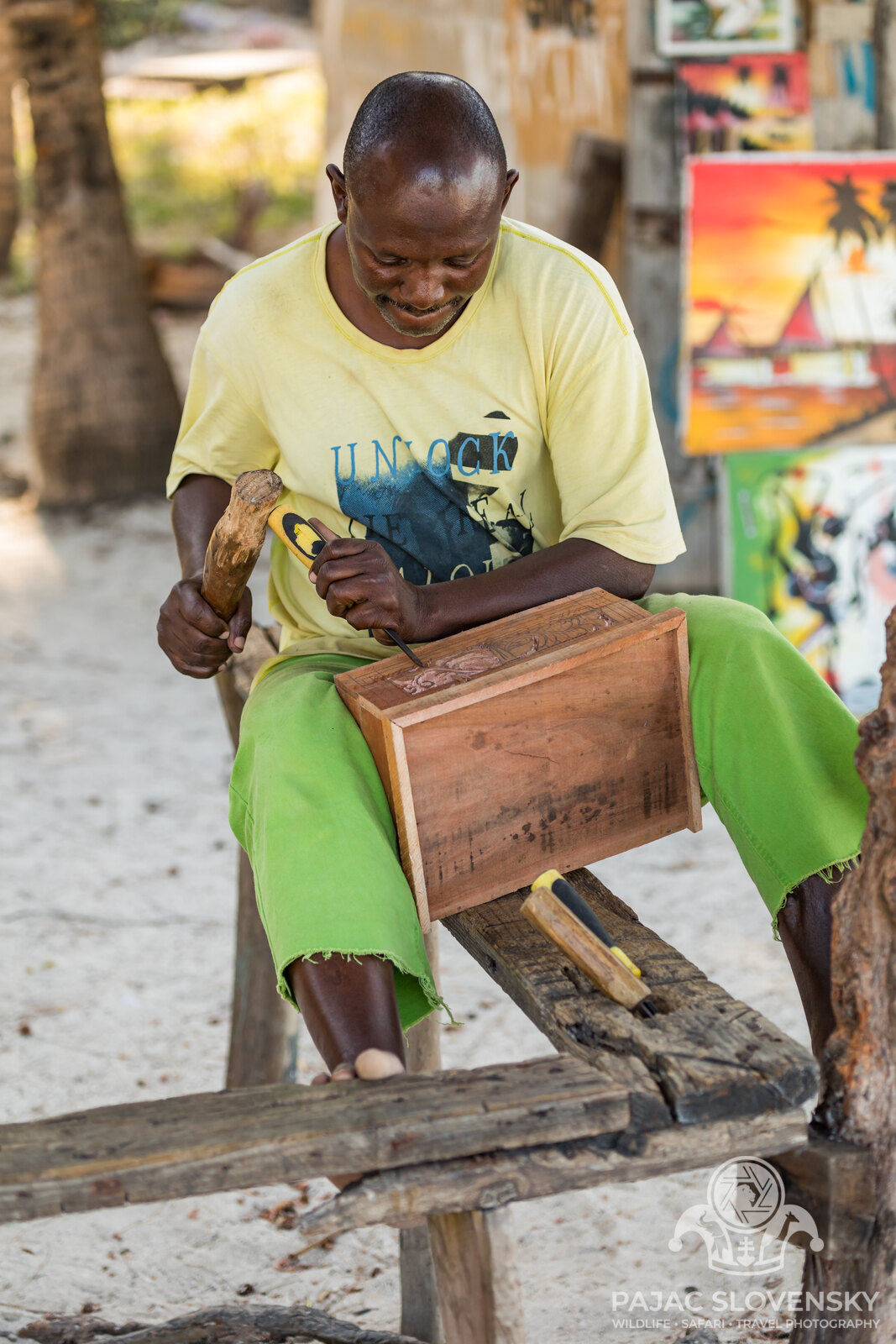
At the bench stood a man in a yellow t-shirt and green trousers with a small carved chest braced against his hip and an adze in his right hand, the old tool with its blade set crosswise like a hoe’s. He was working the chest’s panels one short stroke at a time: brace, cut, turn, brush the chips away, look, cut again.
The carved chest is one of Zanzibar’s oldest crafts. In Stone Town the grand versions — brass-studded, deep-lidded — once held dowries and merchants’ fortunes, and antique ones now sell for serious money. What was taking shape on this bench was the tradition’s beach-born descendant: a chest small enough for a suitcase, carved by hand for whoever wandered down the sand with an afternoon to spend and a little money to leave behind.
I asked with gestures if I could photograph him. He looked at me, looked at the camera, and went back to work — which on Kiwengwa beach translates to yes, but I’m busy. It was the best possible answer. For the next twenty minutes he simply worked, and I simply photographed, and neither of us performed for the other.
Watching Someone Who Knows
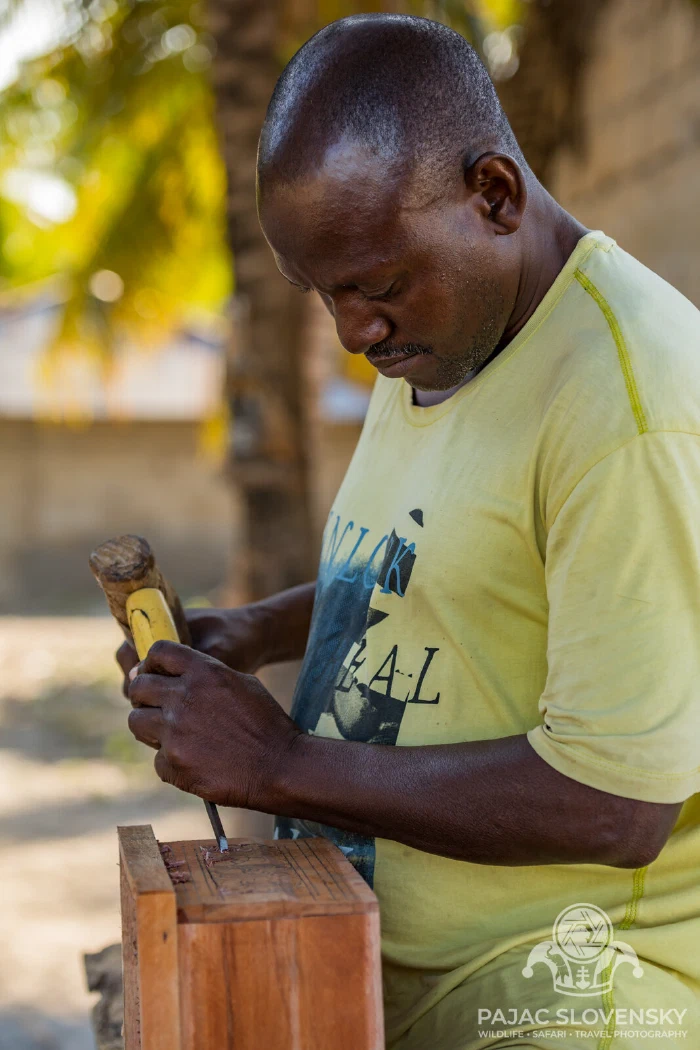
There is a particular pleasure in watching anyone who has done a thing ten thousand times. No stroke was hurried and none was hesitant. He didn’t measure — the measuring had happened years ago, somewhere in the hands themselves. When the light caught the panel you could see the pattern emerging: lines and rosettes in the old Swahili style, cut freehand into wood the colour of the evening to come.
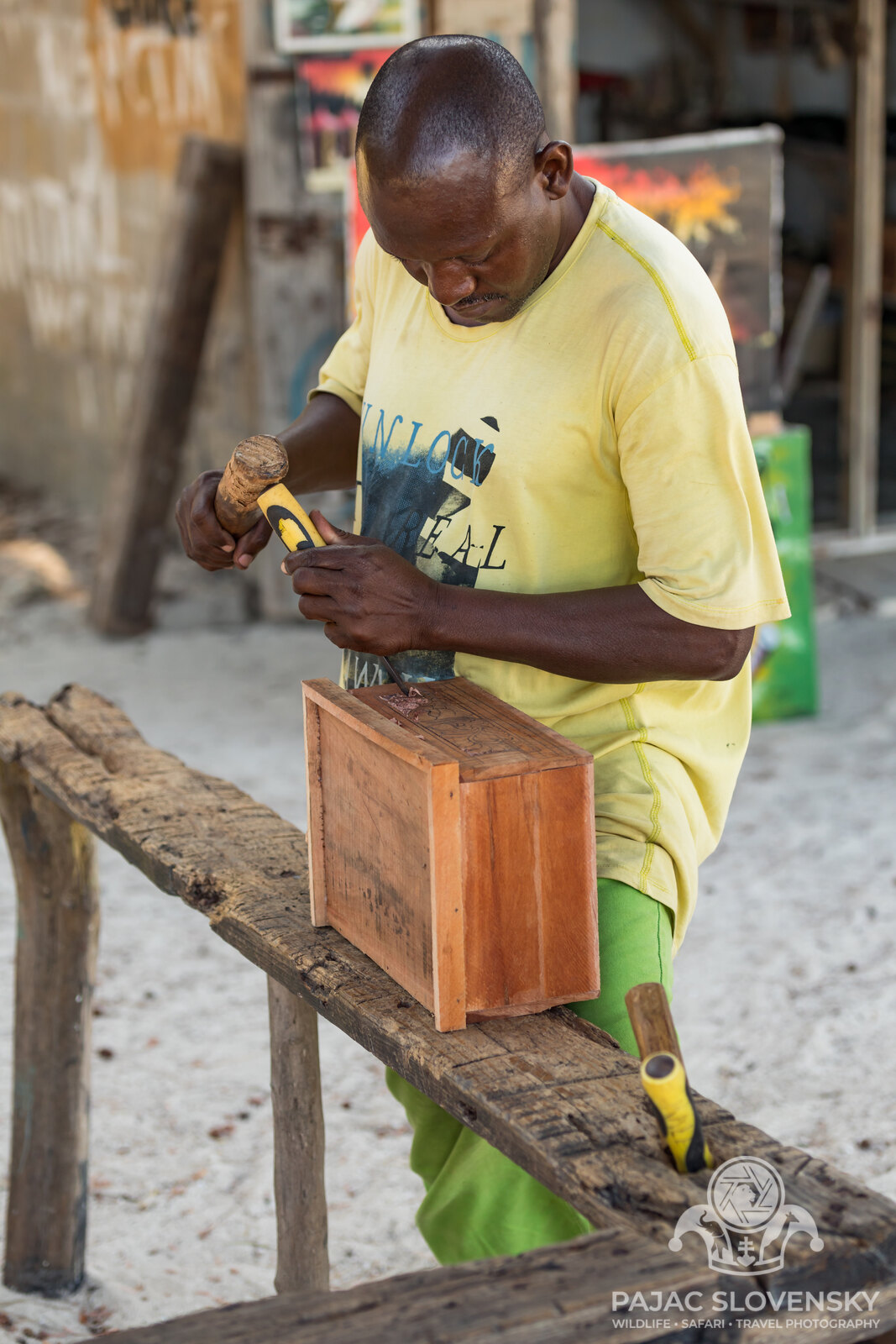
Photographing craft is close kin to photographing wildlife, it turns out. You wait for behaviour. You learn the rhythm — brace, cut, turn — and you time the shutter to the moment of stillness at the top of each stroke. The 90mm macro I’d brought for the next day’s spice farm stayed in the bag; this was a job for standing quietly in one place and letting a man forget you.
And then, at some point deep into the session, he looked up — not because I’d done anything, but because something amused him — and laughed, chest in hand, wood chips on his forearms.
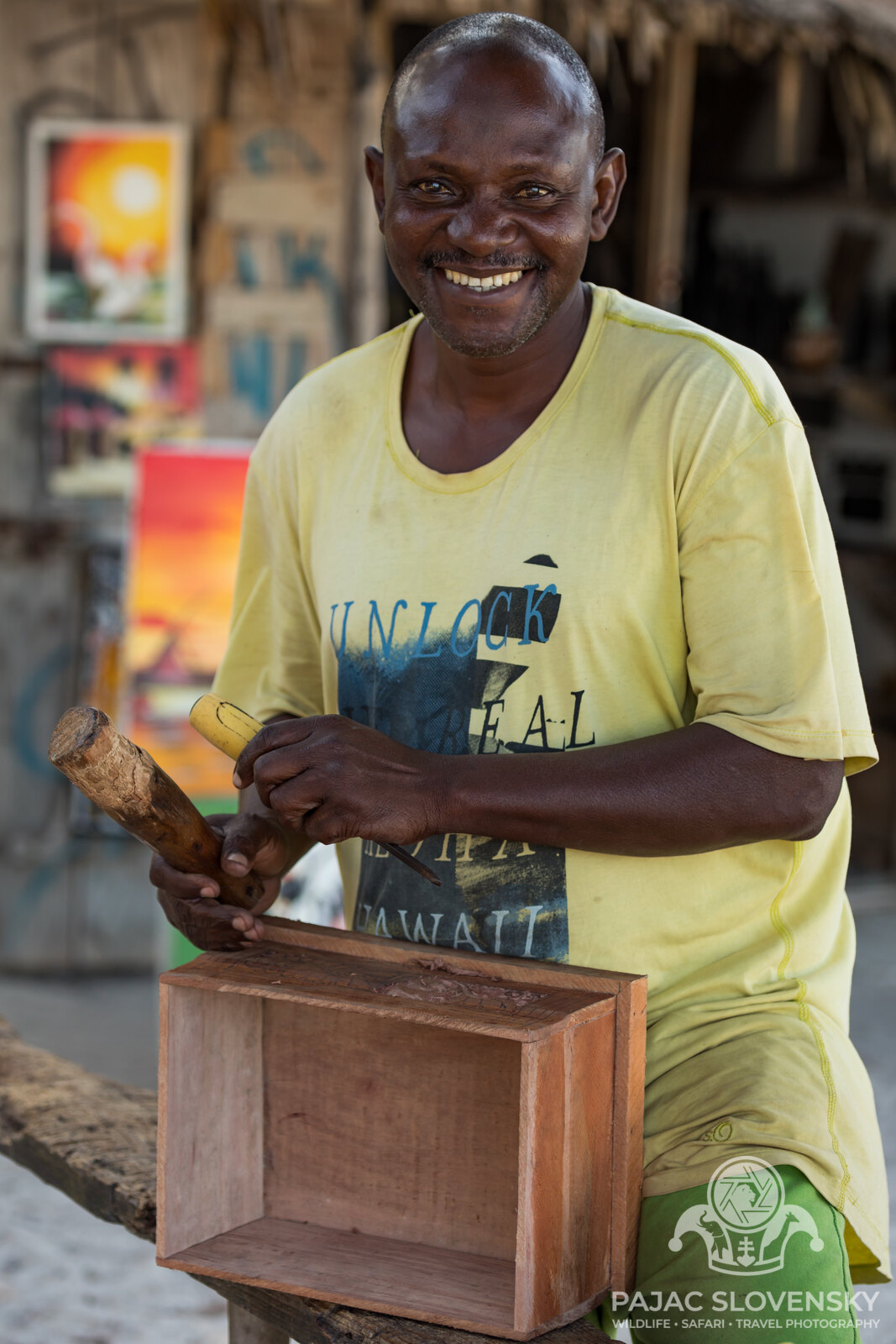
The Chest
By the time I lowered the camera, the chest was very nearly a chest — lid trued, panels carved, edges waiting for oil. I have no photograph of the money changing hands, because some things you do with the camera down. The chest came home in the duffel, wrapped in a beach towel, and it sits within sight of me as I write this — still faintly smelling of wood and salt, still holding, as far as I’m concerned, that whole October afternoon on Kiwengwa beach.
The next morning we drove inland to the spice farm at Dole, and the trip rolled on. But if you ever find yourself on Kiwengwa beach with an afternoon to spare, walk past the loungers and keep going — somewhere between the palms and the tide line, the real souvenirs are still being made by hand.
More from this trip
- The Carpenter of Kiwengwa — all 20 photographs from the session, in order
- Zanzibar Spice Farm — the next morning, among the cloves and cacao
- Zanzibar — the earlier visit that first brought me to Kiwengwa
Photographed one October afternoon in 2017 on the beach at Kiwengwa, Zanzibar. Photographs in the text open in the viewer.