In October 2017 we set out from Nairobi on a two-week loop across two countries and five great parks of the East African Rift — Nakuru, the Masai Mara, the Serengeti, Ngorongoro and Amboseli. Every park had its own character and its own light; this is the trip the way it unfolded, park by park.
Click a pin to browse photos from that stop — every location links through to its gallery.
Day 1–2 · Lake Nakuru
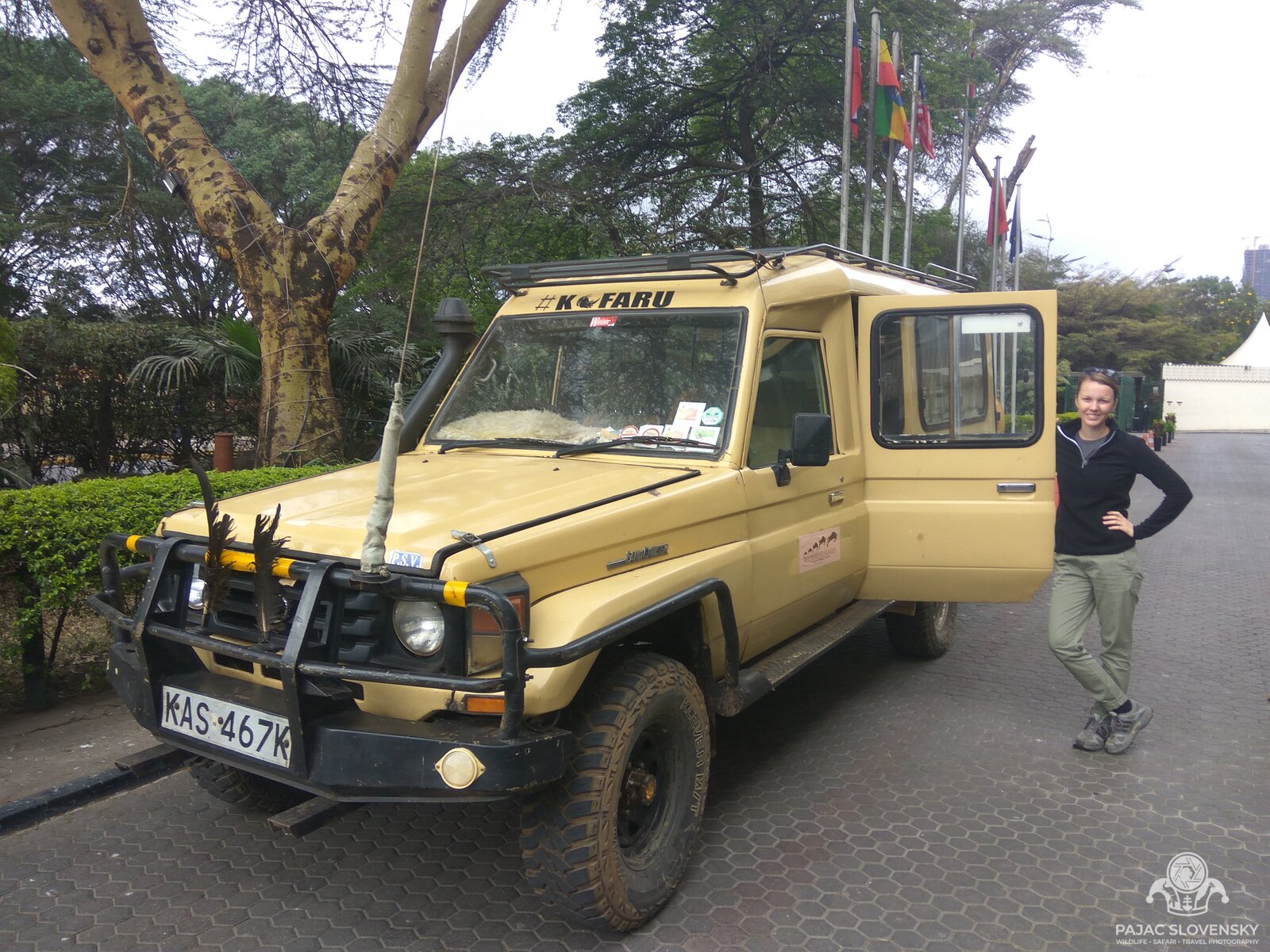
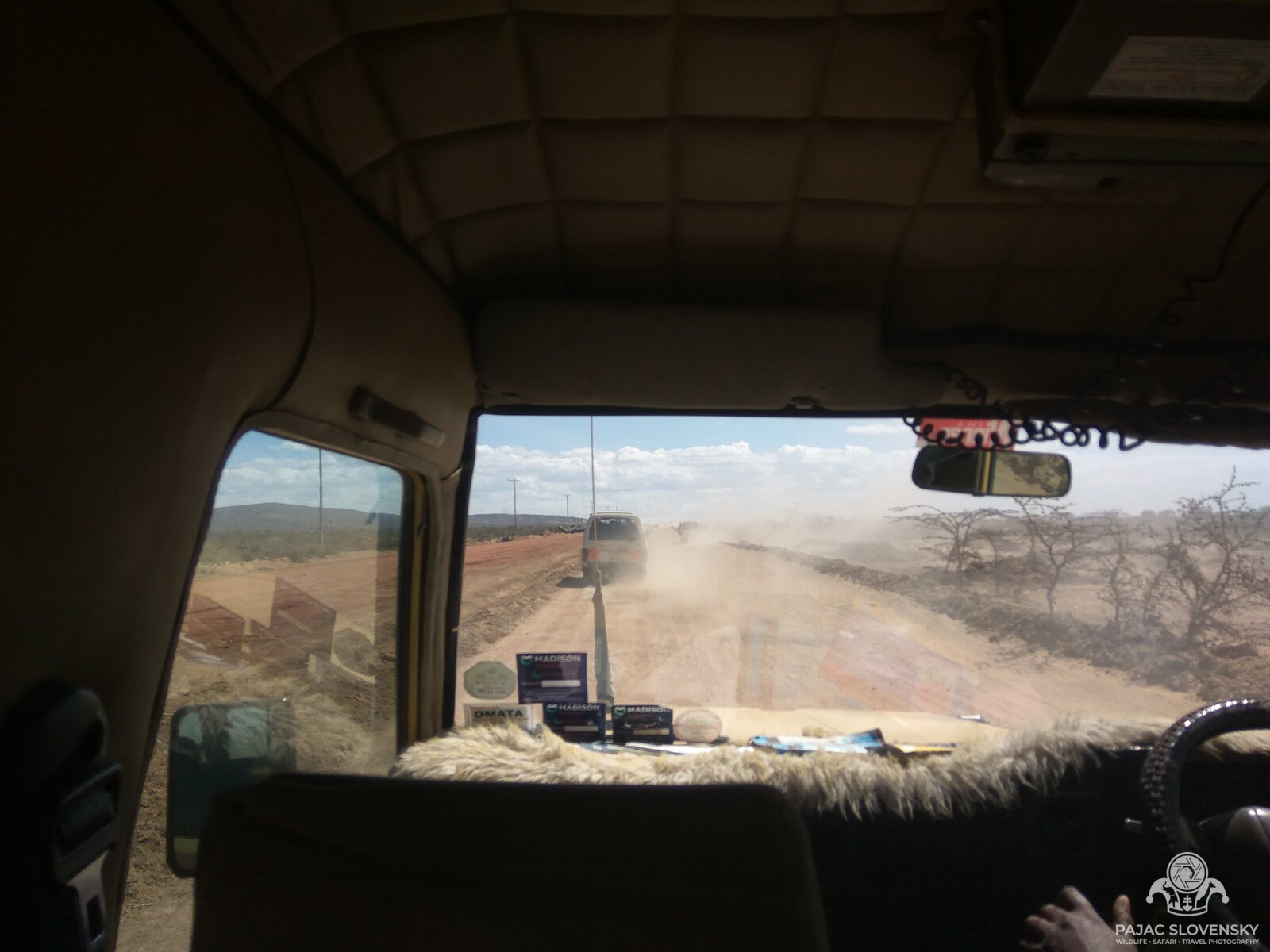
The trip had a face, and it was beige: a long-wheelbase Land Cruiser with a pop-up roof, a snorkel, and space for more camera gear than clothing. It was waiting outside the hotel on the first morning, and for the next two weeks it was home.
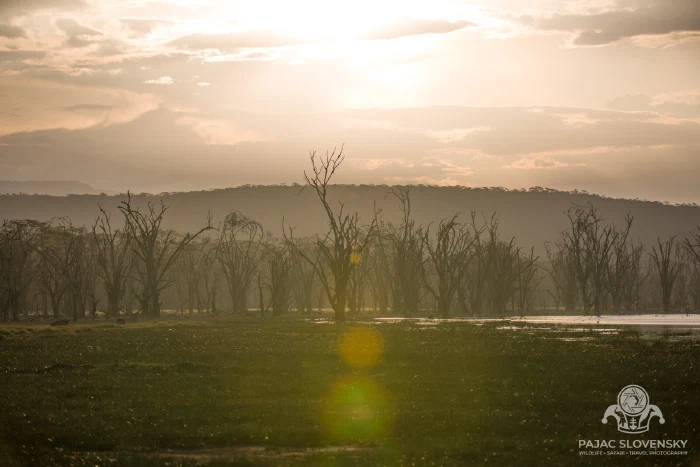
We left Nairobi heading northwest, dropping down the wall of the Rift Valley past Lake Naivasha to Lake Nakuru, a shallow soda lake famous for its flamingos and its rhino sanctuary. We reached the western shore in the middle of the afternoon on 1 October.
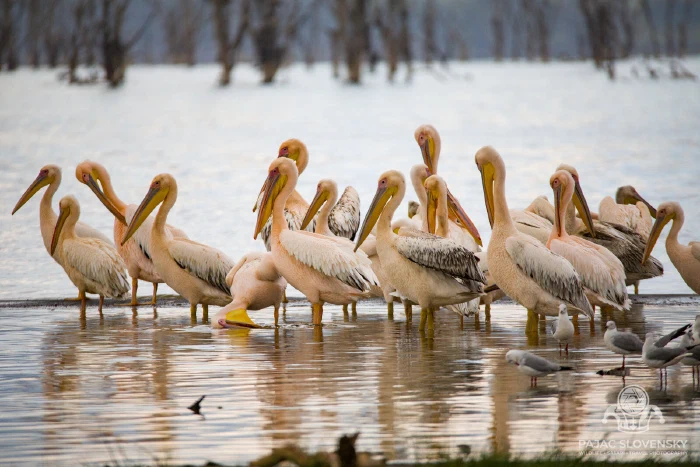
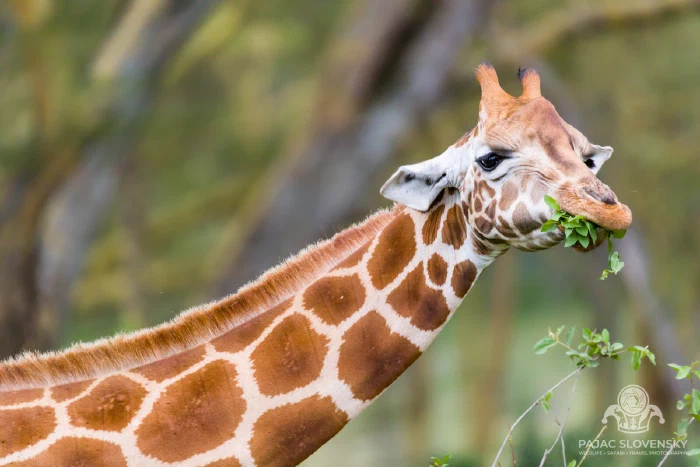
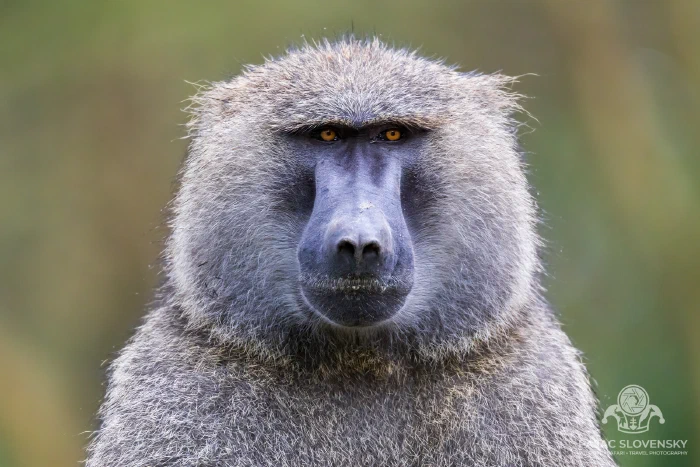
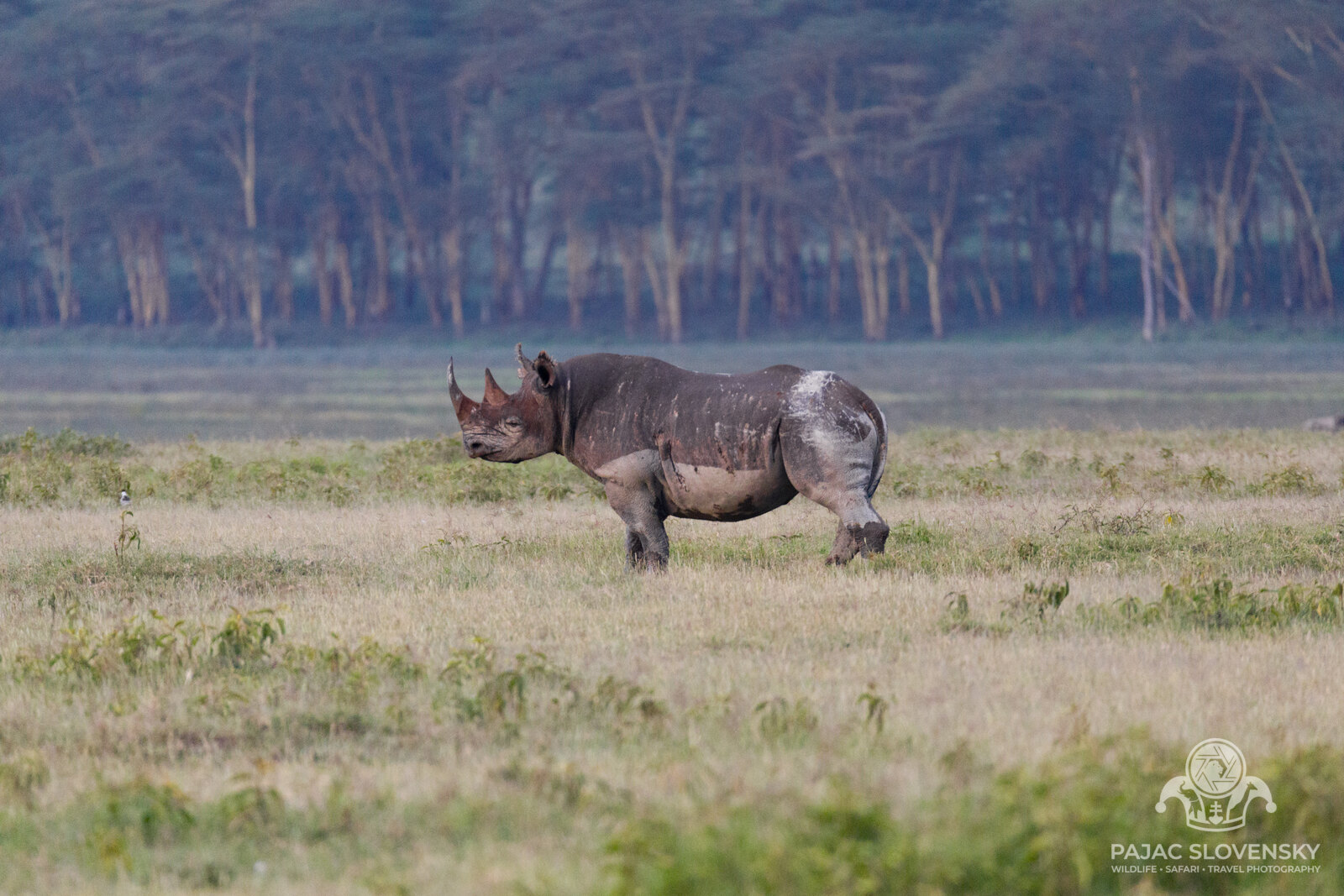
Nakuru is a place of easy abundance. Great white pelicans loaf along the waterline in their hundreds; the yellow-barked fever trees are full of olive baboons; and the park is one of the last strongholds of the endangered Rothschild’s giraffe, easy to pick out by its clean white lower legs. But the animal you come for is the rhino. By late afternoon we found a southern white rhino grazing the short grass by the lake, unbothered, prehistoric.
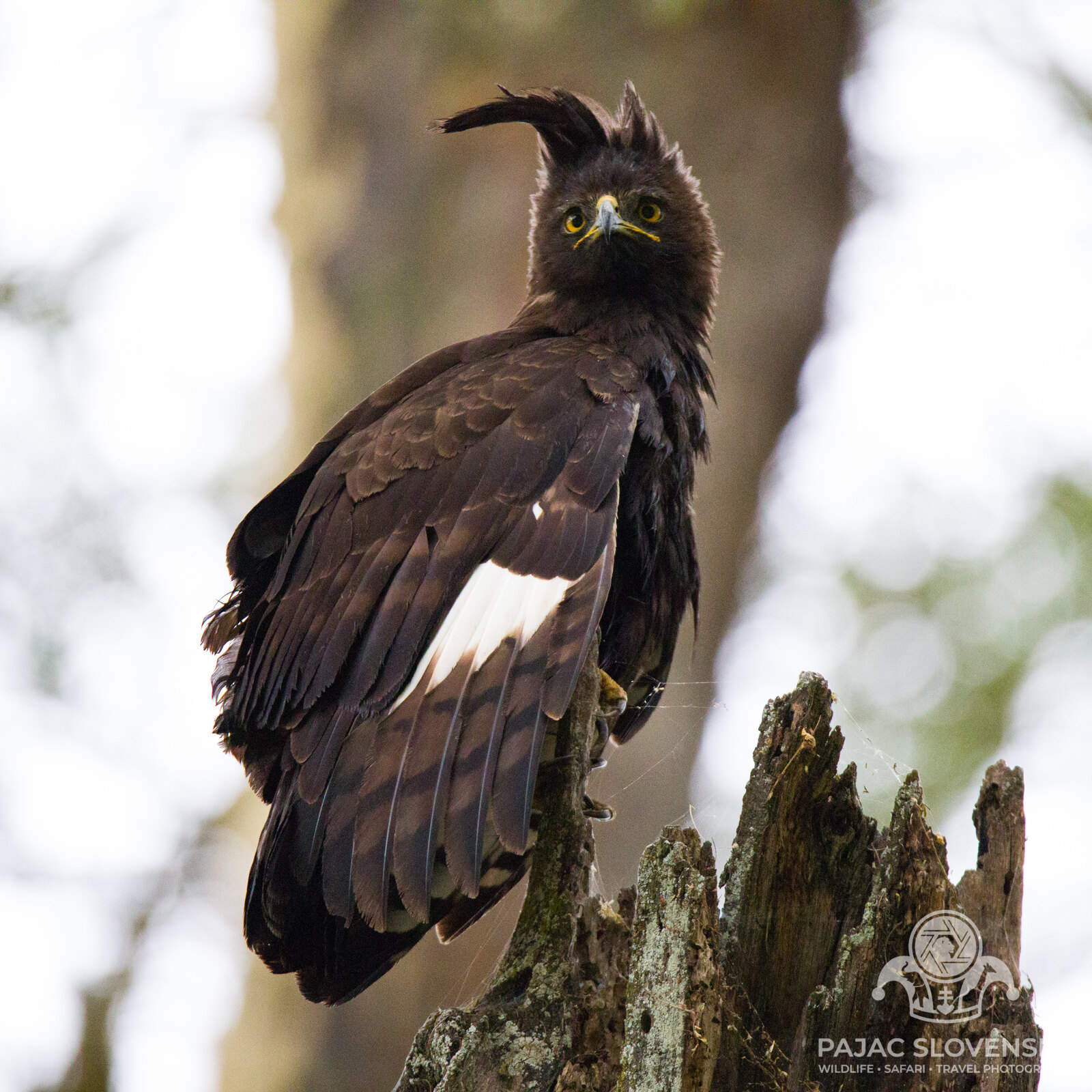
The lake is as much a bird place as a mammal place. Between the pelicans and the last of the flamingos, an African fish eagle kept watch from a dead stump above the shallows — the same piercing, two-note cry you hear in every film ever made about Africa, delivered in person.
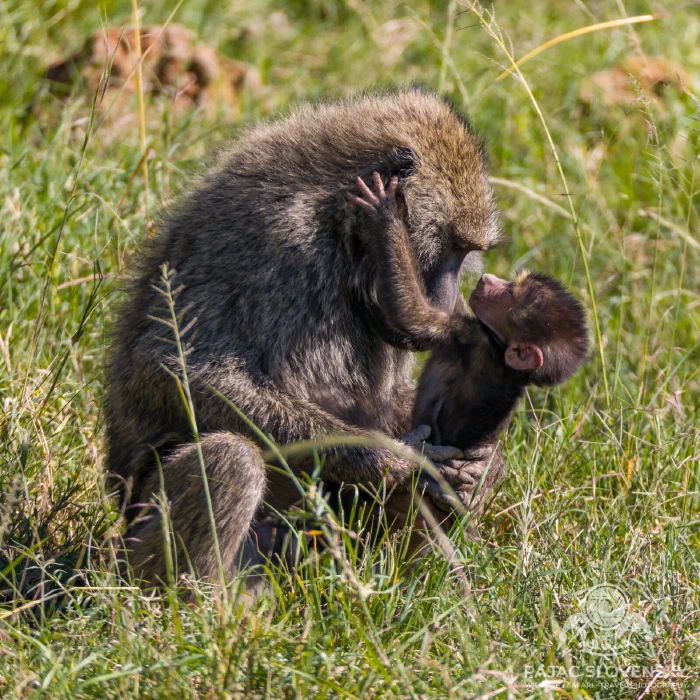
The next morning started early, in cool flat light: buffalo on the flats, and a baboon troop working through the wet grass — mothers grooming infants at arm’s length from the vehicle, entirely indifferent to us. By mid-morning we had turned south for the Mara.
Day 2–4 · Masai Mara
The drive into the Masai Mara National Reserve took most of 2 October; by mid-afternoon we were in the eastern part of the reserve near Sekenani. This is Kenya’s slice of the greater Mara–Serengeti ecosystem, and in early October the tail of the wildebeest migration was still scattered across it.
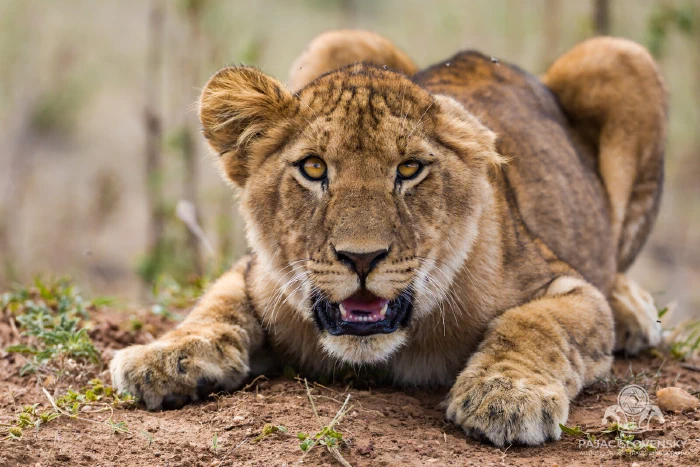
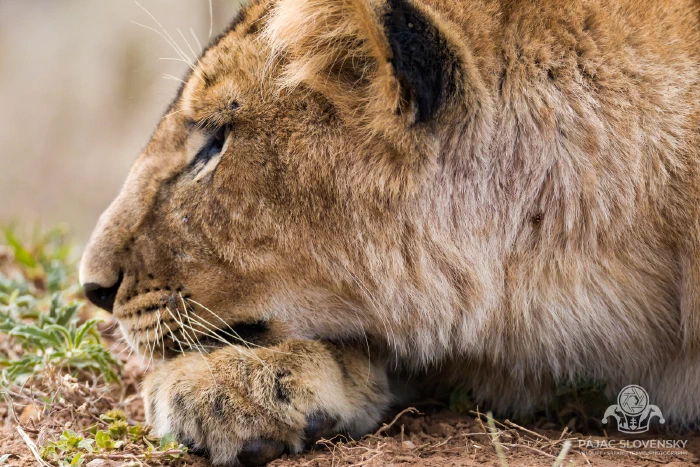
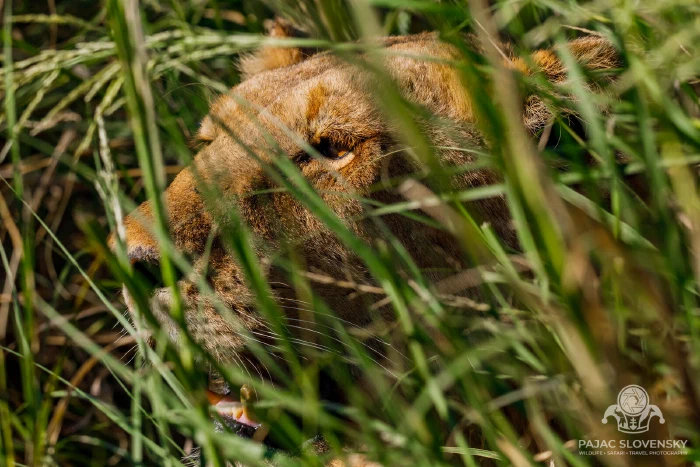
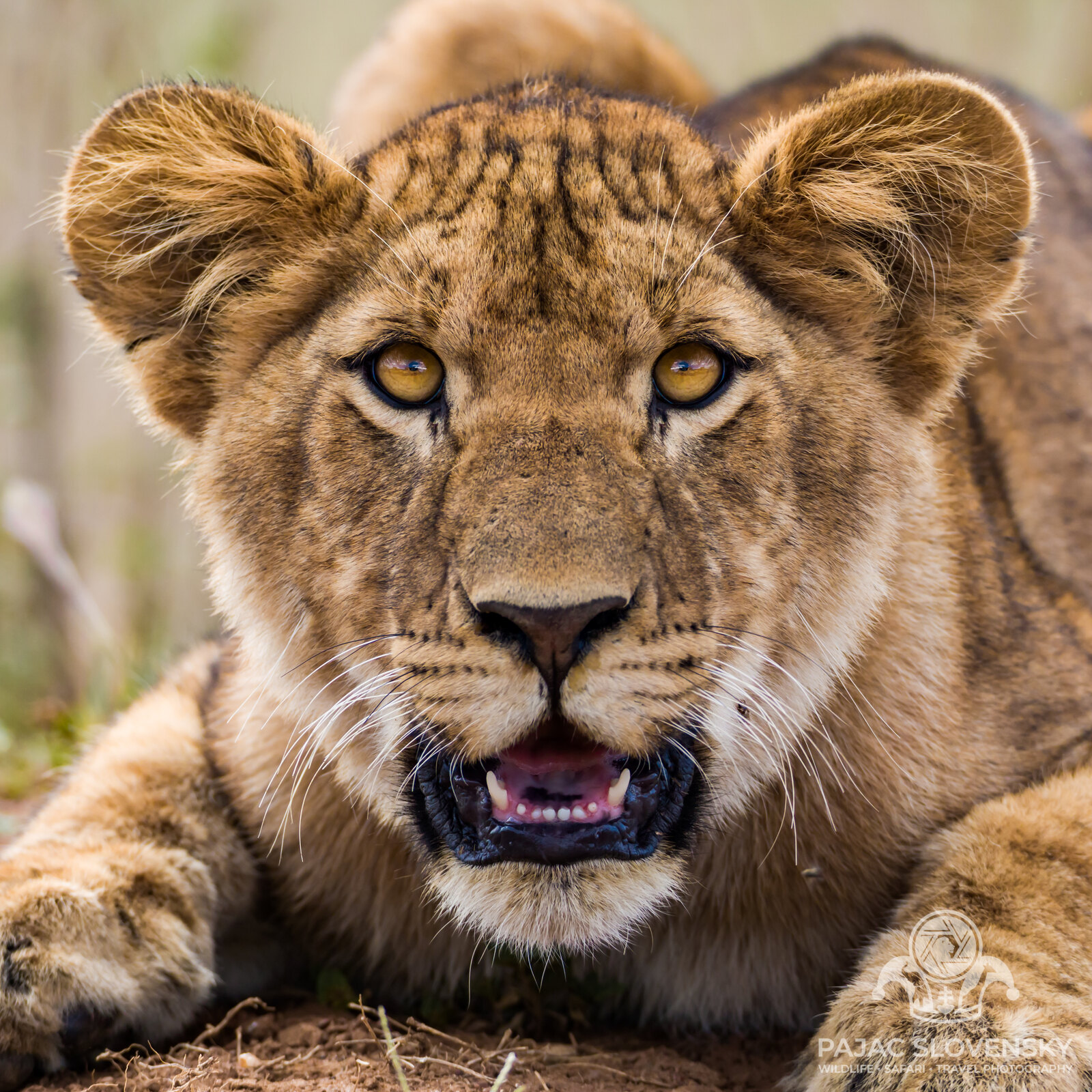
The Mara delivered cats immediately — and close. Within the first hour a young lioness rose out of the grass a few metres from the vehicle and simply looked at me. Through a long lens at that distance a lion’s face stops being scenery and becomes a presence: the amber of the iris, the torn notch in one ear. That stare emptied my head of everything except the shutter.
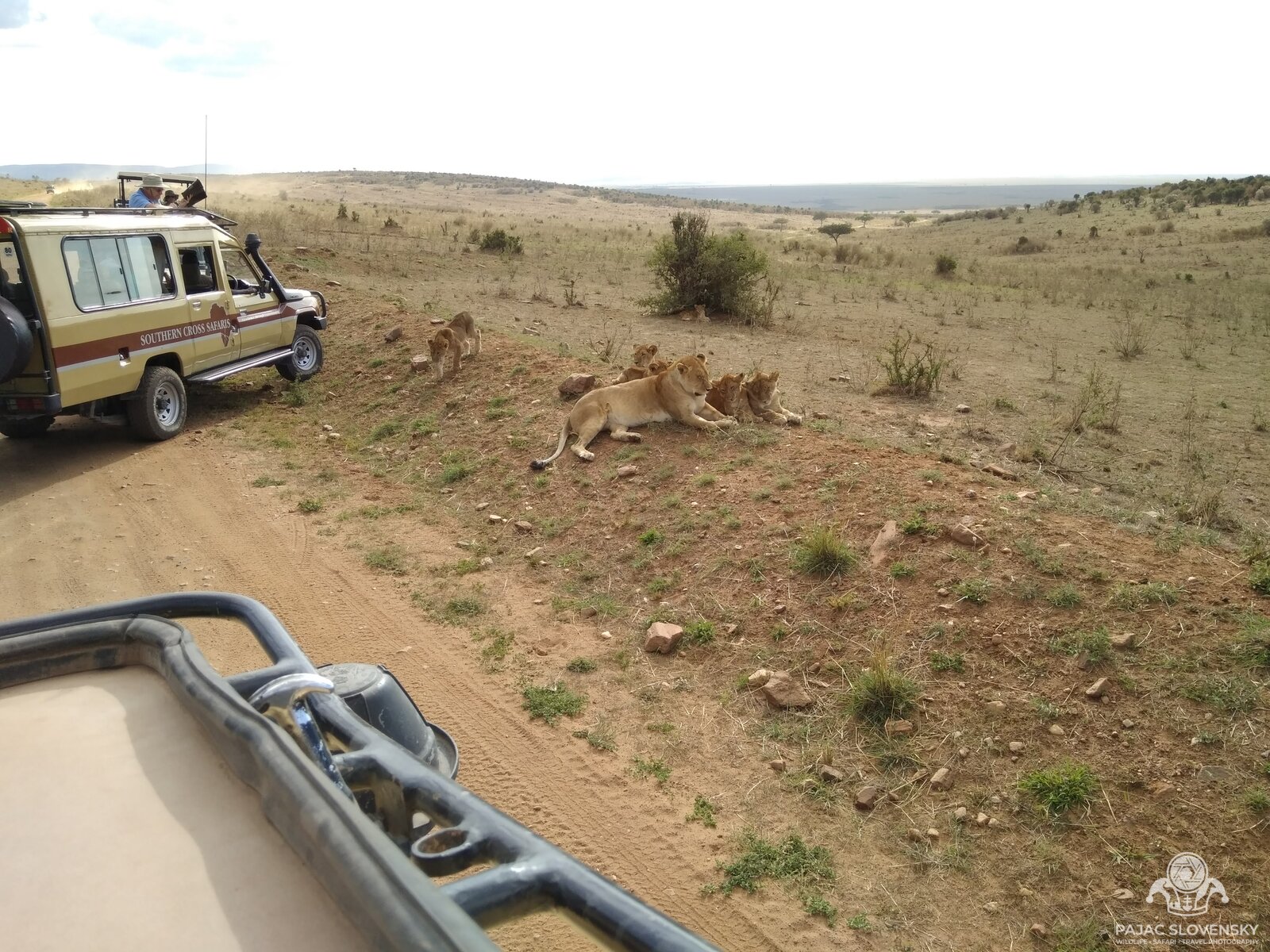
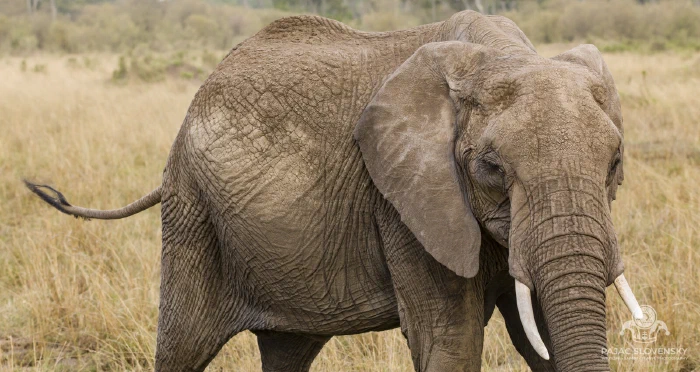
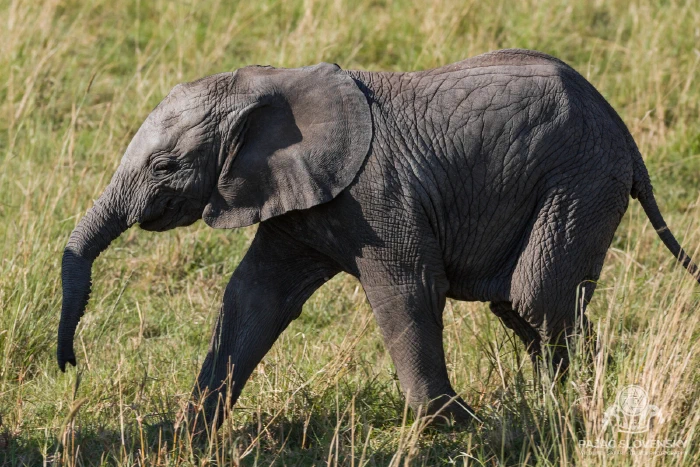
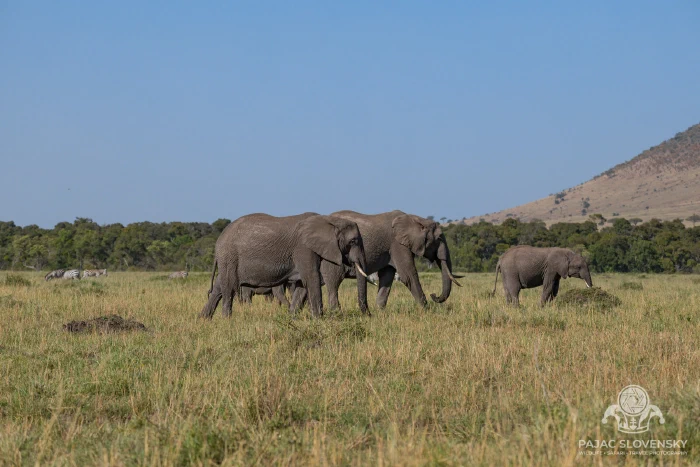
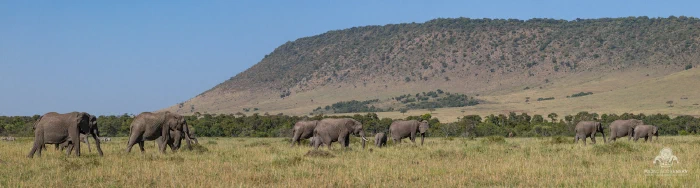
At dawn on 3 October we found a pride bunched together against the cold, and over the following morning the elephants took over: family after family drifting across the grass beneath the long green wall of the Oloololo escarpment, the last of them photographed near the Mara River.
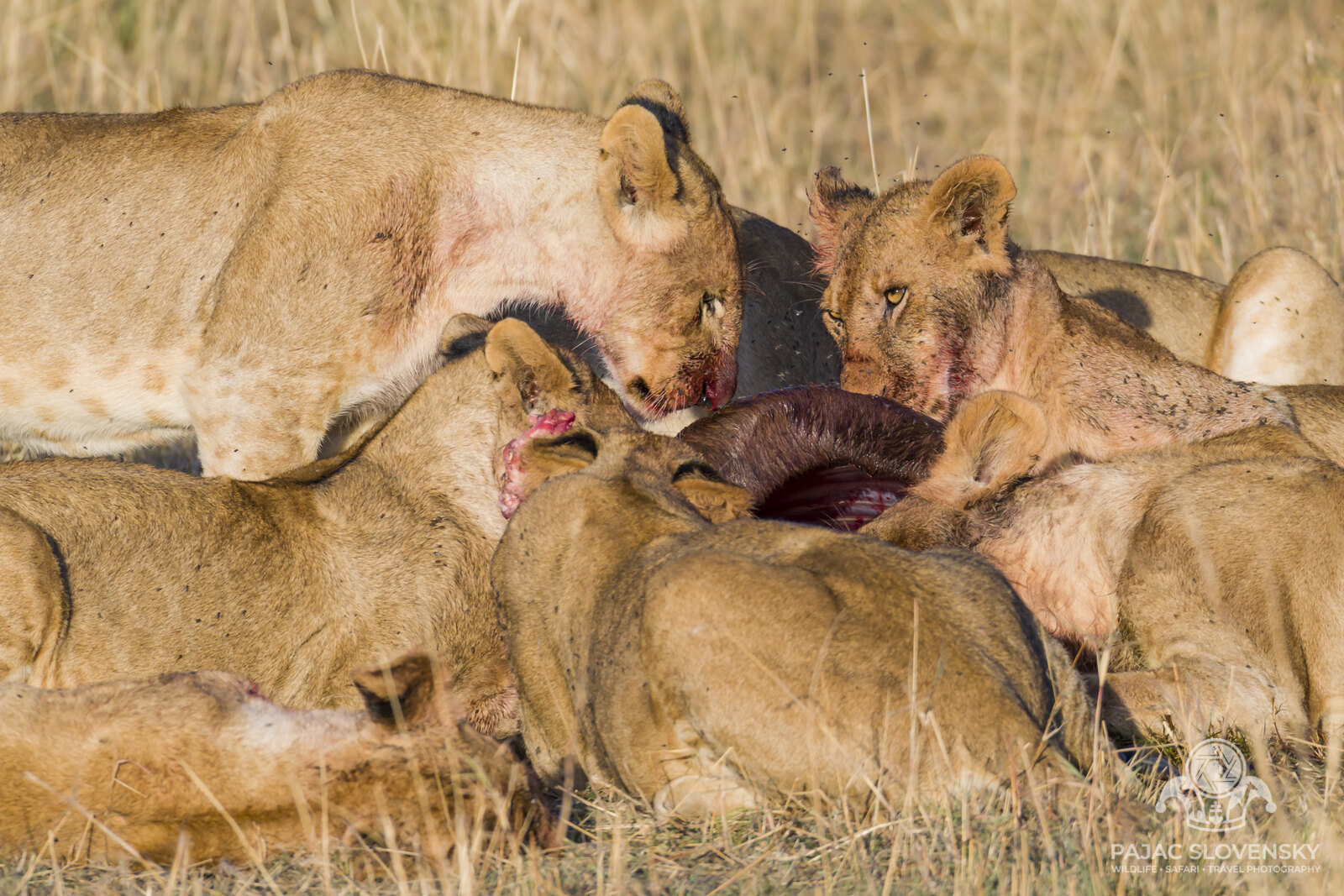
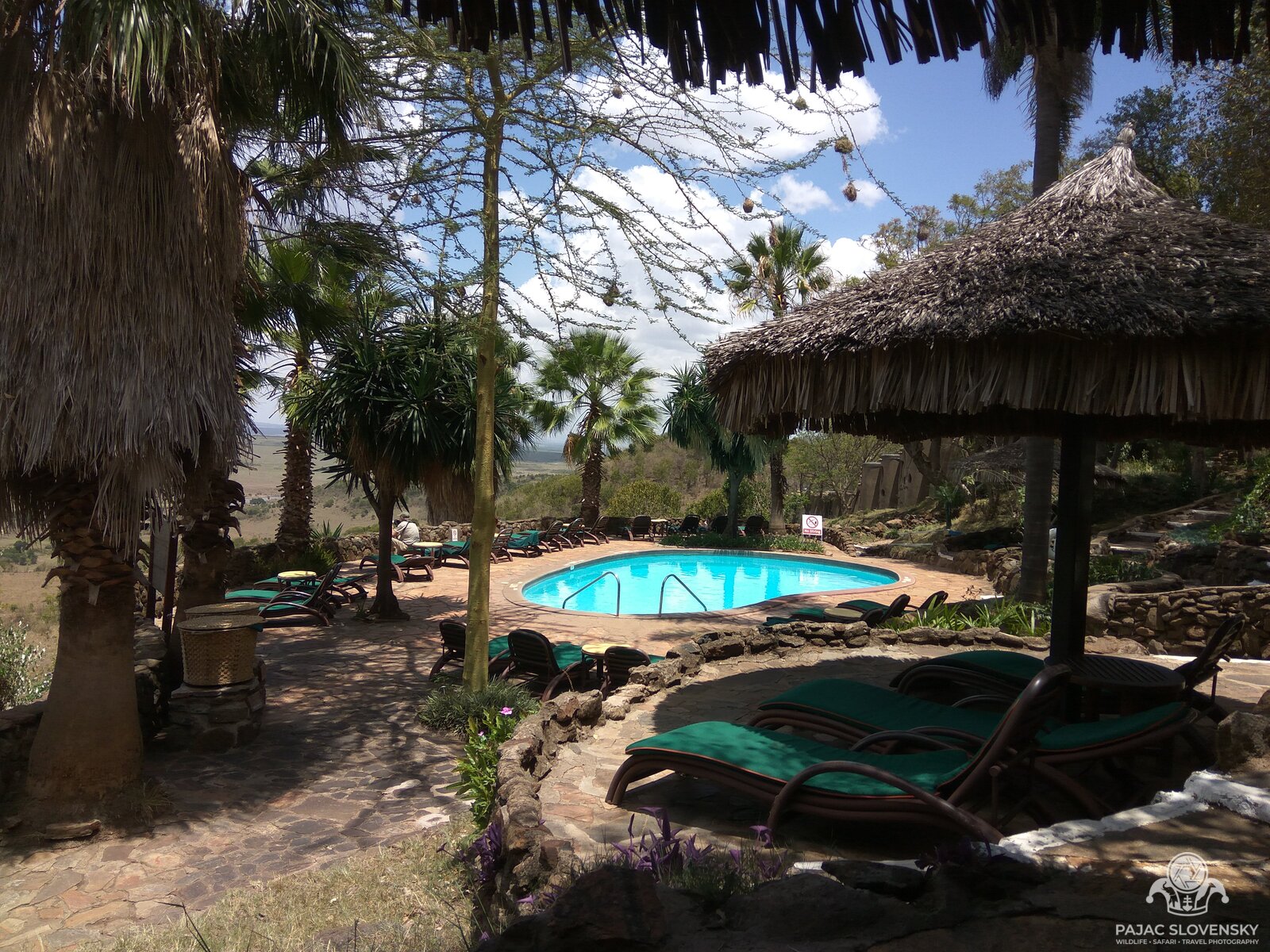
The Mara days found their rhythm quickly: out before sunrise with the long lenses resting on the window frames, back up the escarpment for the fierce midday hours — to a lodge with a swimming pool hanging improbably over the plains — then out again into the soft afternoon, riding with our heads out of the roof hatch.
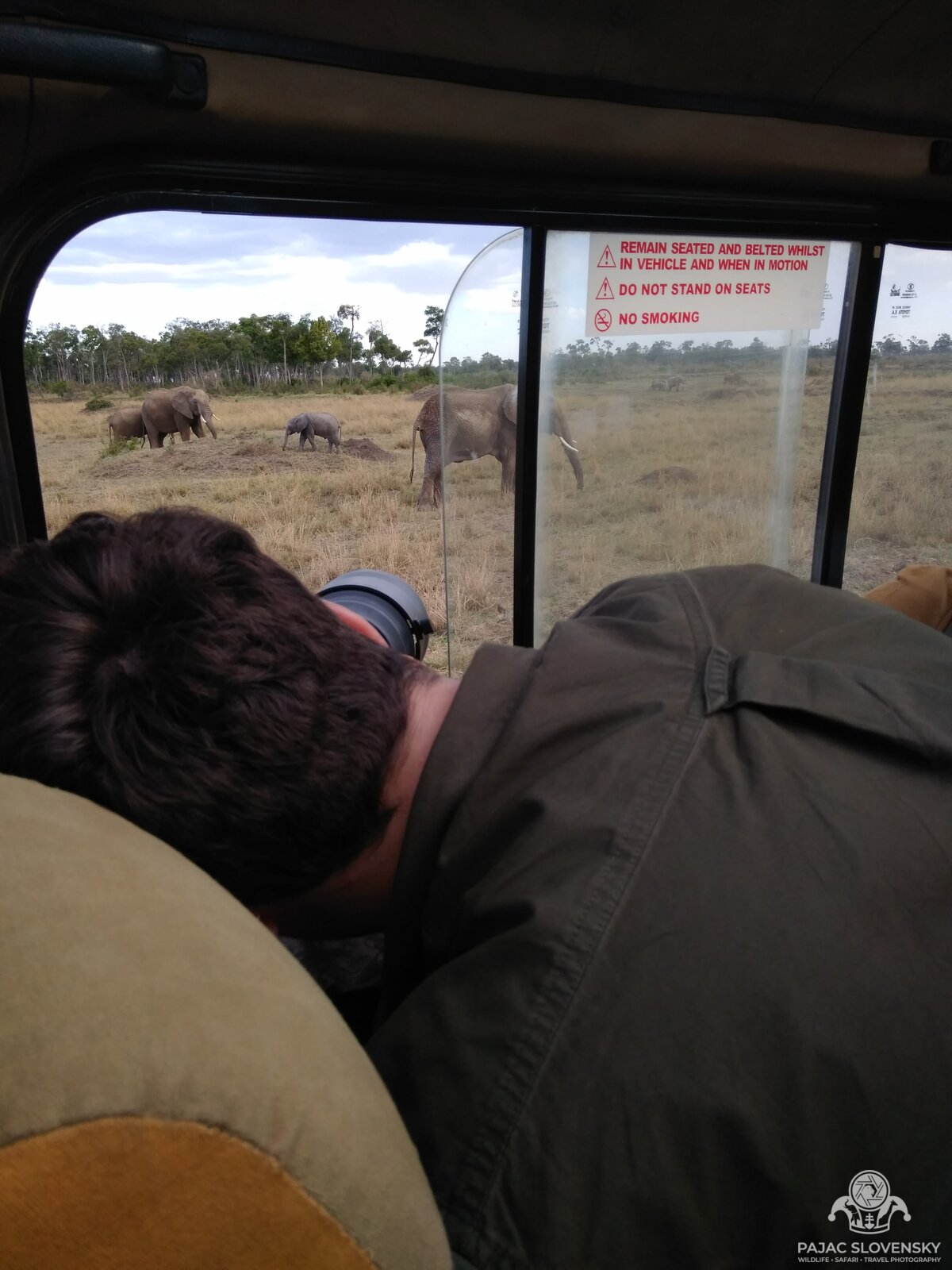
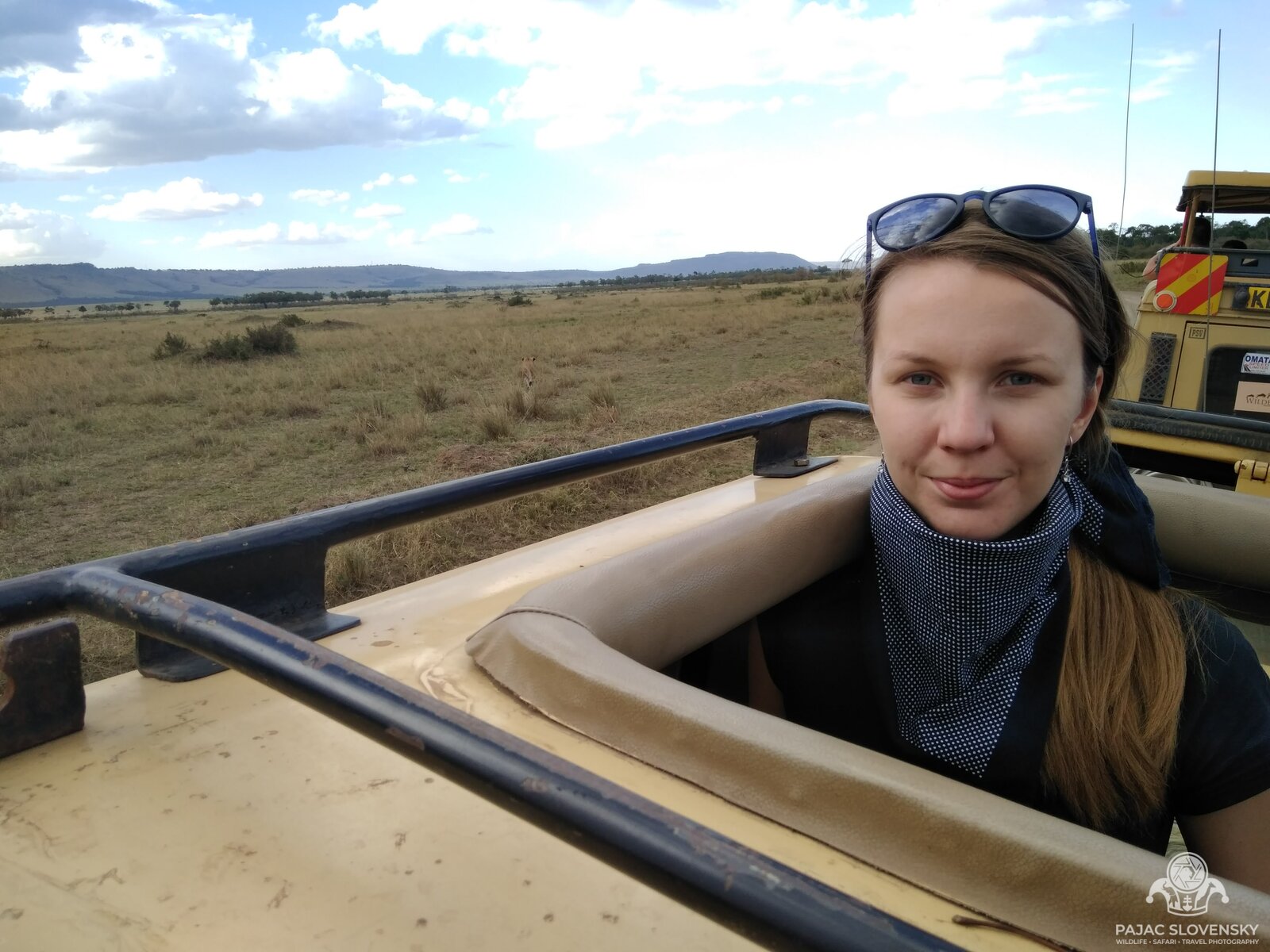
Day 4 · Across the border into the Serengeti
The fourth day was mostly a road day — a long, dusty transfer out of the reserve, across the Kenya–Tanzania border, and south into the top of Serengeti National Park. The name simply means endless plains in Maa, and the moment the grass opens out you understand it.
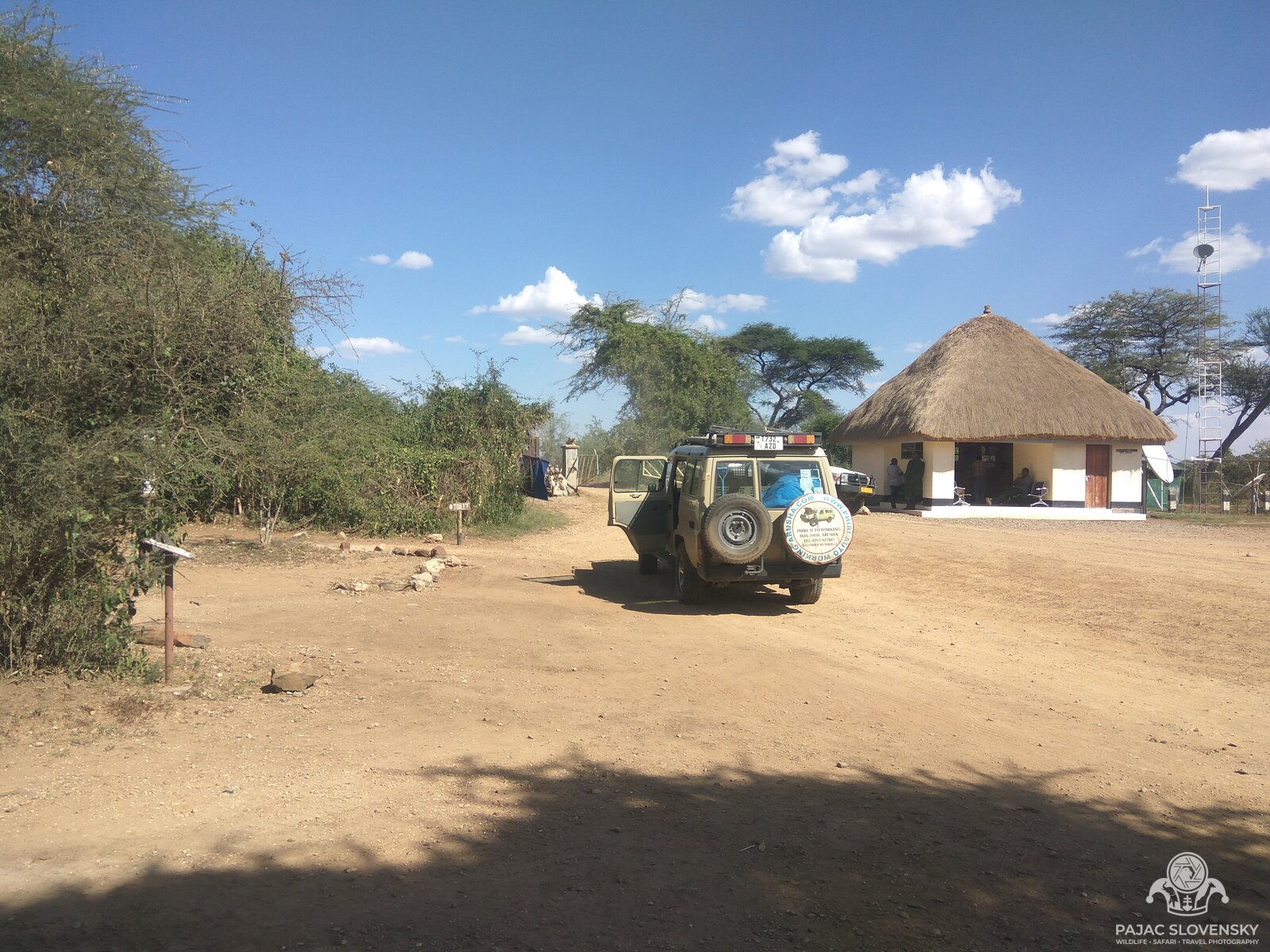
It was on this Tanzanian side of the trip that we were also welcomed into a Maasai village — the soaring adumu jumping dance, songs sung in gathered lines, the intricate beadwork of the village women. Those photographs belong together, and they have their own home: the Maasai Village gallery.
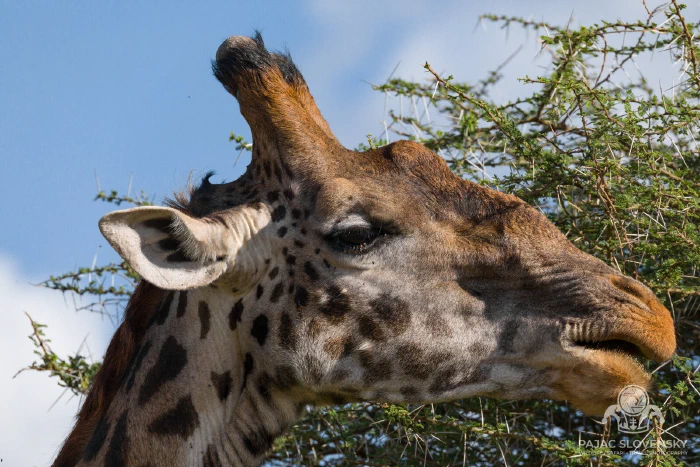
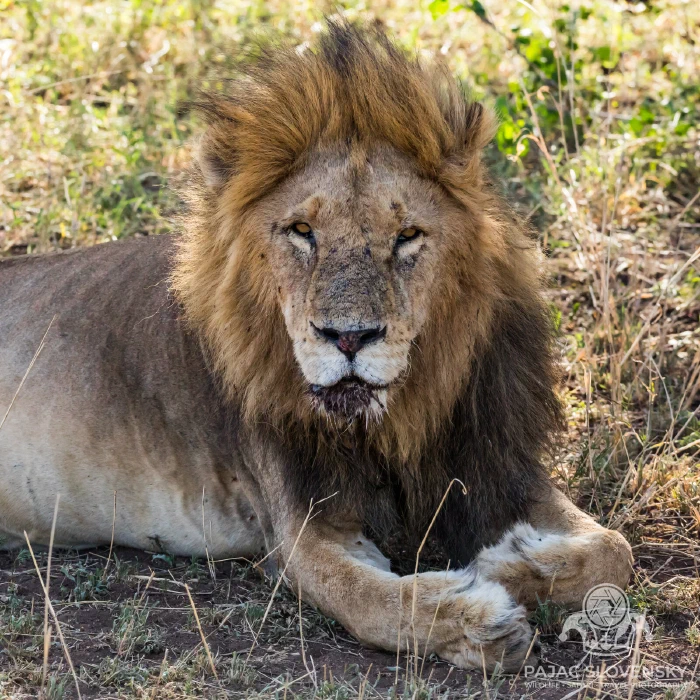
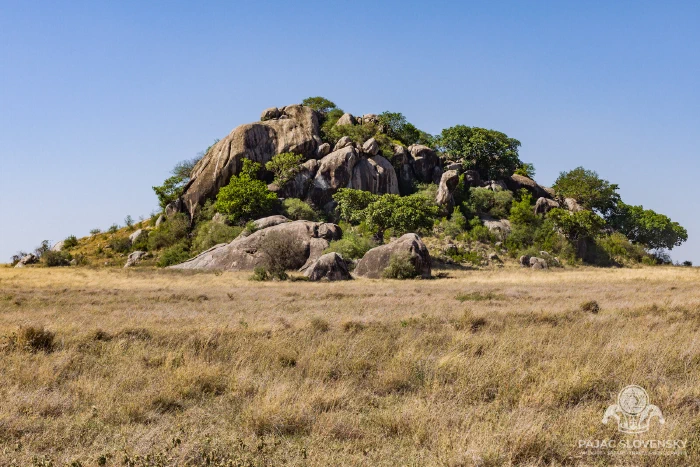
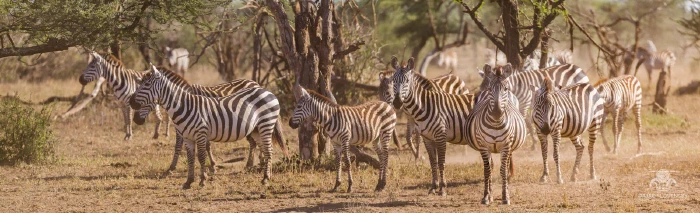
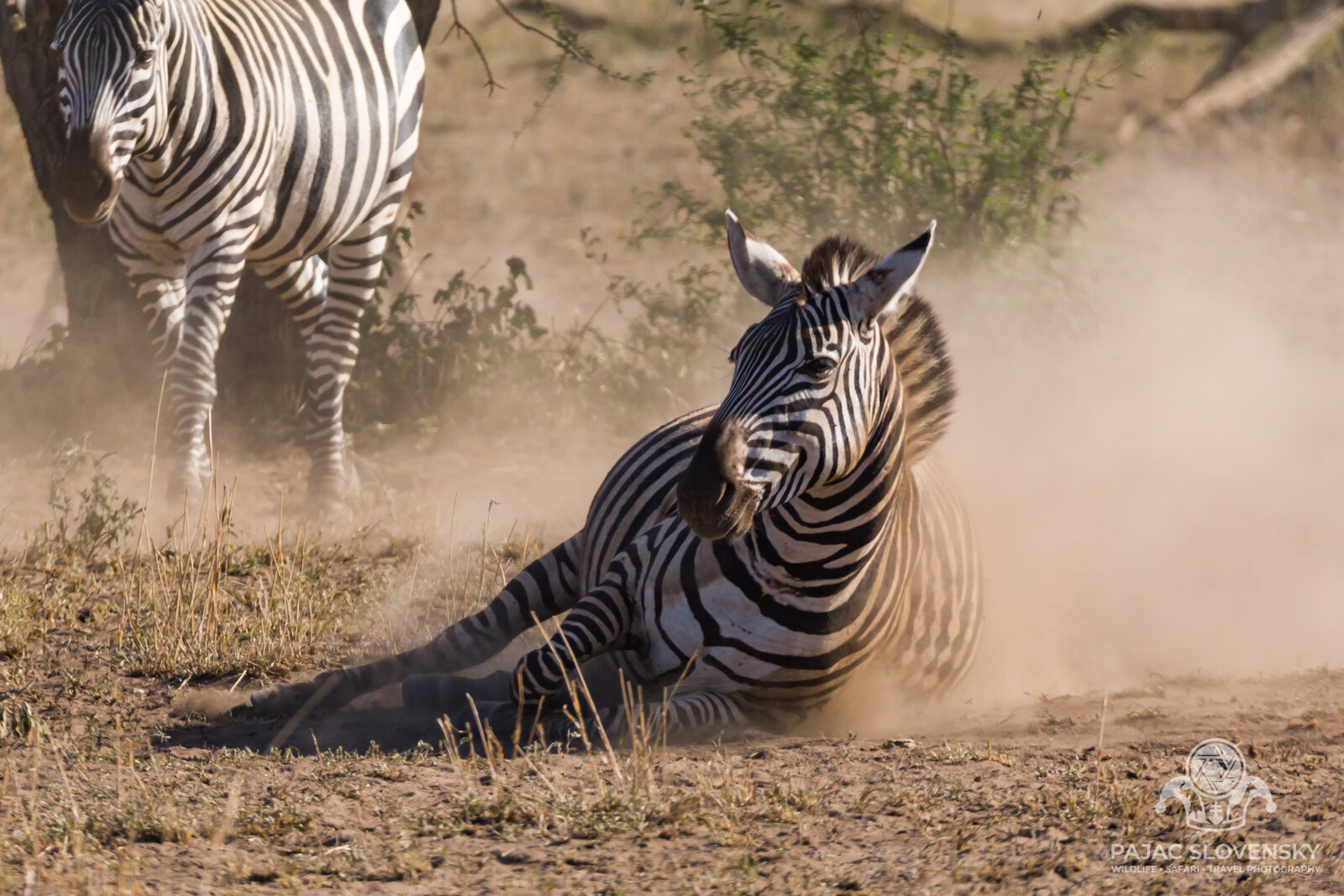
We were based in the central Seronera region, and this is where the trip peaked. Giraffes reaching into flat-topped acacias; zebras collapsing into the dust to roll; a big dark-maned lion who lay in the grass and watched the vehicle with complete indifference; and, scattered across the plain, the ancient granite islands the Serengeti is famous for — the kopjes, warm to the touch and full of hyrax and lion.
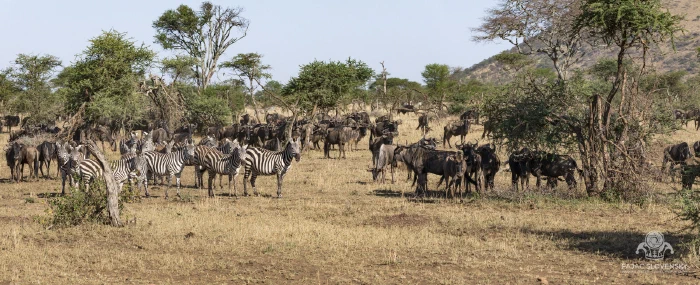
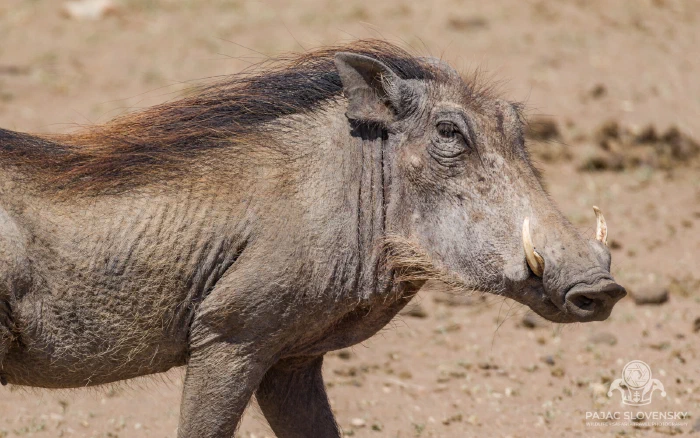
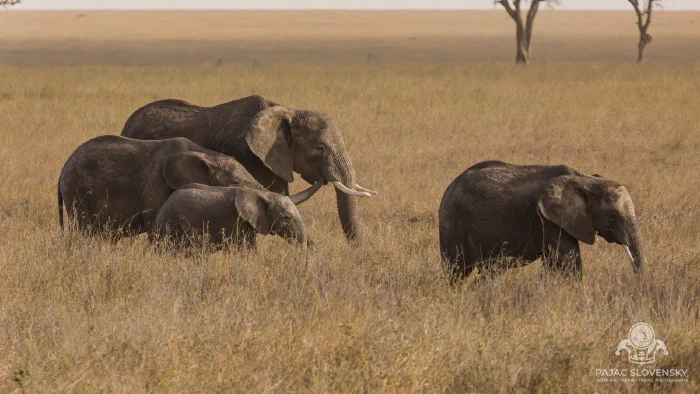
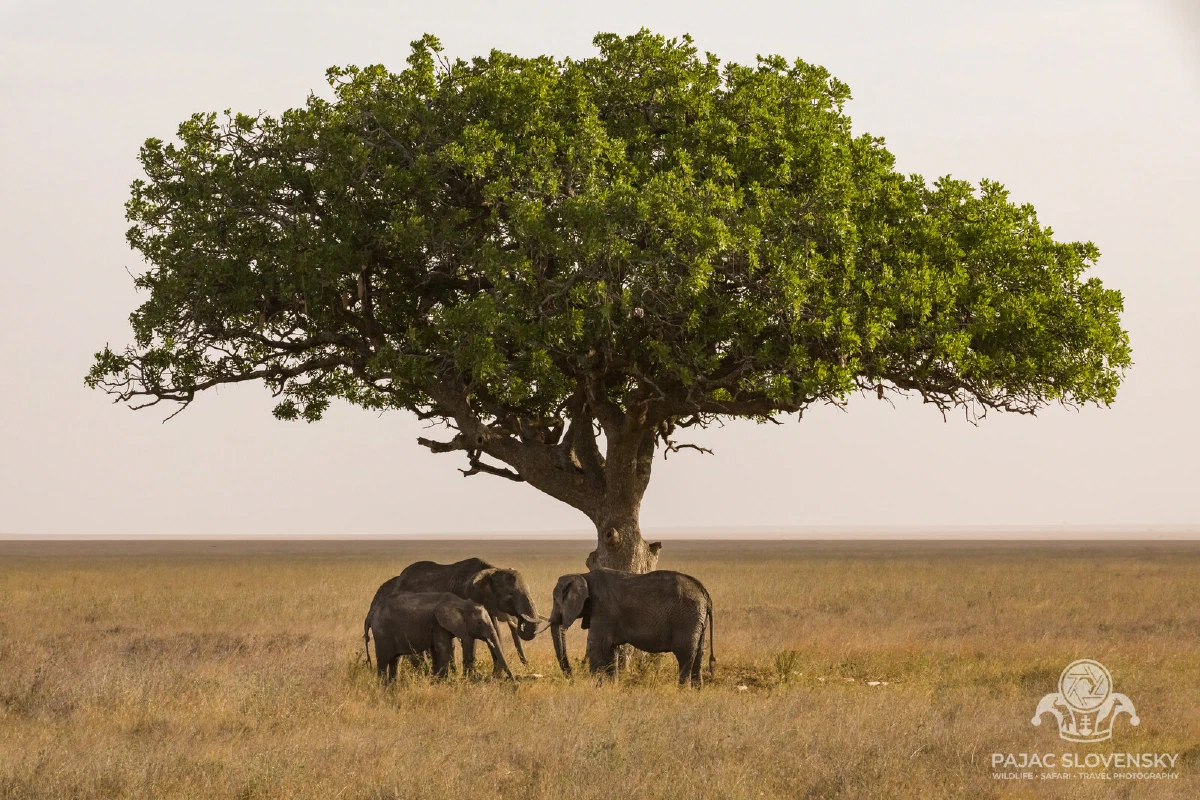
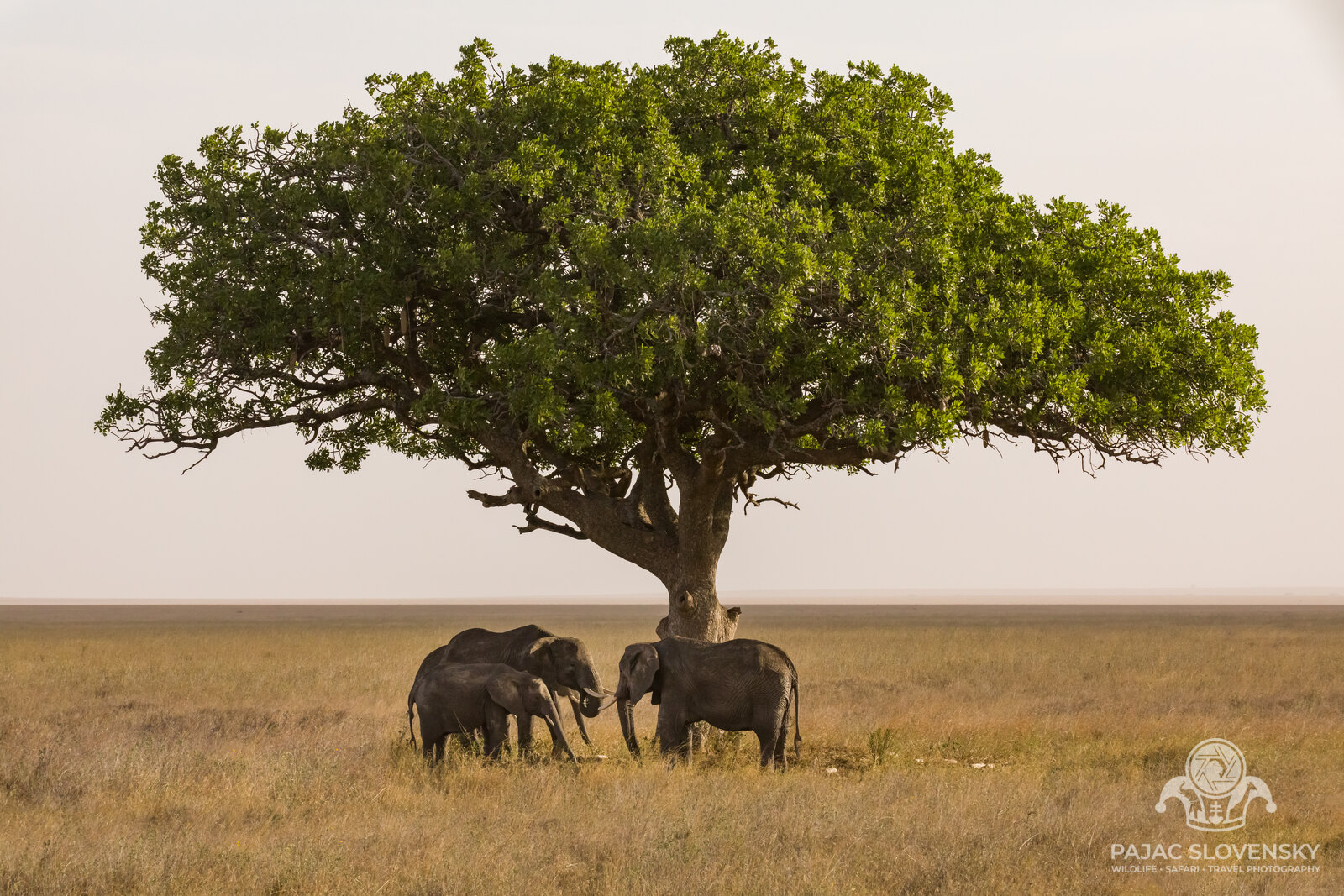
On 5 October we ran the full arc of a Serengeti day: out early to wildebeest strung across the plain in their thousands, a warthog grazing on its knees mid-morning, back through the heat of midday, and out again into the honeyed light of late afternoon. That evening belongs to one encounter above all the others — a breeding herd of elephants gathered under the lone acacia that gives this story its cover, the only patch of shade for a kilometre in any direction. We switched the engine off and let the family feed, greet and drift past at eye level for the better part of an hour — and the next morning another breeding herd crossed our path on the way east. Those unhurried hours with the Serengeti’s elephants filled a memory card of their own, and became a gallery of their own: Serengeti Elephants.
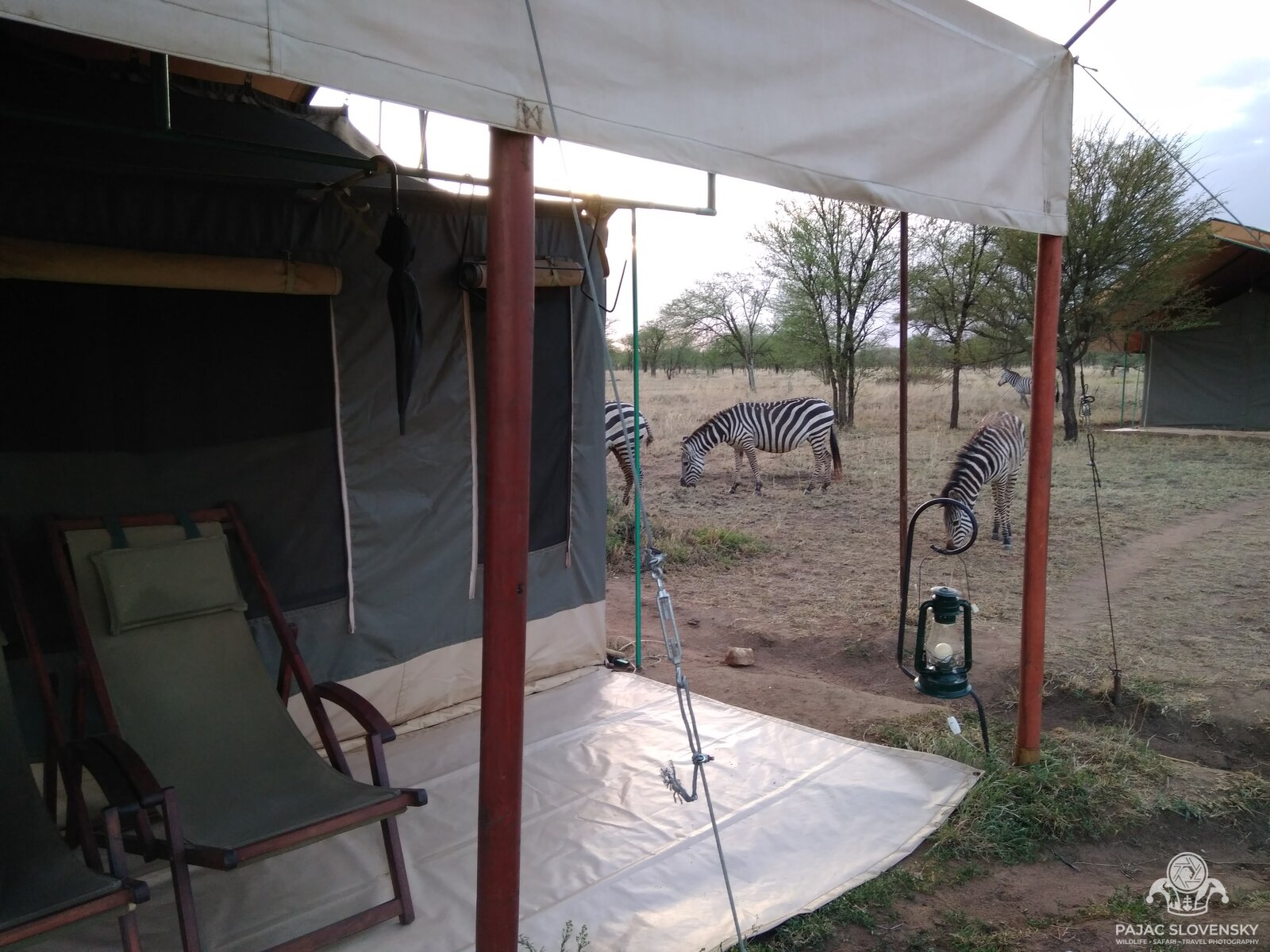
Back at the tented camp that evening, the wildlife came to us instead: a small group of zebras grazed its way between the tents and past the veranda chairs, close enough to hear them cropping the grass.
Day 6 · A Serengeti dawn, then down into Ngorongoro
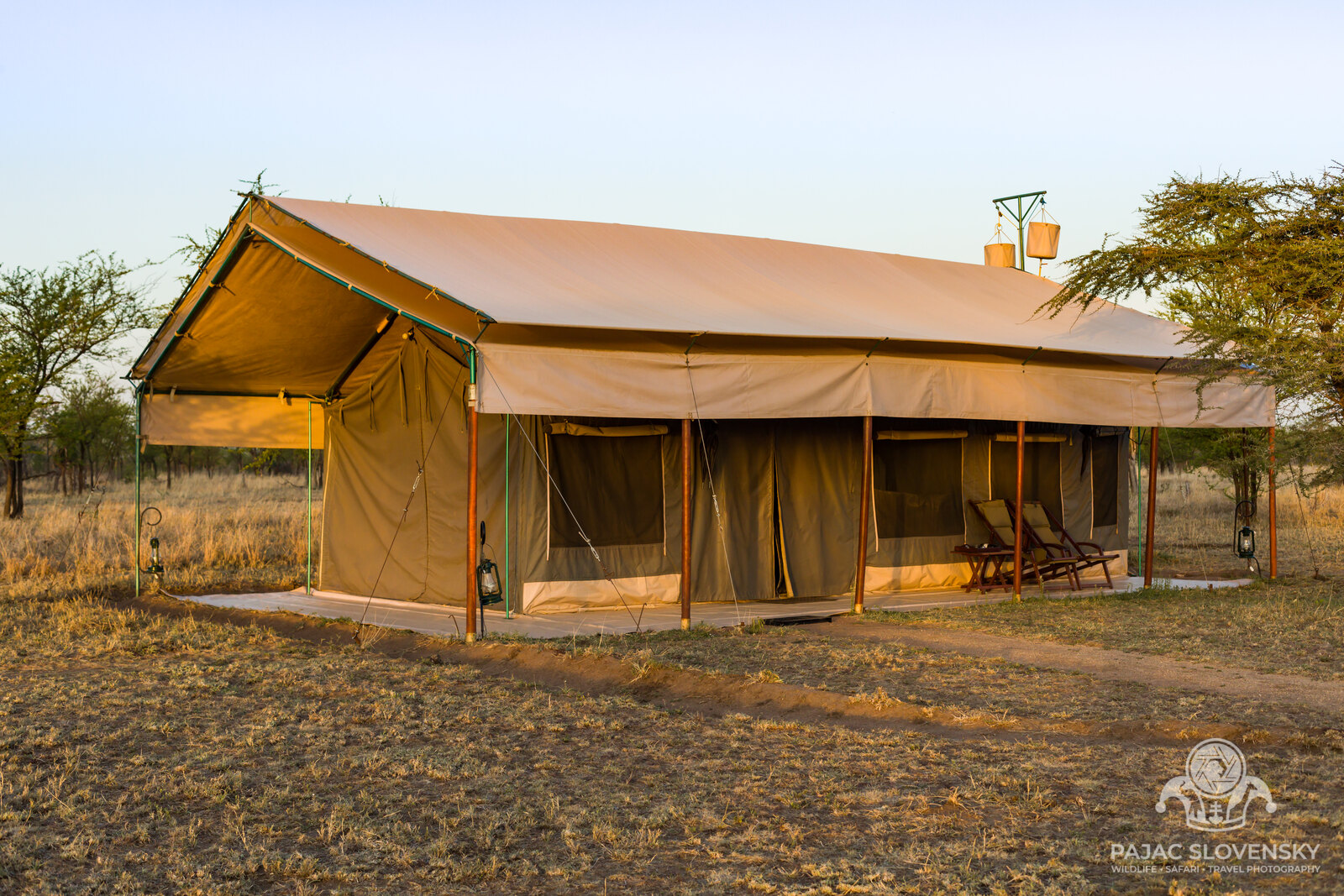
The sixth day started earliest of all — up well before the sun, our camp under a sky still holding its last stars, the horizon just beginning to warm.
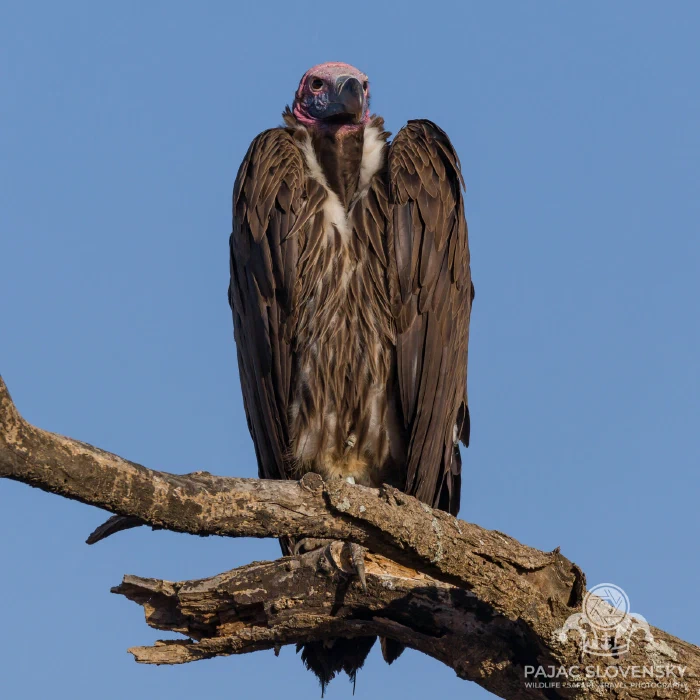
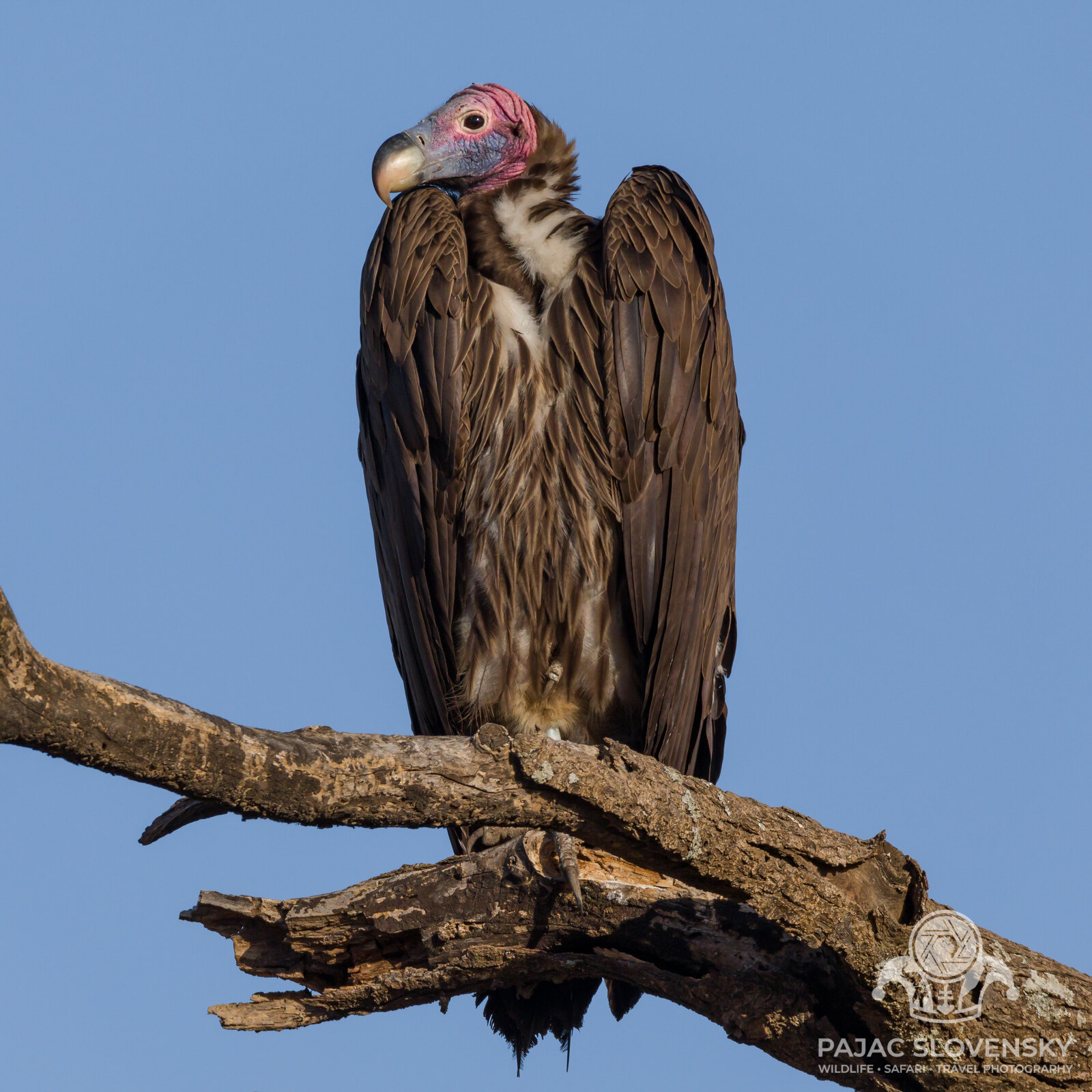
An hour later, in the first proper light, we found a pair of lappet-faced vultures hunched on a bare branch — Africa’s largest vulture, with a bare pink head built for reaching where nothing else wants to reach. One of them was still stained from a carcass. They are easy birds to photograph unkindly; up close, in good light, they have the gravity of old statues.
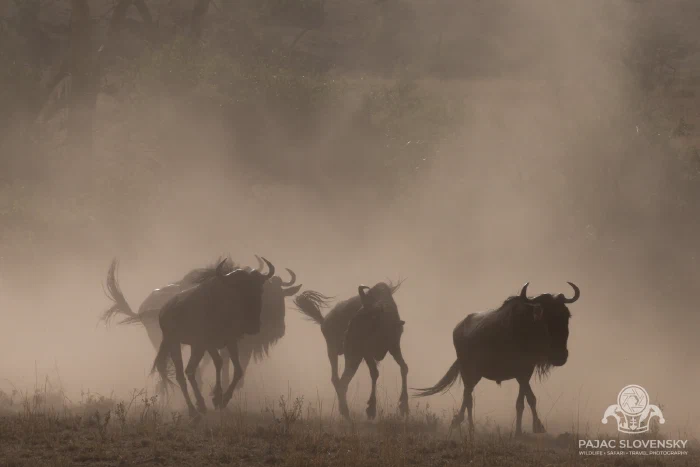
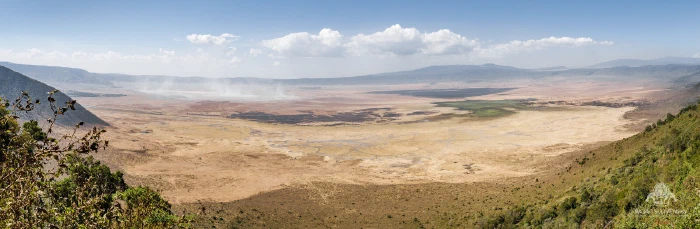
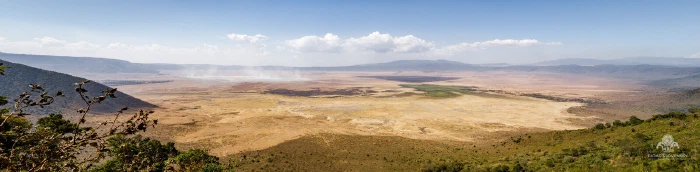
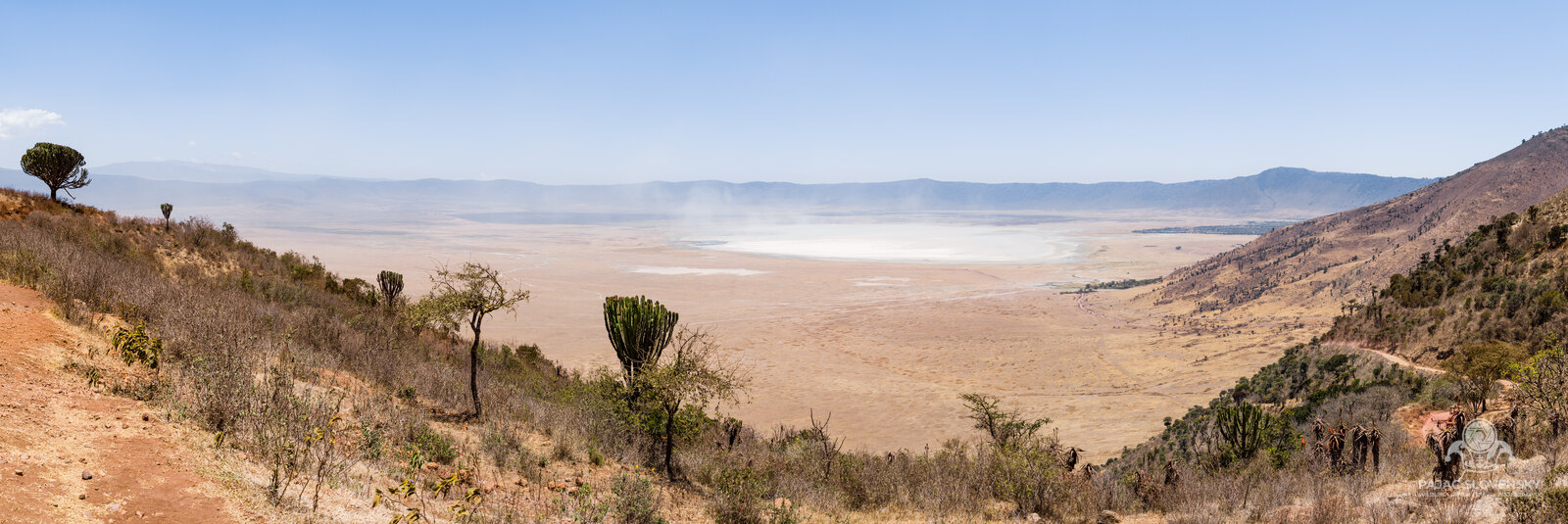
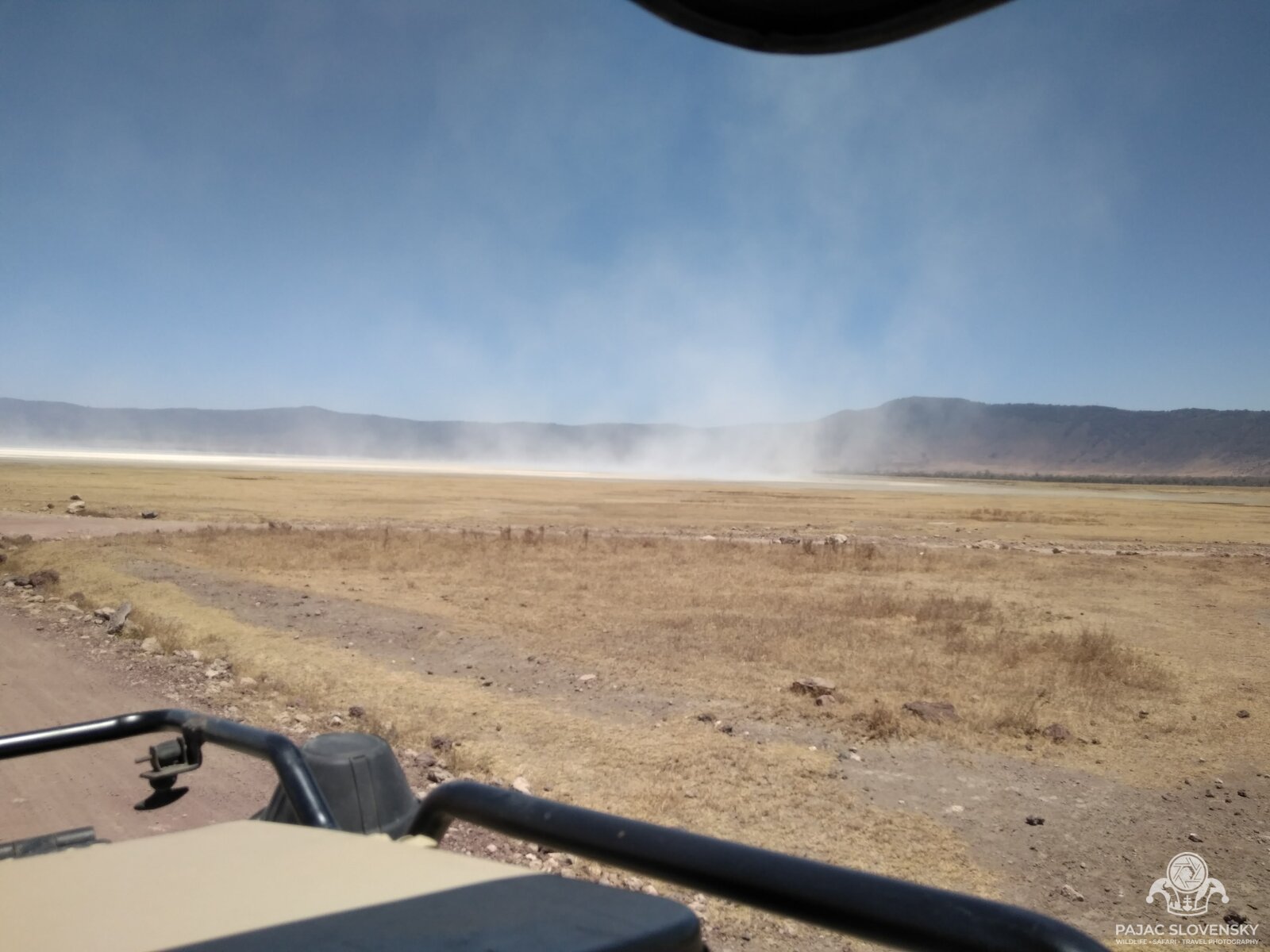
Then we got moving: past the last kopjes — the track running dead straight toward a granite island on the horizon — and up the flank of the Crater Highlands, until just before noon we stood on the rim of the Ngorongoro Crater. Nothing quite prepares you for the first look over the edge. The crater is the caldera of a collapsed volcano — some 260 square kilometres of grassland, swamp and soda lake enclosed by a 600-metre wall — and it holds its own resident population of almost everything: lion, elephant, buffalo, flamingo, and a handful of the black rhino that have all but vanished elsewhere. We spent the rest of the day working around the rim and then down the wall road onto the crater floor itself, where the wind dragged long curtains of soda dust across the flats.
Day 7–8 · The long way back to Amboseli
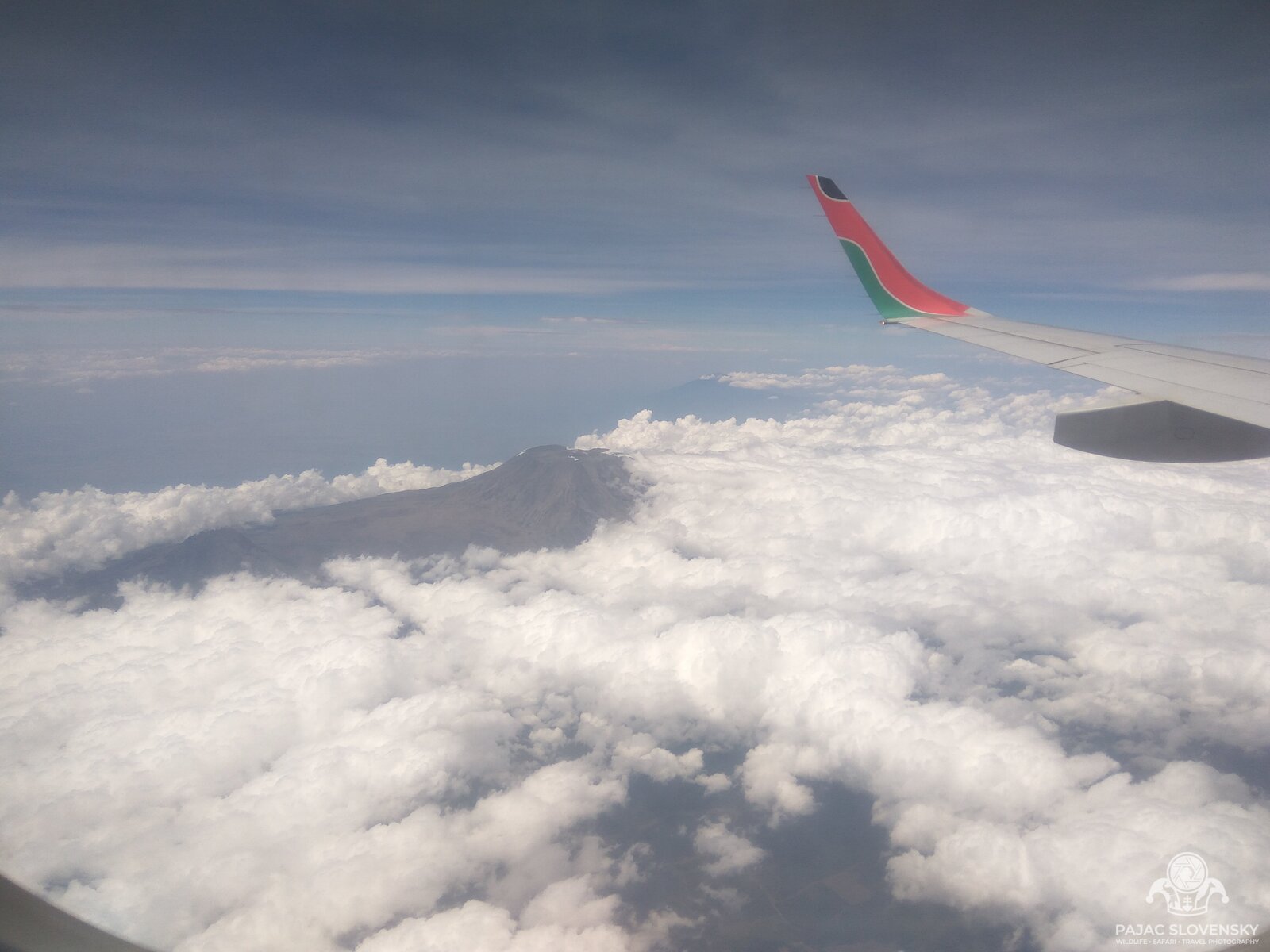
Then came the longest haul of the trip: a full day back north through Arusha and over the Namanga border into Kenya, arriving on the afternoon of 7 October in Amboseli National Park. After the enclosed drama of the crater, Amboseli is all horizon: dust and shimmering marsh under the bulk of Kilimanjaro, whose snows sit just across the Tanzanian border we had recrossed.
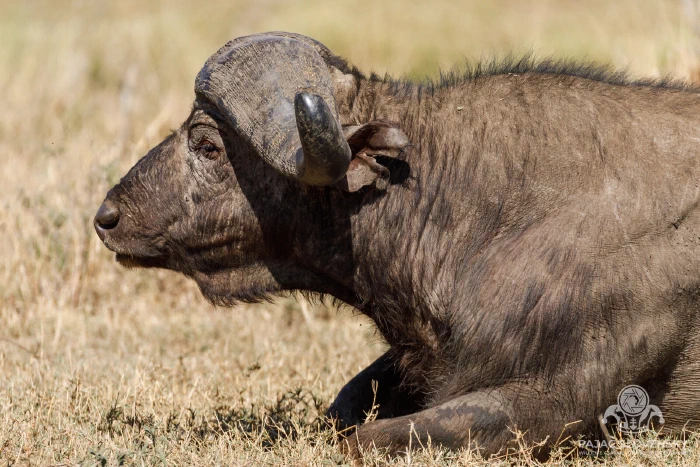
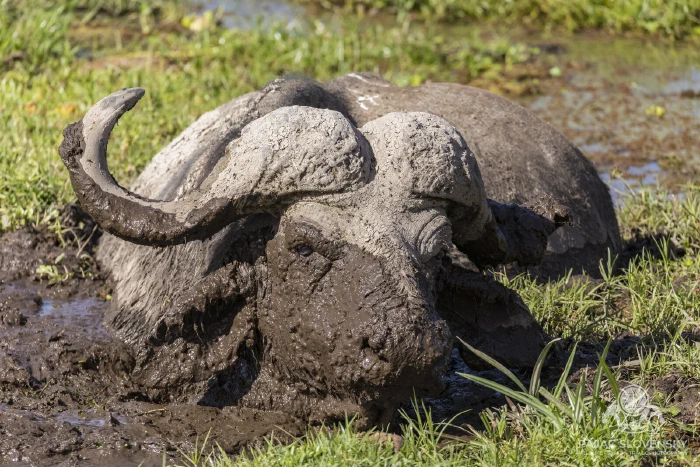
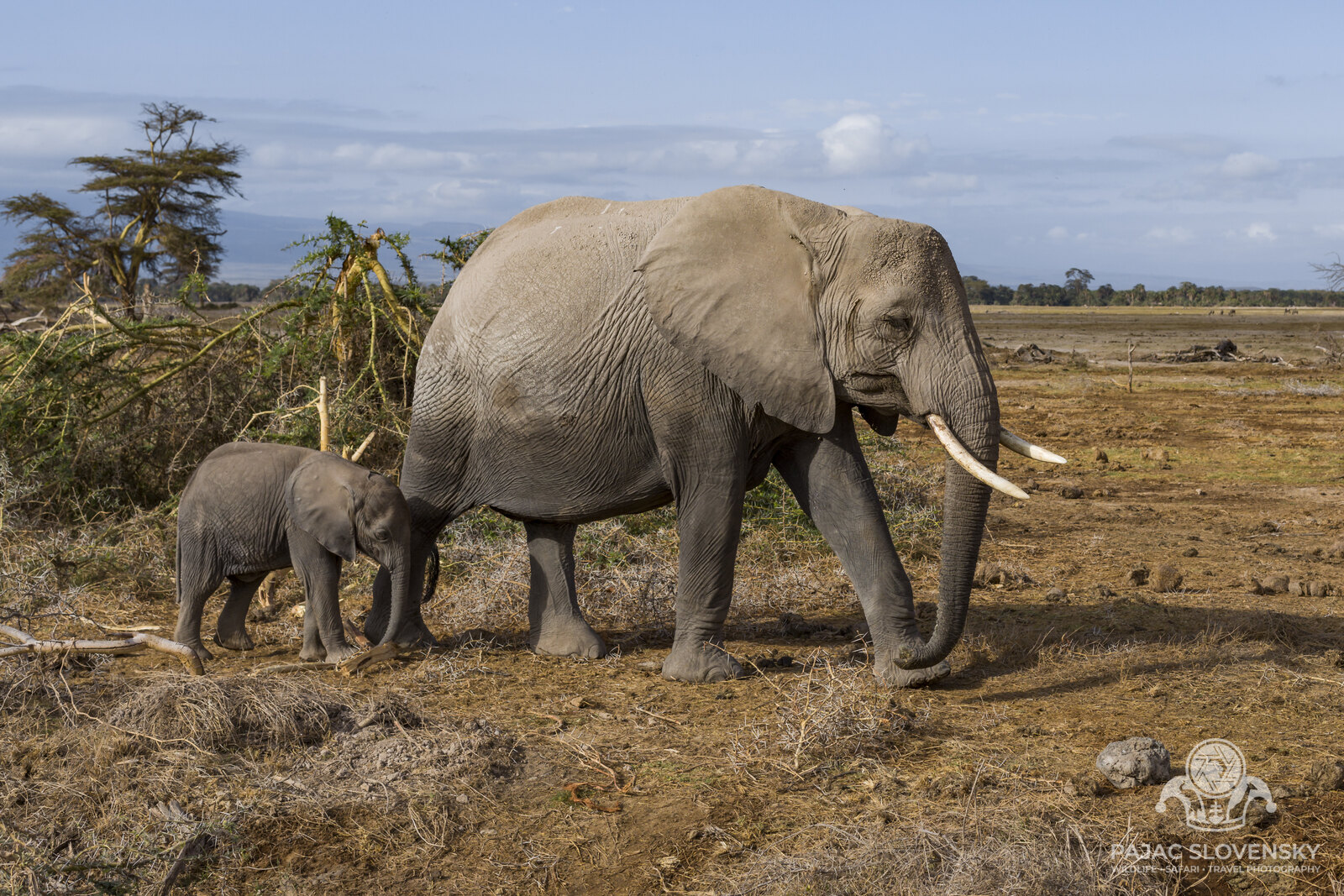
Amboseli’s swamps are fed by meltwater from the mountain, and everything gathers at the water. Cape buffalo hauled themselves out of the wallows caked head-to-horn in black mud; giraffes splayed their forelegs to drink at the marsh edge; and at dawn on 8 October, the last full day, a line of elephants waded out through the marsh grass, grey against the silver water. Amboseli gave us so much in those two days that it, too, earned a gallery of its own — fifty frames of it in the Amboseli gallery.
Closing the loop
From Amboseli it was a half-day north to Nairobi and the flight home, closing a rough circle drawn across two countries. Two weeks, five parks, and a full memory card from each of them. The map above traces the route the way we drove it — and the galleries below hold what we found along it.
More from this trip
- Kenya & Tanzania — the full loop, 47 photographs in the order the trip unfolded
- Serengeti Elephants — one hour with a breeding herd, photographed at eye level
- Maasai Village — the adumu dance, songs and beadwork of a village in northern Tanzania
- Amboseli — elephants, giraffes and dust devils beneath Kilimanjaro
Photographed in October 2017. Photographs in the text open in the viewer — click any of them.