
35mm Film
Travel photography on 35mm slide film with the Canon EOS 3, projected with the Rolleivision twin MSC 300 P
The Classic Format
35mm remains the most versatile film format. A compact body, fast autofocus lenses, and 36 exposures per roll make it the format I reach for when traveling light.
Shot on slide film, 35mm has a character of its own — real grain instead of digital noise, and the discipline that comes from knowing every frame costs something.
My 35mm Kit
Canon EOS 3 The late-90s professional EOS body: 45-point eye-controlled autofocus, fast motor drive, and full compatibility with modern EF lenses — so my digital-era glass works on film. It handles like a modern camera and gets out of the way, which is exactly what travel photography needs.
Film Choices
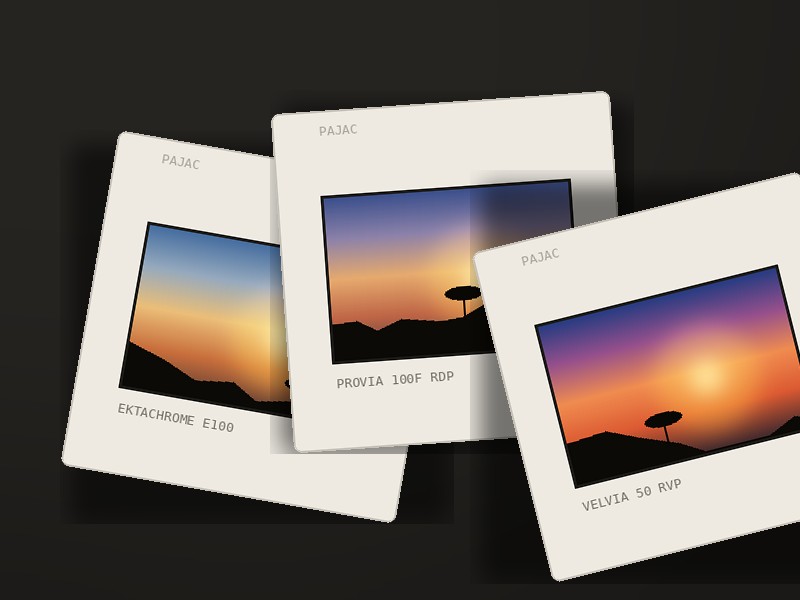
- Fuji Velvia 50 — Saturated, fine-grained slide film for landscapes in good light
- Fuji Provia 100F — Neutral all-purpose slide film; my default travel stock
- Kodak Ektachrome E100 — Clean, slightly cooler color; the revived American classic
Projection
Mounted slides go into magazines for the Rolleivision twin MSC 300 P, a twin-lens 35mm projector built for dissolve shows: two lenses alternate between frames and crossfade, so the screen is never dark between slides. With autofocus and programmable dissolve it carries a whole evening of trays without touching a computer. A well-exposed 35mm slide filling a two-metre screen is the finished work — the frame never becomes a file.
Scanning for the Web
The gallery below was digitized on a Reflecta RPS 10M, a motorized scanner that batch-feeds whole uncut 35mm strips. The scans exist to show the work online; the slides themselves stay in the projector trays.
Gallery






•