
Analog Photography
Slide film, from the shutter to the projection screen
Why Film Still Matters
I shoot film alongside digital, and after years of doing both, film has kept its place for one reason above all: the analog picture never has to become a file. From the moment the shutter fires to the moment the image fills a screen two metres wide, the workflow here is analog end to end.
The Deliberate Process
Film forces you to slow down. With 12 frames on a roll of medium format or 36 on 35mm, every shot counts. This limitation becomes a creative advantage — you compose more carefully, wait for the right moment, and truly see before pressing the shutter.
There is no chimping, no immediate review. You commit to your vision and trust your craft.
Slide Film Only
I shoot transparencies — E-6 slide film — in both formats. Slides leave no room for error: exposure has to be right in camera, because there is no negative latitude to rescue it later. In return, a well-exposed slide is a finished image the moment it comes back from the lab, ready for the light table and the projector.
The three emulsions in my bag:
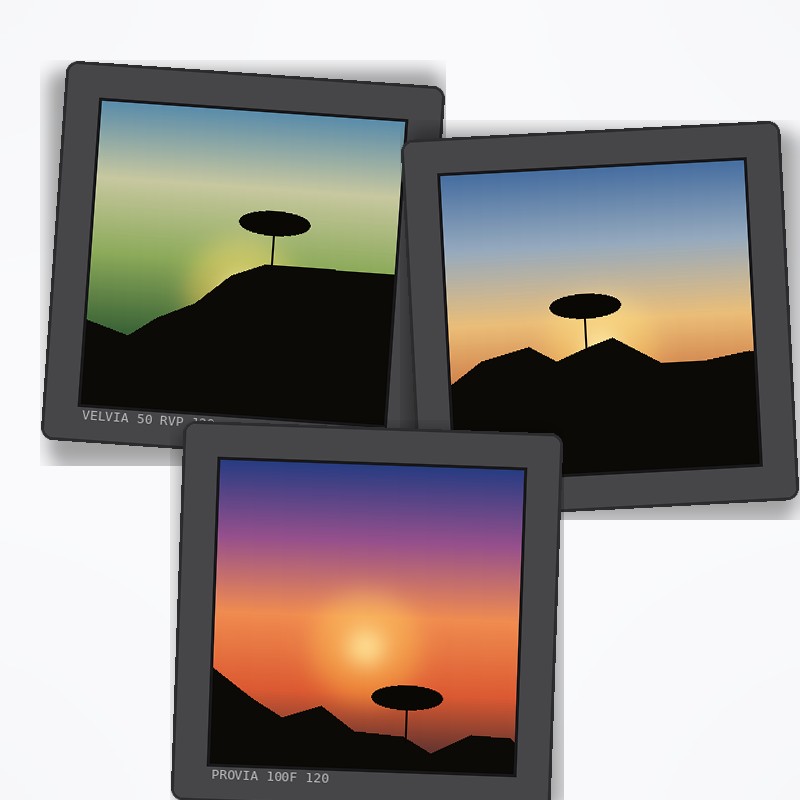
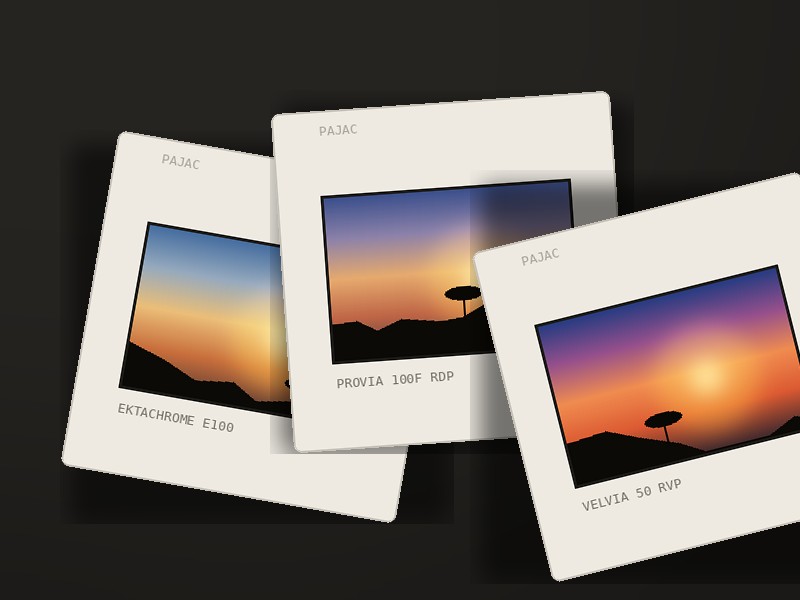
- Fuji Velvia 50 — extreme saturation and resolving power; the landscape film
- Fuji Provia 100F — neutral, fine-grained, forgiving enough for everyday work
- Kodak Ektachrome E100 — clean, slightly cooler color; the revived classic
Two Cameras, Two Formats
Rollei 6008 Professional — my medium format system. A 6x6 German SLR with the Zeiss Planar 80mm f/2.8, interchangeable backs, and honest metering. The square frame changes how you compose.
Canon EOS 3 — my 35mm body. Late-90s professional EOS with eye-controlled autofocus that shares lenses with my digital kit. The travel-light option.
From the Shutter to the Screen
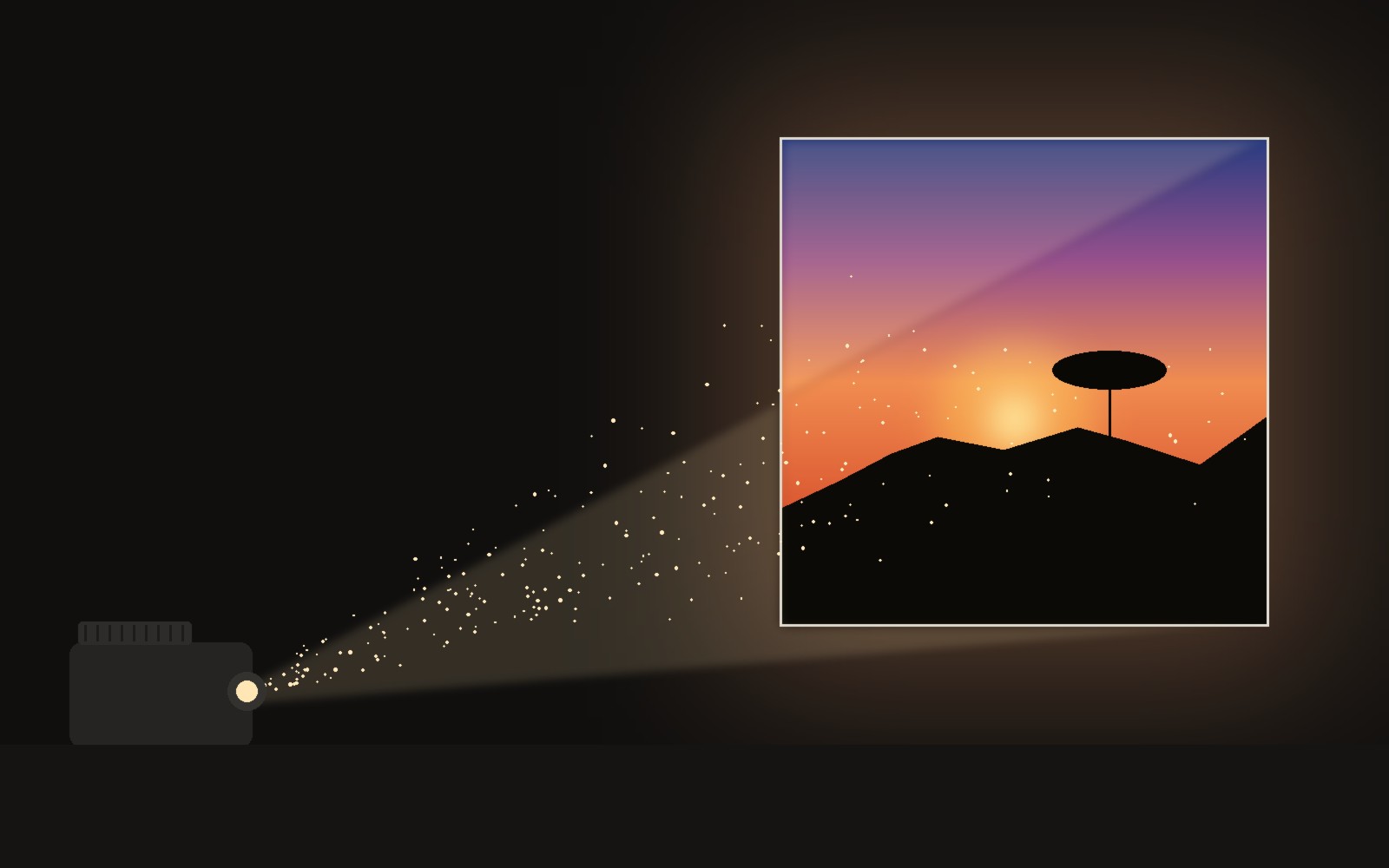
Developed slides come back from the lab, get mounted, and go straight into a projector magazine. Projection is the point of the whole exercise. A Rolleivision twin MSC 300 P throws the 35mm work onto the screen; a Rolleivision 66 does the same for the 6x6 slides.
A projected slide is the original. The projector shines light through the very dyes the shutter exposed and magnifies them onto the wall — no scan in between, no display resolution to hit. Whatever the film resolved, the screen shows. This is where slide film still keeps up with digital: a room-filling 6x6 Velvia frame makes the argument better than any spec sheet.
I don’t make prints from film for now. Slides are shot to be projected.
A Word on the Scans
The images in these galleries are digitized only so the work can be shown online — a Reflecta MF 5000 scans the 120 rolls, a Reflecta RPS 10M the 35mm strips. Treat them as previews; the finished piece is the transparency on the screen.
The Tangible Archive
Slides are a physical archive. Properly stored, they last for decades. No format obsolescence, no corrupted files — hold a slide up to the light a hundred years from now and the image is simply there, ready to project.
Film Galleries
Explore my analog work organized by format:
Best Seen Projected
The scans on this site are previews. The finished work is the transparency itself, projected onto a big screen — fully analog, nothing lost along the way. Curious what a 6x6 slide looks like on two metres of wall? Get in touch.
Get in Touch